Pre Operative Brow Lift Information
All cosmetic surgery involves risks and individual results vary. Cosmetic surgery is a serious decision. Decisions about whether to proceed should be made after careful consideration and following at least two consultations with a qualified medical practitioner.
This page provides pre-operative and post-operative information for patients preparing for brow lift surgery with Dr Roth. Please read it alongside the written instructions provided at your pre-operative appointment. If anything here is unclear or conflicts with instructions you have been given directly, please contact the rooms.
Full brow lift information → | Brow lift risks →
About Brow Lift Surgery
A brow lift — also called a forehead lift or browplasty — raises the position of the eyebrows and addresses horizontal forehead lines, frown lines between the brows (glabellar lines), and the heavy or tired appearance that a descended brow creates. It is frequently combined with blepharoplasty (eyelid surgery) or facelift, as brow descent often contributes to upper eyelid hooding.
Dr Roth performs a range of brow lift techniques and selects the most appropriate approach based on your anatomy, brow position, forehead height, skin quality, and specific goals. The technique planned for your surgery will have been discussed in detail at your consultations.
Brow lift surgery is performed under general anaesthesia. It is typically day surgery, though it may involve an overnight stay when combined with facelift or other procedures. Operating time is approximately 60–90 minutes for a brow lift alone.
Before Surgery
Medications to Cease
- Aspirin and any aspirin-containing products
- Ibuprofen (Nurofen, Advil) and all other anti-inflammatory medications
- Naproxen (Naprosyn, Naprogesic)
- Warfarin, clopidogrel, or other anticoagulants — discuss with Dr Roth and your GP before stopping
- Vitamin E, fish oil, garlic tablets, ginkgo biloba, ginseng, St John’s Wort
Full list: Medications to Avoid →
Smoking
Do not smoke, vape, or use nicotine for at least two weeks before and two weeks after surgery. Smoking impairs wound healing and increases the risk of complications at incision sites.
Fasting
Hair and Scalp Preparation
- Wash your hair the night before or the morning of surgery — you will not be able to wash it for several days after
- Do not apply any hair products, sprays, or dry shampoo on the day of surgery
- Do not colour or chemically treat your hair for at least two weeks after surgery
- Arrange comfortable, loose-fitting clothing that does not need to be pulled over the head
Practical Preparations
- Arrange a responsible adult to drive you home and stay with you on the first night
- Purchase prescribed medications in advance
- Plan one to two weeks away from work; four weeks off strenuous activity
What to Expect in Recovery
Important Post-Operative Instructions
- Keep the head elevated on two to three pillows for the first week — lying flat increases swelling
- Apply cold compresses gently over the forehead and around the eyes for the first 24 hours
- Do not touch, rub, or scratch the scalp incisions
- Do not bend over or perform activities that raise blood pressure for two weeks
- Avoid strenuous exercise, heavy lifting, and contact sport for four weeks
- Do not colour or chemically treat the hair for two weeks after surgery
- Protect incision sites from sun exposure for at least six months — use SPF50+ or a hat
- Complete the full course of antibiotics as prescribed
- Take paracetamol for pain — avoid ibuprofen and all anti-inflammatory medications after surgery
- Attend all follow-up appointments — scalp healing requires monitoring
When to Seek Urgent Assistance
- Rapidly increasing or asymmetric swelling of the forehead or scalp
- Brisk bleeding from any wound site
- Any change in vision
- Fever above 38.5°C
- Increasing pain, redness, or discharge from the incision sites
Dr Roth’s rooms: (02) 9982 3439
Out of hours: attend the nearest emergency department.
Brow Lift Surgery — Full Information → | Brow Lift Risks → | Contact the Rooms →
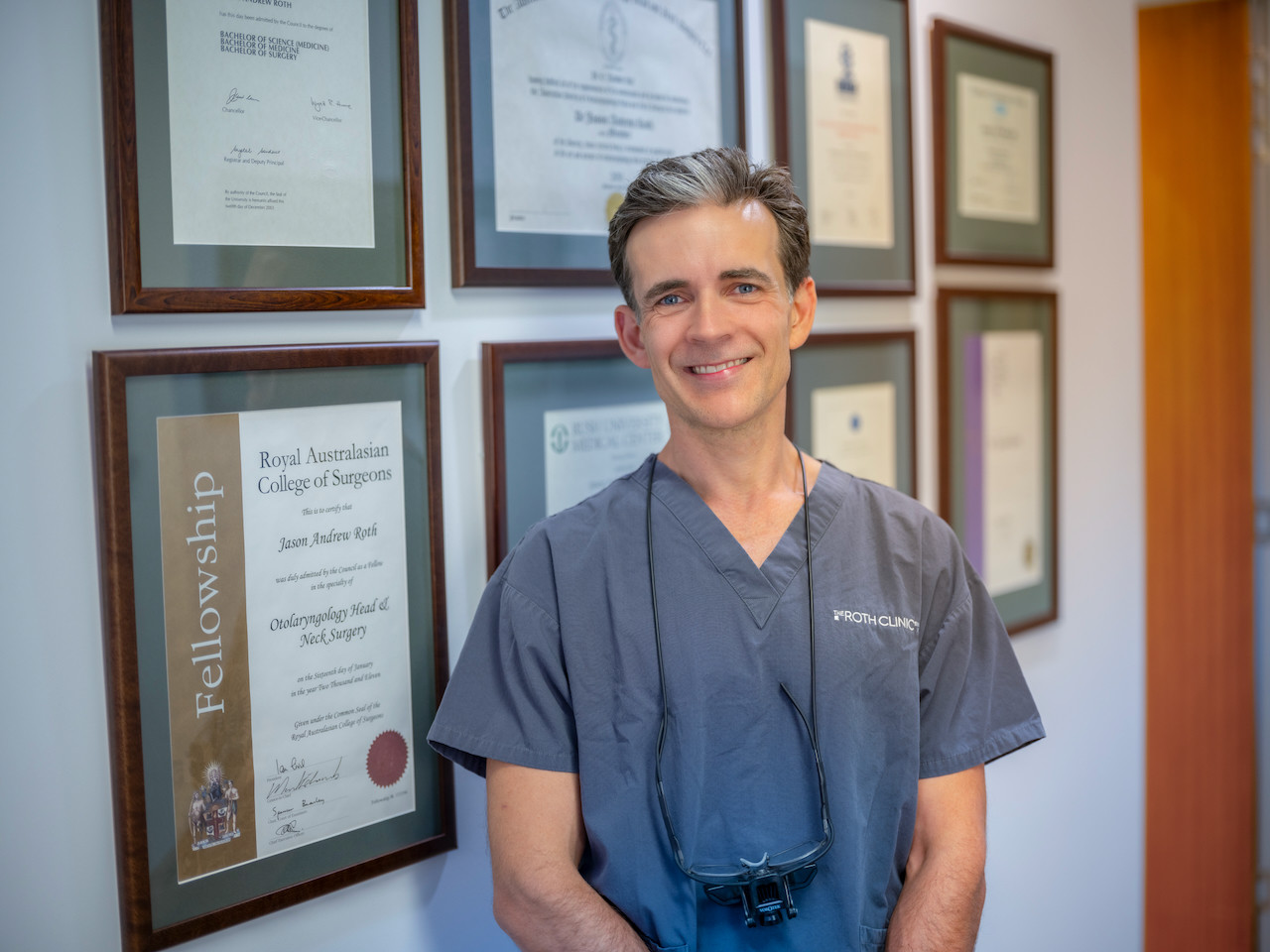
Specialist Otolaryngologist & Head and Neck Surgeon
Specialist registration — Otorhinolaryngology, Head & Neck Surgery
View full profile
