
Nasoseptal Reconstruction (Deviated Nasal Septum)
Nasoseptal reconstruction is the surgical correction of a significantly deformed or deviated nasal septum — sometimes called septoplasty. It is one of the most frequently performed procedures in ENT surgery, addressing nasal airway obstruction, structural collapse, or deformity of the internal nasal framework. When performed as part of rhinoplasty, it becomes a septorhinoplasty — addressing both the functional and aesthetic dimensions of the nose in a single procedure. The term “nasoseptal reconstruction” is used particularly when the degree of structural disorganisation or prior surgical damage to the septum is such that straightforward septoplasty is insufficient and more extensive cartilage reshaping or grafting is required.
For a detailed overview of standard septoplasty, see the Septoplasty page →
The Nasal Septum — Anatomy and Function
The nasal septum is the central wall of the nose, dividing the right and left nasal cavities. It serves three critical functions: structural support (providing the central skeletal column around which the nasal tip, columella, and dorsum are built), airway division (creating two separate channels for nasal breathing), and a source of grafting material for rhinoplasty (the septal cartilage is the preferred donor site for structural grafts used to support and refine the nasal framework).
The septum is composed of three structural elements: the quadrangular cartilage anteriorly, the perpendicular plate of the ethmoid superiorly and posteriorly, and the vomer inferiorly. These components articulate at their junctions and rest on the maxillary crest and nasal spine at the septal base. A perfectly straight septum is unusual — minor deviations are nearly universal in adults; clinically significant deviations obstructing airflow or causing nasal deformity are present in approximately 20–40% of the adult population.
When Standard Septoplasty Is Insufficient — The Need for Nasoseptal Reconstruction
Standard septoplasty addresses most uncomplicated septal deviations. Nasoseptal reconstruction — a more extensive procedure — is needed in the following situations:
The Extracorporeal Septoplasty Technique
Extracorporeal septoplasty — developed by Gubisch and subsequently refined by multiple surgeons — is used for severely deformed septa that cannot be adequately corrected by in situ repositioning. The technique involves:
- Removal of the entire septal cartilage through a carefully elevated mucosal pocket (preserving the mucosal flaps intact)
- Reconstruction of the cartilage on a back table — scoring, suturing, and carving to create a straight, rigid new framework
- Replacement of the reconstructed cartilage into the subperichondrial pocket in the midline, secured with sutures to the nasal spine and dorsal septum
The procedure requires that both mucosal flaps be preserved intact throughout — even a small tear in the mucosa creates the risk of exposure and extrusion of the reconstructed cartilage. It is a technically demanding operation requiring significant rhinological experience, and is typically reserved for cases where simpler in situ techniques cannot achieve an adequate result.
Septal Grafts in Rhinoplasty
Beyond straightening the nasal airway, the septal cartilage harvested during septoplasty is the most valuable and versatile donor material in rhinoplasty:
- Columellar strut graft: Placed vertically between the medial crura of the alar cartilages to provide tip support and projection
- Spreader grafts: Placed between the dorsal septum and upper lateral cartilages to open the internal nasal valve and widen the middle vault
- Alar batten grafts: Placed over the nasal sidewall to prevent external valve collapse
- Onlay grafts: Stacked or single pieces used to augment a depressed or under-projected nasal dorsum
- Caudal extension graft: Sutured end-to-end to the caudal septum to increase tip projection or rotation
- Tip grafts (shield, cap): Small pieces placed at the nasal tip to define and project the tip
The availability of adequate septal cartilage is therefore central to rhinoplasty planning. Prior septoplasty that removed cartilage without preservation of an adequate L-strut substantially limits future rhinoplasty options. This is one of the reasons Dr Roth advocates for performing septoplasty and rhinoplasty as a combined procedure (septorhinoplasty) rather than as staged operations.
Recovery and Outcomes
Contact us to arrange a consultation → | Septoplasty → | Septorhinoplasty → | Rhinoplasty Surgery → | Sinus Surgery →
Dr Roth’s Clinical Perspective
Nasoseptal reconstruction is the operation I use when the septal deformity is too severe to be corrected by conventional septoplasty — where the cartilage has buckled, fractured, or dislocated to the point that mobilising and repositioning it within the nose is not sufficient. The extracorporeal approach — removing the septum entirely, reshaping it on the back table, and reinserting it — gives complete access to the cartilage and allows reconstruction that is simply not possible through a limited submucosal dissection. It is a more involved procedure and the recovery reflects that, but in the right case it produces a degree of correction that nothing else does.
— Dr Jason Roth, MBBS, FRACS (ORL-HNS), IBCFPRS
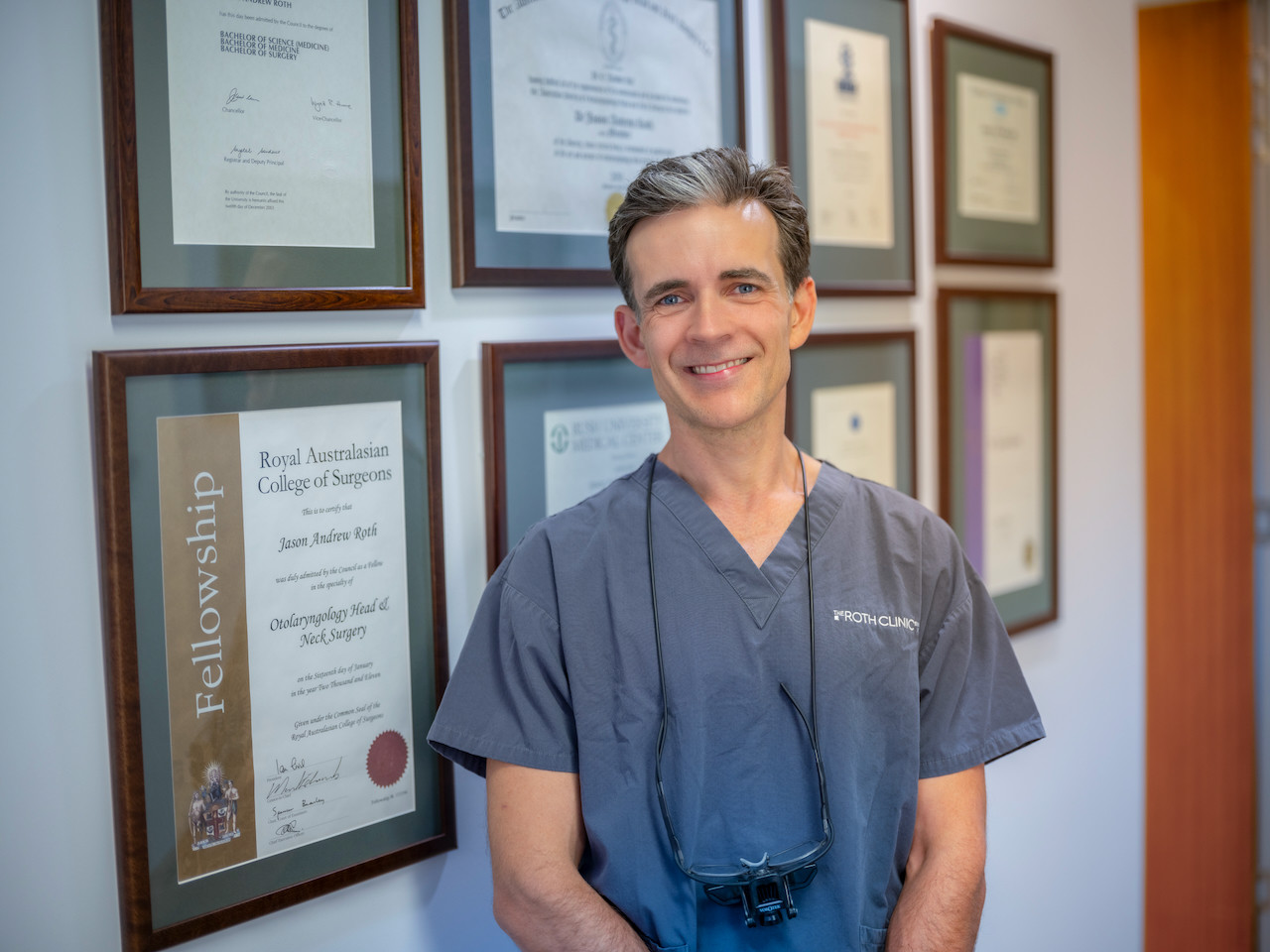
Specialist Otolaryngologist & Head and Neck Surgeon
Specialist registration — Otorhinolaryngology, Head & Neck Surgery
View full profile
