Why Choose Dr Roth
All cosmetic surgery involves risks and individual results vary. Cosmetic surgery is a serious decision. Decisions about whether to proceed should be made after careful consideration and following at least two consultations with a qualified medical practitioner.
Patients considering facial surgery — facelift, rhinoplasty, blepharoplasty, brow lift, or neck lift — are often uncertain how to evaluate surgeons. The marketing in this field tends to be loud and the qualifications confusing. This page sets out the information that actually matters: training, technique, volume, and scope of practice. Read it, ask questions at consultation, and if you want a second opinion, get one. That is not something Dr Roth will ever discourage.
His practice is deliberately focused. He operates exclusively on the nose, face, neck, and ears. That is not a marketing statement — it is a structural fact about how the practice is organised, and it is the reason the procedural volumes are what they are. High volume in a narrow scope is how surgical expertise develops and is maintained. Patients who have consulted broadly before coming to see Dr Roth sometimes remark that the level of anatomical detail and procedural specificity at consultation is different from what they have encountered elsewhere. That is what a focused practice looks like in practice.
Training & Qualifications
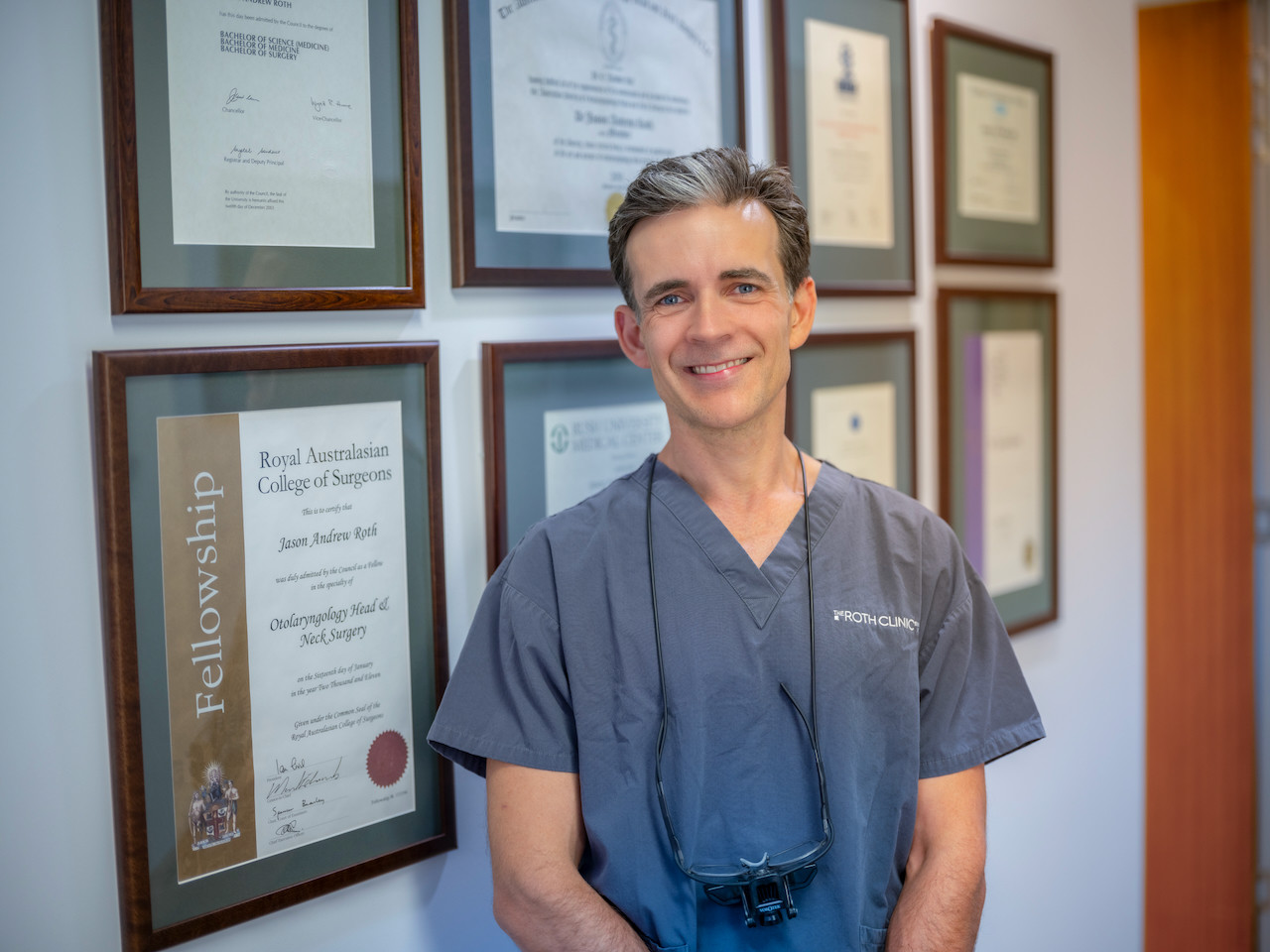
Dr Roth’s surgical training spans Australia, the United States, and Europe — covering both the breadth of specialist ENT surgery and the depth of subspecialty facial plastic surgery and rhinology.
Why an ENT Surgeon for Facial Plastic Surgery?
In Australia, facial plastic surgery is performed by surgeons from two specialist training backgrounds — Otolaryngology Head and Neck Surgery (ENT) and Plastic Surgery. Both pathways can produce highly skilled facial surgeons, and the distinction is not one of superiority but of emphasis. Understanding the difference is worth knowing about.
Otolaryngology training is structured around the head and neck from the outset. The anatomy of the face, nose, sinuses, ears, larynx, and neck — including the facial nerve, the nasal airway, the deep facial spaces, and the relevant vascular and lymphatic anatomy — is the core of specialist training, not a later addition to it. A Specialist Otolaryngologist who then completes fellowship training in facial plastic surgery arrives at that subspecialty with a depth of head and neck anatomical knowledge that is built into the training pathway rather than accumulated during fellowship alone.
For rhinoplasty in particular, the ENT background provides a specific clinical advantage: the nose is both a functional organ and an aesthetic structure, and rhinoplasty that does not assess and protect the nasal airway — or that inadvertently worsens breathing — is an incomplete rhinoplasty. ENT specialist training includes the full management of nasal airway problems, and this functional understanding is integrated into rhinoplasty planning rather than being a secondary consideration.
Professor Richard Harvey — a colleague and one of Australia’s leading rhinologists — has written a detailed account of the role of Otolaryngologists as the primary providers of facial plastic surgery in Australia. It is worth reading for anyone navigating the question of surgeon background: Facial Plastic Surgeons Are Otolaryngologists →
Professional Memberships
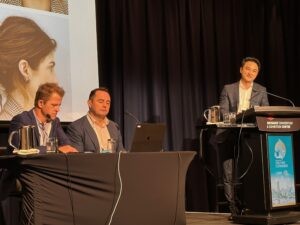
Dr Roth is a board member and treasurer of the Australasian Academy of Facial Plastic Surgery (AAFPS) — the professional body for facial plastic surgery within Australasia, which holds monthly clinical meetings and an annual international conference. Membership reflects active participation in the field rather than simply holding a credential.
His International Board Certification in Facial Plastic and Reconstructive Surgery (IBCFPRS) was awarded following submission of a surgical logbook, peer-reviewed audit of outcomes, and a formal international examination. It is verifiable through the IBCFPRS website.

Deep Plane Facelift & Neck Lift
Dr Roth performs the deep plane facelift as his primary facelift technique and is among a small group of Australian surgeons who have adopted this approach as their standard practice. He performs more than 50 face and neck lift procedures per year, providing experience across a wide range of presentations including primary, complex, and revision cases.
His facelift training includes a dedicated observership with Dr Neil Gordon in Connecticut — a surgeon with extensive experience in the deep plane technique — which directly informs his approach to facelift and neck lift surgery.
The neck is where many facelift consultations are inadequate. Most practices focus on skin laxity and platysmal banding. Dr Roth’s assessment goes further — evaluating subplatysmal fat at multiple levels, digastric muscle bulk (which in some patients sits low into the submental space and cannot be addressed with liposuction alone), and submandibular gland position, which descends with age and creates a mid-jaw fullness that no amount of skin tightening will resolve. Whether or not each of these needs addressing depends on individual anatomy — but not identifying them before surgery means the result will be limited by what was not assessed. These structures are discussed at every facelift and neck lift consultation.
Dr Roth also sees a number of patients for revision neck lift procedures — patients who have had surgery elsewhere and are unhappy with the result. These are among the most technically demanding cases in facial surgery, and the most common reason for an incomplete result is that the deep structures were not addressed in the first operation.
Learn more about deep plane facelift → | Neck lift surgery →
Brow Lift Surgery
Dr Roth performs a high volume of brow lift procedures annually, with experience across the full range of techniques. Rather than offering a single standardised approach, he selects the technique most appropriate for each patient’s anatomy and goals.
- Endoscopic brow lift — minimally invasive, small incisions within the hairline, shorter recovery. Preferred approach for most patients.
- Trichophytic (hairline) brow lift — allows forehead shortening without raising the hairline, with well-concealed scars. Suited to patients with a higher hairline.
- Lateral temporal and direct brow lift — for specific anatomical circumstances or revision cases.
The choice of technique is discussed in detail at consultation based on a thorough examination of brow position, forehead height, skin quality, and the patient’s specific concerns.
Learn more about brow lift surgery →
Rhinoplasty
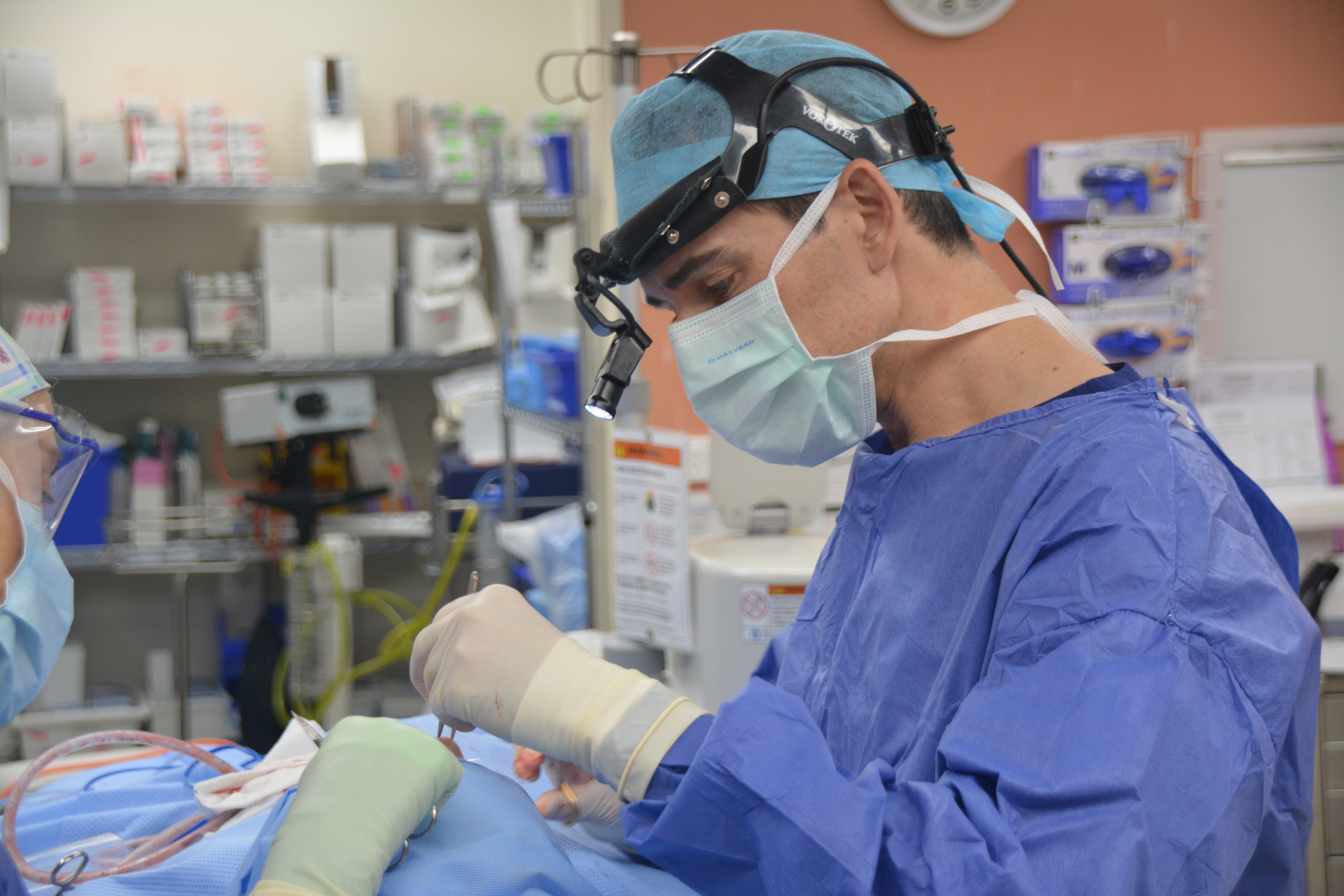
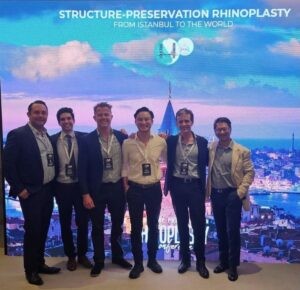
Rhinoplasty has been the procedure Dr Roth has invested the most time in — in formal training, in continuing education, and in the daily reality of a practice that performs more than 150 rhinoplasties a year. It is also the procedure that has changed the most over his career. The shift toward preservation rhinoplasty — working within the native anatomy rather than deconstructing and rebuilding it — has genuinely changed what is achievable and how patients recover. He attended the inaugural preservation rhinoplasty conference in Nice in 2019, at a point when most Australian surgeons had not yet encountered these techniques, and has been incorporating them since. The Istanbul conference in 2024 refined that understanding further. The point is not that preservation is always better — it is that the surgeon needs to have a genuine grasp of both approaches and the judgement to select appropriately for each patient’s anatomy. That is what the training and volume are actually for.
Dr Roth has training and experience in all major rhinoplasty approaches and selects the technique most suited to each patient’s anatomy and goals:
- Preservation rhinoplasty — reshapes the nose while preserving as much of the original anatomy as possible. Dr Roth attended the inaugural preservation rhinoplasty course in Nice (2019) and the Structure and Preservation Rhinoplasty Conference in Istanbul (2024). Where anatomy permits, this is now his preferred approach.
- Open structure rhinoplasty — provides maximum surgical access for complex tip work, significant structural reconstruction, and revision cases.
- Functional rhinoplasty — addressing breathing problems, nasal valve collapse, deviated septum, and other functional concerns, with or without cosmetic changes.
- Revision rhinoplasty — Dr Roth sees a significant number of patients seeking revision after rhinoplasty performed elsewhere. Revision rhinoplasty is among the most technically demanding procedures in facial surgery and requires specialised expertise in cartilage grafting and soft tissue management.
Learn more about rhinoplasty → | Revision rhinoplasty →
What to Expect as a Patient
Consultations are typically 45 to 90 minutes. That is not padding — it is the time required to take a proper history, examine the relevant anatomy carefully, explain what can and cannot be achieved in your specific case, and have a real conversation about options rather than a rehearsed pitch. You should leave a first consultation with a clear understanding of what surgery involves, what the realistic outcome range is, and whether Dr Roth thinks you are an appropriate candidate. If he does not think surgery is right for you, he will say so.
Two consultations are required before any cosmetic procedure proceeds — this is not a bureaucratic requirement, it is how Dr Roth practises. The first consultation establishes the plan. The second confirms it, gives you time to have thought about what was discussed, and allows any remaining questions to be answered before consent is finalised. There is no pressure at either appointment. A deposit is not taken at consultation.
Dr Roth performs all surgery himself. He is not a name above a door with associates performing procedures in his practice — every patient he consults, he operates on. Post-operative follow-up is similarly personal. He is directly accessible to his patients during recovery.
On risks and realistic outcomes: Dr Roth’s approach is to tell patients what surgery cannot do as clearly as what it can. He will not oversell a result, and he will not proceed with surgery on a patient whose expectations he believes cannot be met. That conversation occasionally disappoints people at consultation. It prevents far worse disappointment later.
Dr Roth’s Clinical Perspective
Patients sometimes ask me what makes my practice different from others they have consulted. I try to answer it plainly. The honest answer is volume and scope — doing a large number of a narrow range of procedures is how surgical judgement develops, and there is no substitute for it. A surgeon who does fifty rhinoplasties a year for twenty years has encountered a range of anatomical variation, healed a range of outcomes, and revised a range of problems that a lower-volume surgeon simply has not. That experience changes how you assess a new patient, how you plan, and what you tell people about what to expect.
What I try to do at consultation is give people a genuinely useful assessment — not one designed to convert them to surgery, but one that tells them clearly whether surgery is appropriate, what it can and cannot achieve in their specific anatomy, and what the risks are in their case. Not everyone I see is an appropriate candidate. I would rather tell someone that clearly at consultation than proceed with surgery I do not think will serve them well.
The second consultation requirement is not a formality. A patient who has had time to think about what was discussed at the first appointment asks better questions. And a surgeon who sees a patient twice before operating is in a better position to be confident about what they are doing and why.
— Dr Jason Roth, MBBS, FRACS (ORL-HNS), IBCFPRS
Frequently Asked Questions
Common questions from patients considering surgery with Dr Jason Roth.
In Australia, cosmetic and reconstructive surgery of the face is performed by surgeons holding Fellowship of the Royal Australasian College of Surgeons (FRACS) — either in Plastic Surgery or Otolaryngology Head and Neck Surgery. You should verify that your surgeon holds FRACS in a relevant specialty, has completed dedicated subspecialty fellowship training in the specific procedures they perform, is currently registered with AHPRA with no conditions on their registration, and performs adequate volume in the procedures you are considering.
Be cautious of practitioners who hold only cosmetic medicine or cosmetic surgery credentials without FRACS, or whose training does not include dedicated facial plastic surgery fellowship experience.
Both Otolaryngology Head and Neck Surgeons (ENT surgeons) and Plastic Surgeons may perform facial plastic surgery, and both pathways can produce highly skilled facial surgeons. The specific advantage of an ENT background for rhinoplasty is the depth of training in nasal anatomy, function, and the management of both the functional and cosmetic aspects of nasal surgery together. Dr Roth’s training encompasses both rhinology (nose and sinus surgery) and facial plastic surgery through dedicated overseas fellowships — a combination that is particularly well suited to rhinoplasty and facial procedures requiring an understanding of nasal function.
Dr Roth’s AHPRA registration (MED0001185485) can be verified at any time through the AHPRA online register. His FRACS fellowship can be verified through the Royal Australasian College of Surgeons. His International Board Certification in Facial Plastic and Reconstructive Surgery certificate is available to view here.
A GP referral is not strictly required for a cosmetic surgery consultation but is recommended. For functional procedures — septoplasty, sinus surgery, turbinate reduction, and other procedures that attract Medicare rebates — a GP referral allows Medicare to contribute to the specialist consultation fee. Without a referral, the full consultation fee applies with no Medicare rebate.
The first consultation is typically 45–90 minutes. Dr Roth will listen to your concerns, examine your face and the relevant anatomy in detail, discuss what is and is not achievable with surgery, and give you a frank assessment of whether you are a suitable candidate. Photographs are taken. Computer imaging may be performed for rhinoplasty consultations. There is no obligation to proceed and no pressure to make a decision at the first appointment.
Dr Roth consults from Dee Why on Sydney’s Northern Beaches — Suite 4205, 834 Pittwater Road, Level 2, Dee Why Grand Commercial Building. He operates at North Shore Private Hospital, Castlecrag Private Hospital, Pittwater Day Surgery, and Wyvern Private Hospital.
Yes. Dr Roth performs all surgery personally and is involved in every patient’s care from first consultation through post-operative follow-up. He does not use surgical assistants or delegate operative steps to trainees or other surgeons.
To arrange a consultation with Dr Roth, please contact the practice. Further information about Dr Roth’s training and background is available on the About Me page.
Neck Lift Surgery
Rhinoplasty
Revision Rhinoplasty
Brow Lift
Blepharoplasty
Before & After Gallery
About Dr Roth
Specialist Otolaryngologist & Head and Neck Surgeon
Specialist registration — Otorhinolaryngology, Head & Neck Surgery
View full profile
