Is Rhinoplasty for Me?
All cosmetic surgery involves risks and individual results vary. Cosmetic surgery is a serious decision. Decisions about whether to proceed should be made after careful consideration and following at least two consultations with a qualified medical practitioner.
Deciding whether rhinoplasty is the right choice for you is a question that cannot be answered from a website alone. It requires a thorough clinical assessment of your nasal anatomy, a detailed discussion of your concerns and goals, an honest account of what surgery can and cannot achieve in your specific case, and sufficient time to reflect on all of this before committing to a decision. What this page can offer is a framework for thinking through the question — the factors that determine suitability, the questions worth asking yourself and your surgeon, and what to expect from the consultation process.
Cosmetic surgery is a serious decision. Read the full rhinoplasty risks page →
General Health Considerations
Rhinoplasty is performed under general anaesthesia and requires a period of recovery during which the body is directing its resources toward healing. Good general health is therefore an important foundation for any elective surgical procedure. The specific health factors assessed at consultation include:
Age and Timing
Rhinoplasty is generally not performed until the face has reached skeletal maturity — typically around sixteen years of age in females and seventeen to eighteen in males, though this varies between individuals. The reason for this is that the nose must be planned in relation to the adult face: a nose that looks proportionate at fifteen may not look proportionate when the rest of the face has reached its full dimensions. The nasal septum also contains growth centres that are best left undisturbed until facial growth is complete.
There are exceptions — functional rhinoplasty for airway reasons can sometimes be appropriate at younger ages, and some specific anatomical situations may warrant earlier intervention — but these are individual clinical decisions made on a case-by-case basis, not the norm.
There is no upper age limit for rhinoplasty, provided that general health and anaesthetic fitness are adequate. Older patients may have thinner, less elastic skin that is less forgiving of the rhinoplasty process and that requires specific consideration in surgical planning.
Anatomical Suitability
Whether rhinoplasty is technically appropriate for your specific concerns depends on your anatomy. Several anatomical factors significantly influence what surgery can achieve:
Skin Thickness
Skin thickness is one of the most important determinants of rhinoplasty outcome. Very thin skin is unforgiving — every minor irregularity or asymmetry in the underlying framework will be visible through it, and fine details can show through in ways that can be aesthetically undesirable. Very thick skin limits how much definition can be created — the cartilage framework may be precisely sculpted beneath it, but the thick skin above will conceal the changes and take many months (sometimes two years or more) to re-drape and reveal the underlying shape. Neither extreme prevents rhinoplasty, but both require specific planning and specific expectations.
Cartilage Characteristics
The lower lateral cartilages that form the nasal tip vary considerably between individuals in their thickness, stiffness, and curvature. Very thin or weak cartilages provide limited material for suture reshaping and may require structural support through grafting. Very stiff cartilages resist suture modification and may require different techniques. The quantity and quality of septal cartilage available for grafting is also assessed.
Hyoid Position and Nasolabial Angle
The position of the hyoid bone and the nasolabial angle (the angle between the nose and upper lip in profile view) set the anatomical limits of what tip rotation and projection rhinoplasty can achieve. Some features of nasal profile — particularly the depth of the nasolabial angle — are more influenced by the underlying skeletal anatomy than by the nasal cartilage, and cannot be fully addressed through rhinoplasty alone.
Chin Relationship
The nose and chin are the two most prominent midline projections of the face in profile, and their proportions are closely related. A recessed chin can make the nose appear more prominent than it would if the chin were better positioned. In some patients, chin augmentation alongside rhinoplasty produces a more balanced facial profile than rhinoplasty alone. This is discussed at consultation where relevant.
Psychological Readiness
Beyond the physical factors, psychological readiness is an important dimension of suitability for rhinoplasty. The following questions are worth reflecting on honestly before your consultation:
- How long have you had this concern? Long-standing concerns that have been present since adolescence and are clearly articulated are generally more likely to reflect a genuine and stable motivation than concerns of more recent onset.
- Are your expectations realistic? The goal of rhinoplasty is a nose that is proportionate and natural for your individual face — not a specific nose you have seen on someone else. Understanding the limitations of what surgery can achieve for your anatomy is essential.
- How much of your daily mental bandwidth does this concern occupy? Where concern about the nose is significantly interfering with daily functioning, causing avoidance of social situations or activities, or feeling disproportionate in intensity, it may be worth speaking with a GP or psychologist in addition to seeking a surgical assessment. Body dysmorphic disorder — a condition in which a perceived flaw in appearance causes disproportionate distress and is often not apparent to others — is more prevalent in people seeking rhinoplasty than in the general population. Surgery is not always the appropriate treatment.
- Are you going through a period of significant personal stress or life change? Surgery undertaken during major life disruption tends to produce less satisfying subjective outcomes, because the emotional context shapes how the result is perceived and integrated.
- Are you making this decision for yourself? The motivation for rhinoplasty should be your own — not the expectations of a partner, family member, or social circle. External pressure is a recognised risk factor for post-operative dissatisfaction.
Computer Imaging at Consultation
Dr Roth uses computer imaging at consultation to help communicate the proposed surgical plan. Photographs taken at the first consultation are digitally modified to illustrate what a planned procedure might look like in broad terms. This is a communication tool — it helps ensure that the patient and surgeon share a common understanding of the goals, and allows any discrepancy in their respective ideas about what is desirable to be identified before surgery.
Computer imaging is not a prediction of outcome and is not a guarantee of any specific result. The final appearance of the nose after rhinoplasty is determined by the anatomy, the healing response, and the behaviour of the skin over the reshaped framework — factors that cannot be fully replicated by digital modification. Patients who approach imaging as a starting point for discussion, rather than as a promise of what they will look like, tend to have the most realistic and productive consultations.
Am I a Candidate for Rhinoplasty? → | Planning a Rhinoplasty → | Rhinoplasty Surgery Overview → | Rhinoplasty Risks → | Arrange a Consultation →
Dr Roth’s Clinical Perspective
The consultation process for rhinoplasty is specifically designed to answer whether surgery is right for the individual patient — not to assume that it is and proceed from there. I see patients who are clear candidates, patients who are borderline candidates, and patients who are not appropriate candidates at all. In all three groups, my job is to be honest rather than to convert anyone to surgery. The patients I decline to operate on — because their expectations cannot be met, because their anatomy does not support the change they want, or because their motivations give me concern — are not failed consultations. They are the consultation process working as it should.
— Dr Jason Roth, MBBS, FRACS (ORL-HNS), IBCFPRS
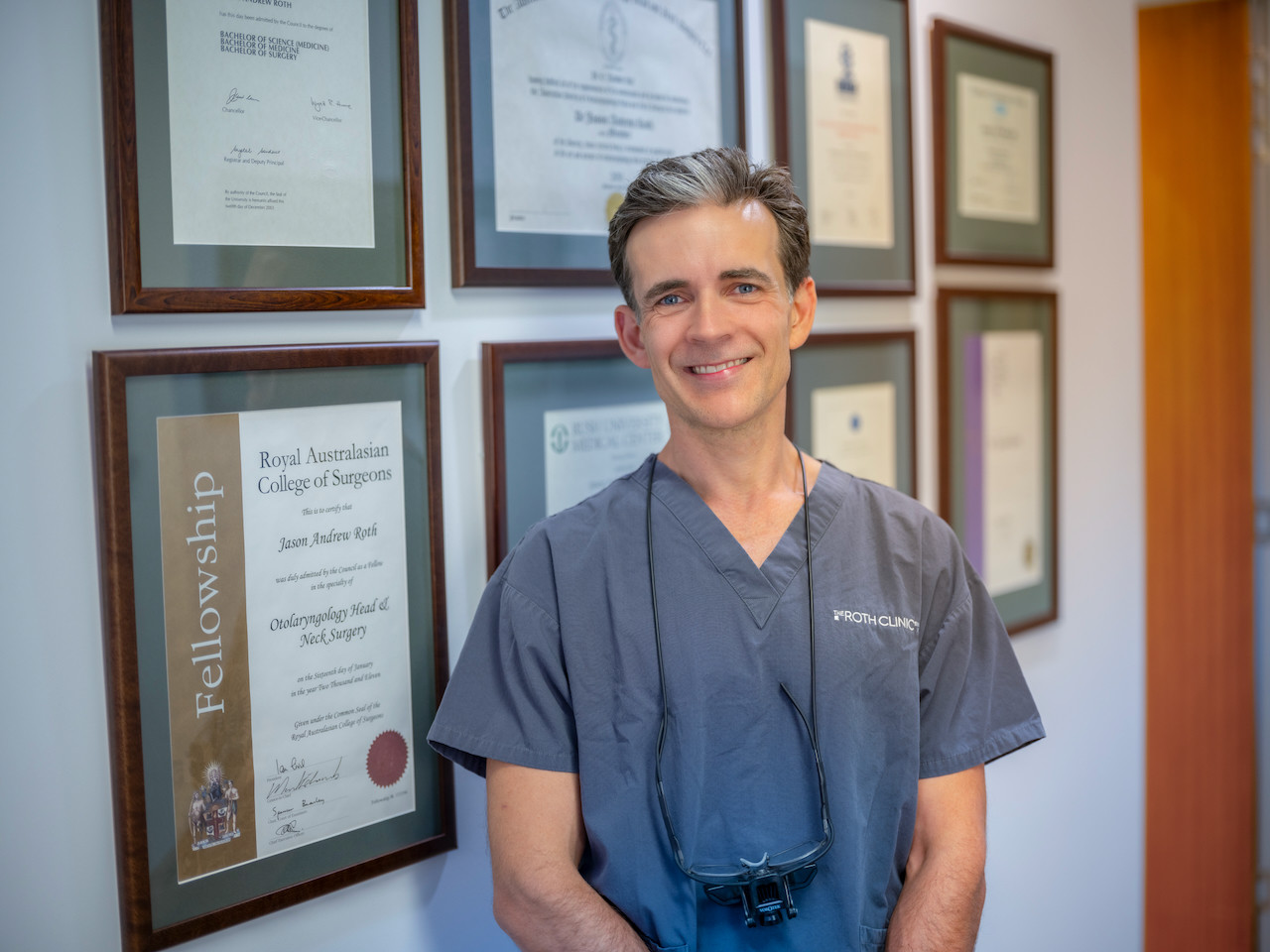
Specialist Otolaryngologist & Head and Neck Surgeon
Specialist registration — Otorhinolaryngology, Head & Neck Surgery
View full profile
