Facelift Surgery in Sydney
All cosmetic surgery involves risks and individual results vary. Cosmetic surgery is a serious decision. Decisions about whether to proceed should be made after careful consideration and following at least two consultations with a qualified medical practitioner.
Facelift surgery addresses the structural changes of facial ageing — descended soft tissues, jowling along the jawline, laxity of the neck, and loss of facial definition that occurs as the retaining ligaments weaken and the deeper layers of the face descend with time. The techniques available vary considerably in depth, durability, and scope. The outcome depends on appropriate technique selection, the surgeon’s training within that technique, and whether the assessment at consultation identified the right approach for the individual anatomy.
Dr Roth performs the deep plane facelift as his primary technique. This page provides an overview of the main facelift approaches offered at the practice, a brief account of what surgery addresses, and answers to the questions patients most commonly bring to consultation.
Cosmetic surgery is a serious decision — read the full facelift and neck lift risks page →
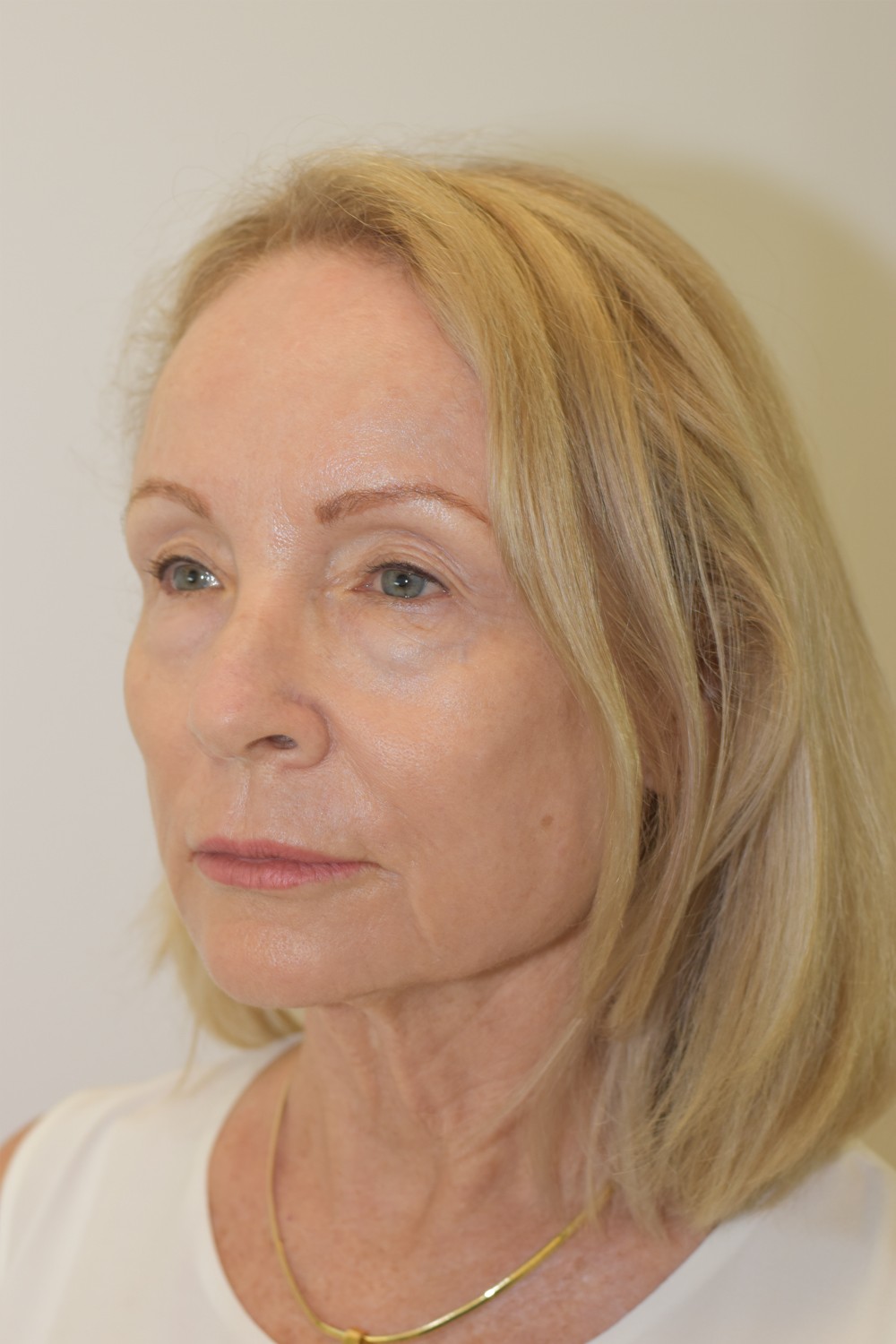
All surgery performed by Dr Jason Roth (MED0001185485). Results vary from person to person. The outcomes shown are relevant only to the specific patient depicted.
BEFORE
AFTER
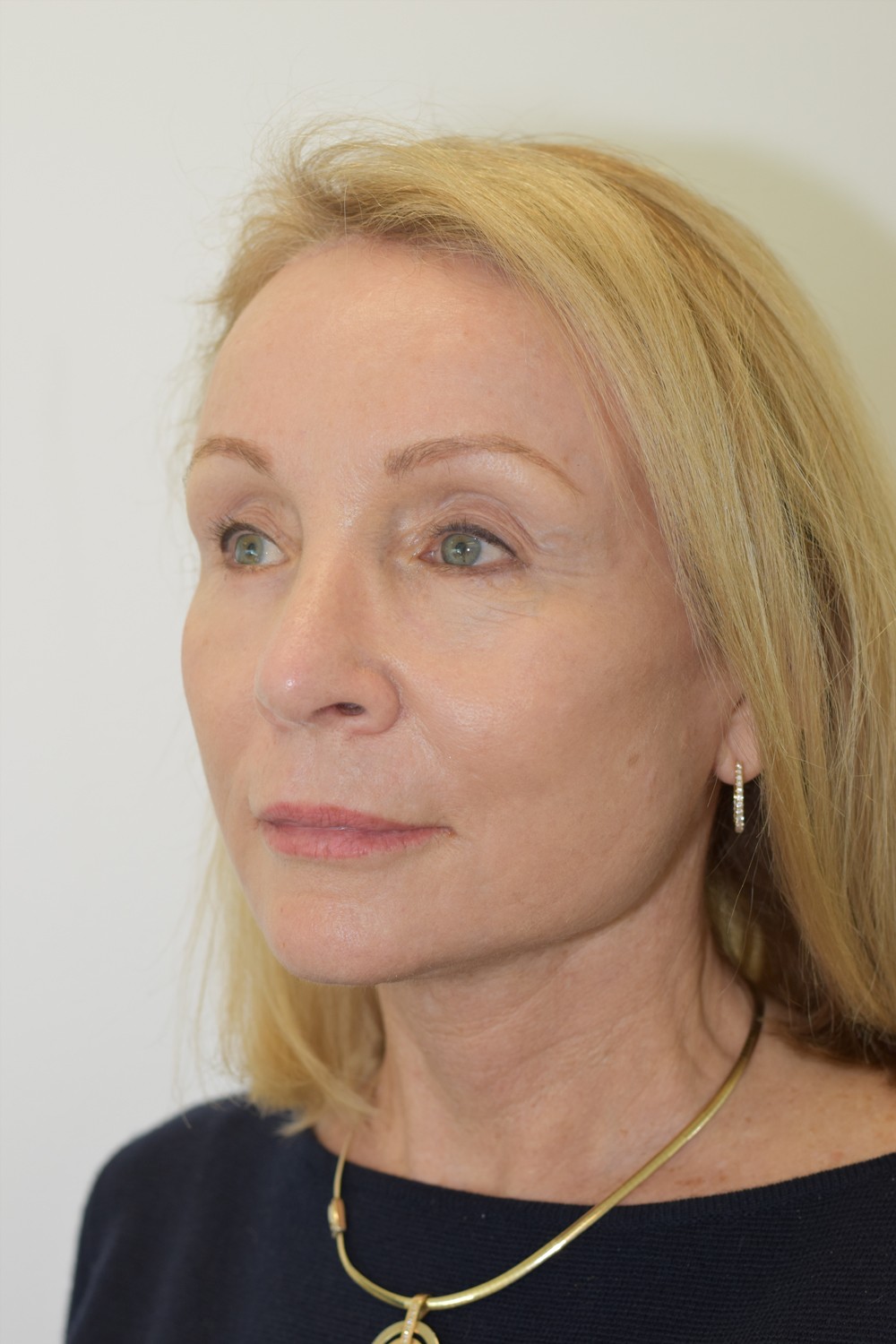
View this patient’s full gallery → — photographs at 6 months following deep plane facelift.
What Does Facelift Surgery Address?
Facelift surgery works at the level of the SMAS and the deeper retaining ligaments — the structures that anchor the facial soft tissues to underlying bone and that, as they weaken with age, allow the face to descend. Effective facelift techniques address these layers directly. Approaches that rely primarily on skin tension alone produce results that are less durable and more likely to look operated upon, because the underlying structural cause of the descent has not been addressed.
Facelift surgery is well-suited to jowling along the jawline, laxity of the neck and platysma, descent of the midface soft tissues, and deepening of the nasolabial folds. It does not address skin quality, pigmentation, fine lines, or periorbital changes — these require separate assessment and treatment.
Types of Facelift
Dr Roth’s Clinical Perspective
The question I am asked most frequently at facelift consultations is whether a mini facelift or a less invasive option would be suitable. My honest answer is that this depends entirely on what the anatomy shows — and that a significant proportion of patients who come in hoping for a mini facelift, once examined properly, have changes that a mini facelift will not meaningfully address. Telling a patient this at consultation is more useful to them than agreeing to a procedure that will disappoint.
On technique: I perform the deep plane as my primary approach because it is the technique I have trained most extensively in and believe addresses the full picture of facial descent in the majority of patients I see. That said, the technique is not the only variable. A surgeon’s volume and experience within their chosen approach matters considerably. I would rather a patient see a high-volume SMAS surgeon than a low-volume deep plane surgeon.
I also want to be direct about what facelift surgery does not do. It does not change skin quality, remove pigmentation, or address the periorbital area — those require separate treatment. And it does not stop the ageing process. The improvement is real and in my experience it holds well, but the face continues to age from whatever baseline surgery establishes. Managing this expectation clearly before surgery is part of every consultation.
— Dr Jason Roth, MBBS, FRACS (ORL-HNS)
Recovery
Recovery from facelift surgery proceeds over several months, though most patients are socially presentable within two to three weeks. The overnight hospital stay is followed by a period of bruising and swelling — most prominent in the first two to three days — that resolves progressively. Sutures are removed at approximately one week. By two to three weeks most patients are comfortable in public settings. Strenuous exercise and heavy lifting are avoided for two weeks. Scars fade from pink to fine pale lines over six to twelve months.
The final result is not fully apparent until twelve months, when the last of the residual swelling has resolved and the scars have matured. Individual recovery timelines vary considerably depending on the technique used, the extent of the procedure, and individual healing capacity.
About Dr Jason Roth, MBBS, FRACS
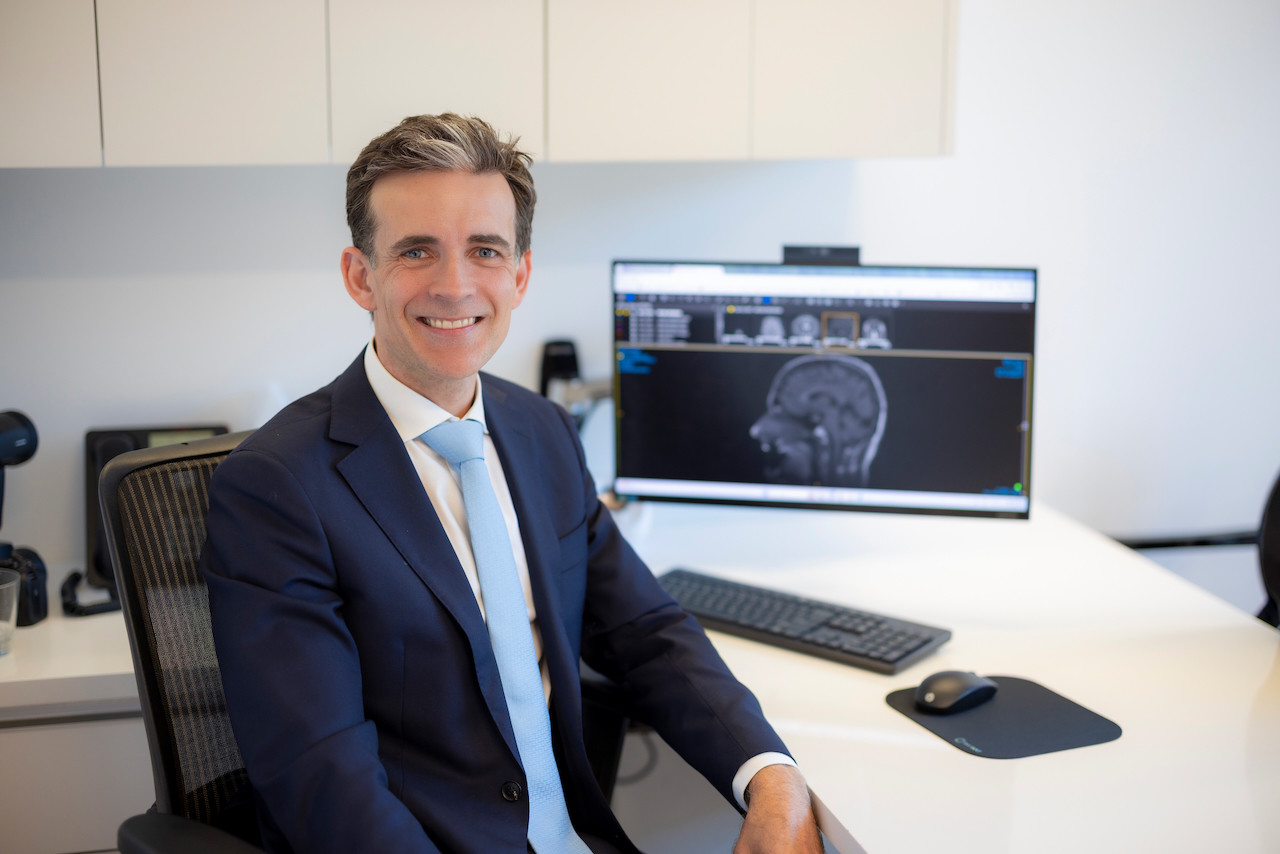
Dr Jason Roth is a Sydney-based Specialist Otolaryngologist and Head & Neck Surgeon with fellowship training in rhinology and facial plastic surgery from Australia, the United States, and Europe.
He consults from his clinic in Dee Why and operates at several accredited private hospitals across Sydney. He performs more than 50 face and neck lift procedures per year. View his full profile →
Frequently Asked Questions
Common questions about facelift surgery answered by Dr Jason Roth, Specialist Otolaryngologist and Head and Neck Surgeon, Sydney.
The term “facelift” covers a range of techniques that vary in anatomical depth. A conventional SMAS facelift tightens the SMAS layer beneath the skin but typically does not release the retaining ligaments — the fibrous anchors that tether the descended facial tissues to underlying bone. The tissues are therefore repositioned by tension rather than by true anatomical mobilisation.
A deep plane facelift works beneath the SMAS, releasing these ligaments and allowing the facial tissues to be repositioned as a composite unit without relying on skin tension to hold the result. Dr Roth performs the deep plane as his primary technique. Read more about deep plane facelift →
Facelift surgery is suited to patients with visible laxity of the lower face, jowling, and descent of the soft tissues of the cheek and neck. General health, non-smoking status, and realistic expectations are all important. Anatomy rather than age is the primary consideration — some patients in their forties are well-suited to facelift surgery, while patients in their sixties may have complicating factors that require individual assessment. Suitability is assessed at consultation.
The operated appearance associated with older facelift techniques results from excessive skin tension — pulling the skin backward and laterally rather than repositioning the underlying structures. The deep plane approach achieves the lift by moving deep tissue with a vertical vector, allowing the skin to be closed without significant tension. The result should look natural — most patients find that people notice they look well, rested, or refreshed, rather than recognising that they have had surgery. Individual results vary and outcomes cannot be guaranteed.
Most patients are socially presentable within two to three weeks. A detailed timeline:
- Day 1: Overnight hospital stay. Drain removed the following morning.
- Days 2–5: Bruising and swelling peak. Rest at home with head elevated.
- Days 7–10: Sutures removed. Bruising beginning to resolve.
- Weeks 2–4: Return to work and most normal activities. Strenuous exercise avoided.
- Months 1–3: Swelling continuing to resolve. Result refining.
- 6–12 months: Final result apparent. Scars matured.
Facelift surgery does not halt ageing — the face continues to change after surgery. What it does is address the structural descent that has already occurred, establishing an improved baseline from which the face continues to age. The improvement is maintained over time: a patient looks better at any given age than they would have without surgery. Individual longevity depends on genetics, skin quality, sun exposure, and lifestyle. These matters are discussed at consultation.
Yes — facelift is frequently combined with neck lift, blepharoplasty (eyelid surgery), brow lift, lip lift, and fat transfer in the same anaesthetic. Combining procedures reduces the total number of anaesthetics and recovery periods and allows complementary changes to be made together. The appropriate combination for your anatomy and goals is discussed at consultation.
Facelift incisions are placed in the natural creases in front of and behind the ear, within the hairline, and in the natural fold behind the ear. Careful incision placement and closure under minimal tension — which the deep plane technique facilitates — results in scars that are not visible in normal social settings at twelve months. All surgery leaves a scar; the goal is for it to be inconspicuous. Individual healing varies and is discussed at consultation.
Related Procedures
Facelift surgery is frequently performed alongside or compared with the procedures below. The most appropriate combination depends on individual anatomy and goals and is assessed at consultation.
Mini Facelift →
Revision Facelift →
Facelift After Weight Loss →
Neck Lift →
Deep Neck Lift →
Blepharoplasty →
Brow Lift →
Risks of Facelift Surgery →
Facelift Before & After Gallery
All surgery performed by Dr Jason Roth (MED0001185485), Specialist Otolaryngologist & Head and Neck Surgeon, Sydney. Results vary from person to person. The outcomes shown are relevant only to the specific patient depicted and do not necessarily reflect the results other patients may experience. Cosmetic surgery is a serious decision.
BEFORE
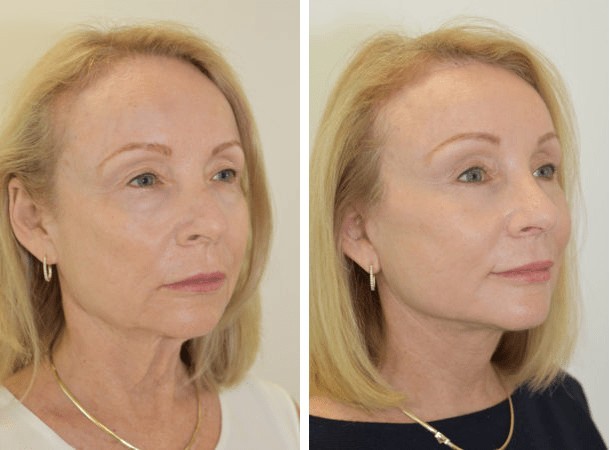
AFTER
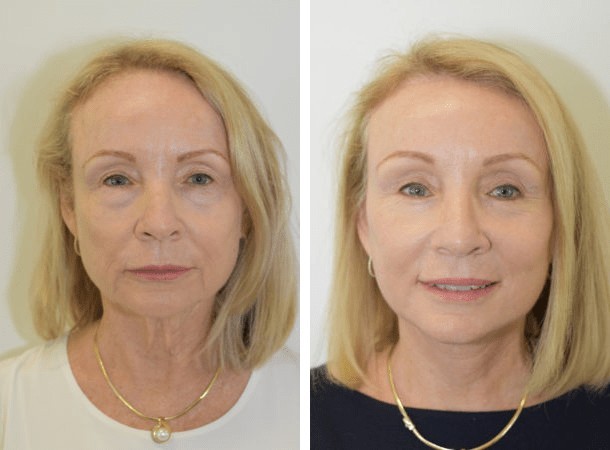
View full gallery → — Facelift, blepharoplasty, neck lift, brow lift. Results vary from person to person.
BEFORE
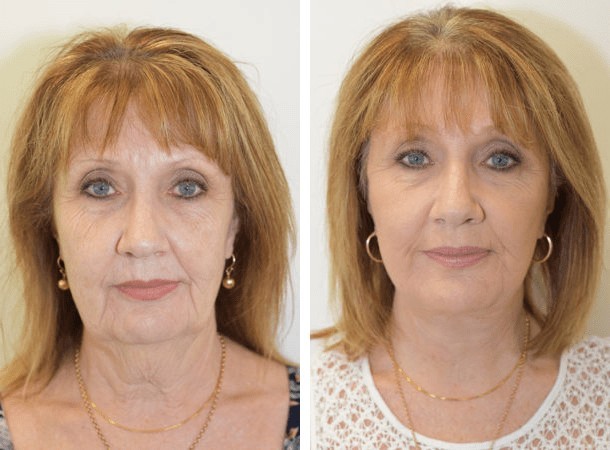
AFTER
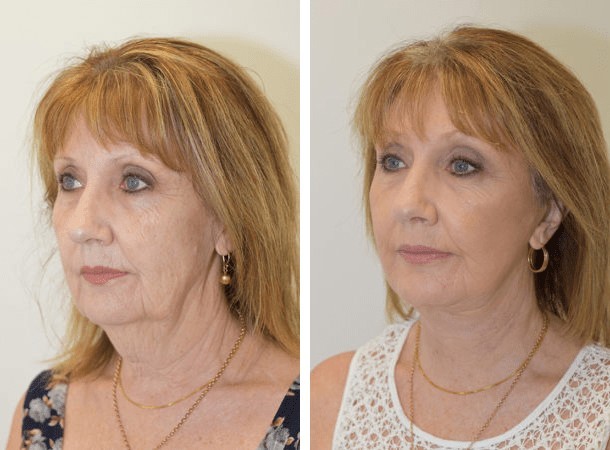
View full gallery → — Facelift, neck lift, brow lift. Results vary from person to person.
BEFORE
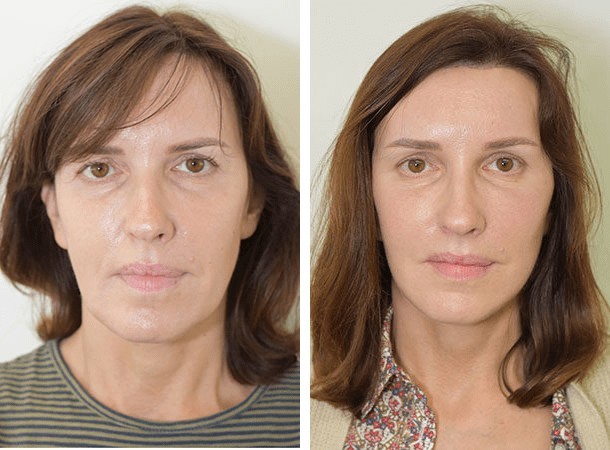
AFTER
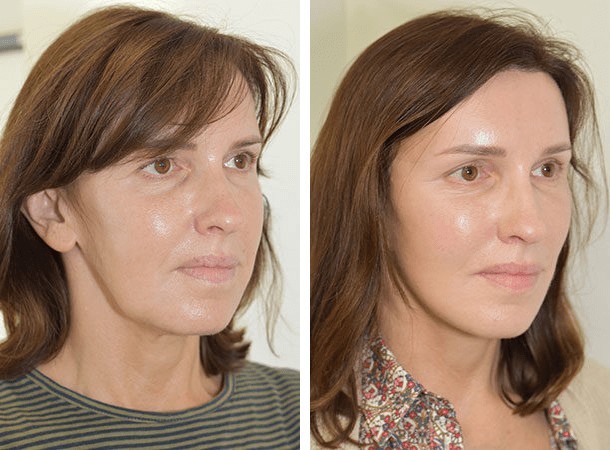
View full gallery → — Facelift, neck lift, brow lift. Results vary from person to person.
View Full Patient Photo Gallery →
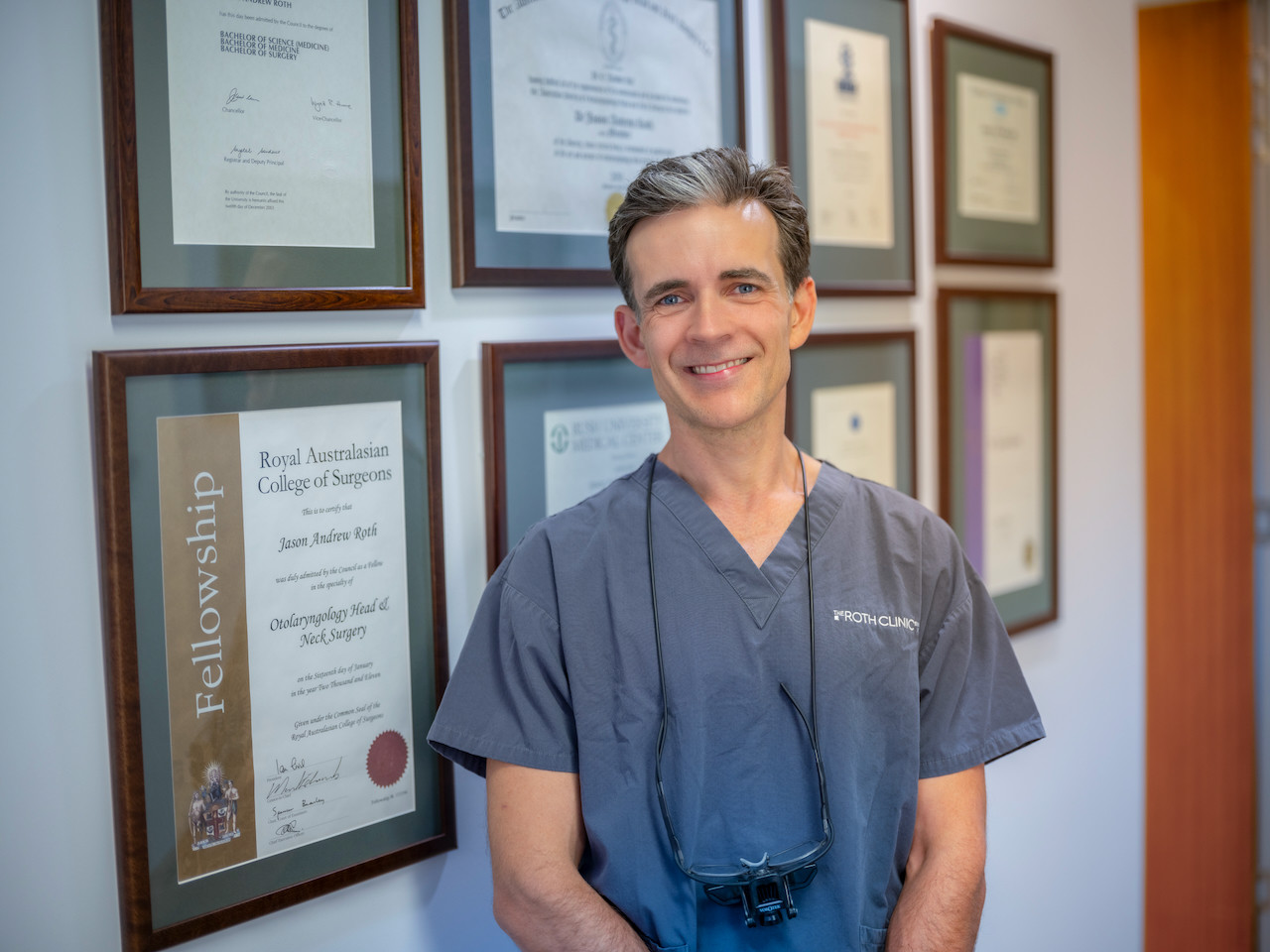
Specialist Otolaryngologist & Head and Neck Surgeon
Specialist registration — Otorhinolaryngology, Head & Neck Surgery
View full profile
