SMAS Facelift Surgery in Sydney
All cosmetic surgery involves risks and individual results vary. Cosmetic surgery is a serious decision. Decisions about whether to proceed should be made after careful consideration and following at least two consultations with a qualified medical practitioner.
Facelift surgery encompasses a range of surgical techniques that address the signs of ageing in the face and neck. Understanding the differences between these techniques can help patients have informed conversations with Dr Roth during their consultation. Outcomes vary between individuals and are influenced by age, skin quality, bone structure, the degree of tissue laxity present, healing response, and overall health.
Cosmetic surgery is a serious decision — read the full facelift and neck lift risks page →
What is the SMAS?
The SMAS — Superficial Musculo-Aponeurotic System — is a fibrous and muscular layer that sits beneath the skin and a thin layer of fat in the face and neck. It begins in the upper cheek and in front of the ear, extends downward enveloping the muscles of facial expression and the facial fat pads, and continues into the jawline and neck where it connects with the platysma muscle.
The SMAS plays an important role in supporting the position of the facial tissues. With age, the SMAS layer gradually loosens and descends, contributing to the visible changes of facial ageing — descent of the brow, deepening of the nasolabial folds, development of marionette lines, jowling along the jawline, and loose skin and platysmal banding in the neck.
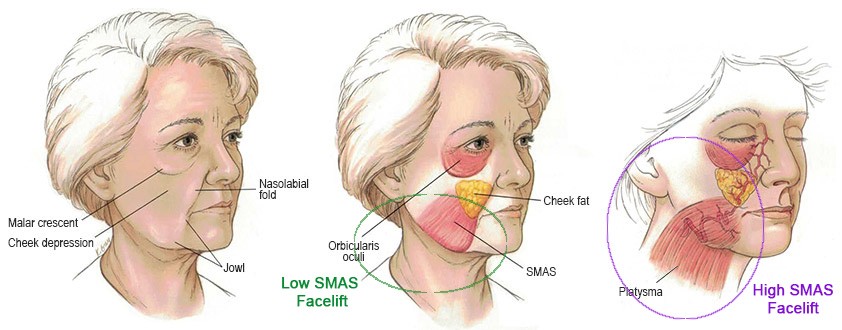
Facelift techniques that address the SMAS layer rather than relying on skin tension alone tend to produce results that appear more natural and more durable — because the underlying cause of the tissue descent is being addressed rather than simply the overlying skin.
Facelift Techniques — An Overview
There are a number of facelift techniques that address the SMAS layer to varying degrees. Understanding the differences assists patients in having an informed discussion with Dr Roth about which technique may be most appropriate for their individual circumstances.
Earlier facelift techniques addressed ageing primarily by lifting and tightening the skin without lifting the underlying SMAS. Because the skin alone was shortened and sutured under tension, these approaches could produce results that appeared tight or unnatural, with distortion of features such as the corners of the mouth. Results also tended not to be long lasting, as skin under tension re-stretches over time. SMAS-based techniques were developed specifically to address these limitations and are now the standard of care.
SMAS plication involves folding and suturing the SMAS layer to reposition it to a higher location, without removing any SMAS tissue. While technically straightforward, the sutures used to hold the SMAS in its repositioned position may loosen over time, leading to a gradual recurrence of the original concerns. Dr Roth generally does not recommend SMAS plication as his preferred approach, considering that other SMAS-based techniques tend to produce more durable results.
SMAS imbrication is a variation of the plication technique in which the SMAS is overlapped and sutured rather than simply folded. Like plication, this approach repositions the SMAS without removing tissue. The longevity and degree of improvement achievable varies between individuals.
The extended SMAS facelift involves more extensive mobilisation of the SMAS layer, allowing redundant tissue to be removed and the remaining SMAS flap to be repositioned. This approach primarily addresses the lower face and neck. Because a greater degree of tissue mobilisation is achieved, results tend to be more substantial and longer lasting than those achieved with plication or imbrication techniques.
The high SMAS facelift incorporates the extended SMAS approach but additionally addresses the cheeks and upper face, making it suitable for patients whose concerns extend beyond the lower face and neck. As with the extended SMAS technique, the degree of improvement and longevity of results varies between individuals.
The deep plane facelift addresses the SMAS by releasing and lifting it in close proximity to the areas of the face where the effects of ageing are most evident — including adjacent to the cheeks, the nasolabial folds, and the marionette lines. By working at a deeper level and releasing the retaining ligaments of the face, the deep plane technique achieves repositioning of the facial tissues that is both more comprehensive and more anatomically appropriate than techniques that address the SMAS at a more superficial level.
Because the deep plane approach lifts a combined skin and SMAS flap rather than a large separate skin flap, less tension is placed on the overlying skin, which contributes to more natural-looking results and may reduce bruising and swelling during recovery compared to some other techniques.
Dr Roth generally recommends the deep plane facelift as his preferred approach for suitable patients, as he considers it to offer natural and longer-lasting results compared to other SMAS-based techniques. Whether this approach is appropriate for your individual circumstances will be assessed and discussed during your consultation. Read more about the deep plane facelift →
Comparing the Techniques
| Technique | SMAS Handling | Durability | Best Suited To |
|---|---|---|---|
| Skin-only | Not addressed | Poor — skin re-stretches | No longer recommended |
| SMAS Plication | Folded and sutured | Moderate | Mild lower face laxity |
| Extended SMAS | Mobilised and excised | Good | Lower face and neck |
| High SMAS | Extended mobilisation into cheek | Good | Lower face, neck, and cheeks |
| Deep Plane ★ | Composite flap — skin and SMAS elevated together; retaining ligaments released | Excellent | Comprehensive facial rejuvenation — Dr Roth’s preferred technique |
The Importance of Addressing the SMAS
Facelift techniques that address the SMAS layer rather than relying on skin tension alone tend to produce results that appear more natural. When the skin is repositioned without lifting the underlying structures, results can appear tight or unnatural because skin under tension does not behave in the same way as properly supported facial tissue. SMAS-based techniques allow the skin to be repositioned with minimal tension, contributing to a more natural appearance and more durable outcome.
It is important to understand that no facelift technique permanently halts the ageing process. Facelift surgery addresses the current degree of tissue descent and laxity at the time of surgery, but ageing continues following surgery. The longevity of results varies between individuals and is influenced by age at the time of surgery, skin quality, lifestyle factors, and genetics.
Am I a Suitable Candidate?
Facelift surgery may be considered by patients who have developed visible laxity of the facial and neck tissues. Suitability is assessed on an individual basis and depends on a thorough clinical assessment of your facial anatomy, medical history, general health, and a detailed discussion of your concerns and expectations. Key considerations include:
- Visible lower facial laxity, jowling, or neck changes that concern you
- Good general health and fitness for general anaesthesia
- Non-smoking status — smokers are at significantly increased risk of wound healing complications
- Realistic expectations about what facelift surgery can and cannot achieve
- Willingness to commit to a minimum of two consultations and a proper recovery period
Facelift surgery is not the only option for addressing the visible signs of facial ageing, and Dr Roth will discuss all relevant options with you during your consultation before any decision is made.
Recovery
Frequently Asked Questions
Common questions about SMAS facelift techniques answered by Dr Jason Roth, Specialist Otolaryngologist and Head and Neck Surgeon, Sydney.
Dr Roth performs the deep plane facelift as his primary facelift technique. He has trained extensively in this approach — through formal fellowship training, surgical observerships with experienced deep plane surgeons, and ongoing cadaveric dissection courses. He considers the deep plane facelift to offer the most comprehensive anatomical correction and the most natural-looking, durable results for the majority of patients presenting for facelift surgery.
For patients whose concerns are limited to the lower face and neck without significant midface descent, a lower facelift (SMAS-based approach to the lower face) may also be discussed. The most appropriate approach is determined at consultation after a thorough assessment of your anatomy. Learn more about the deep plane facelift →
SMAS plication tightens the SMAS by folding and suturing it in place, without releasing the retaining ligaments that tether the facial tissues to the underlying bone. As a result, the lift is limited by those ligament tethers, and the sutures that hold the plication can loosen over time.
The deep plane facelift works beneath the SMAS, releasing the retaining ligaments — particularly the zygomatic and masseteric ligaments — before repositioning the SMAS and overlying skin as a single composite unit. This allows true anatomical repositioning of the descended tissues rather than simply tightening against the intact ligament tethers, producing a more complete correction and a more durable result.
Not exactly — “SMAS facelift” is a broad term covering several techniques that all address the SMAS layer, but they differ significantly in how the SMAS is handled and how deep the dissection goes. SMAS plication and imbrication work superficially to the SMAS. The extended and high SMAS approaches mobilise more of the SMAS. The deep plane facelift enters the plane beneath the SMAS entirely and releases the retaining ligaments — making it the most anatomically comprehensive of the SMAS-based approaches.
This depends significantly on the technique used. Skin-only results may last one to two years. SMAS plication results may last three to five years. Extended SMAS and deep plane results typically last ten years or longer in appropriate patients, because the lift is achieved through fibromuscular tissue that does not re-stretch the way skin does. Individual variation in ageing rate, genetics, sun exposure, and lifestyle all influence how the result evolves over time.
Most patients require at least two weeks away from work and normal social activities, though this varies depending on the extent of the procedure and individual healing capacity. Strenuous physical activity should be avoided for four to six weeks. The final result is not fully apparent until all swelling has resolved — which can take up to twelve months for some patients.
Facelift surgery is a cosmetic procedure and does not attract Medicare rebates. All associated costs — surgeon’s fee, anaesthetist’s fee, and hospital fee — are the patient’s responsibility. A full itemised quote will be provided at consultation.
Deep Plane Facelift → | Deep Plane vs SMAS → | Facelift Surgery → | Facelift Risks → | Before & After Gallery →
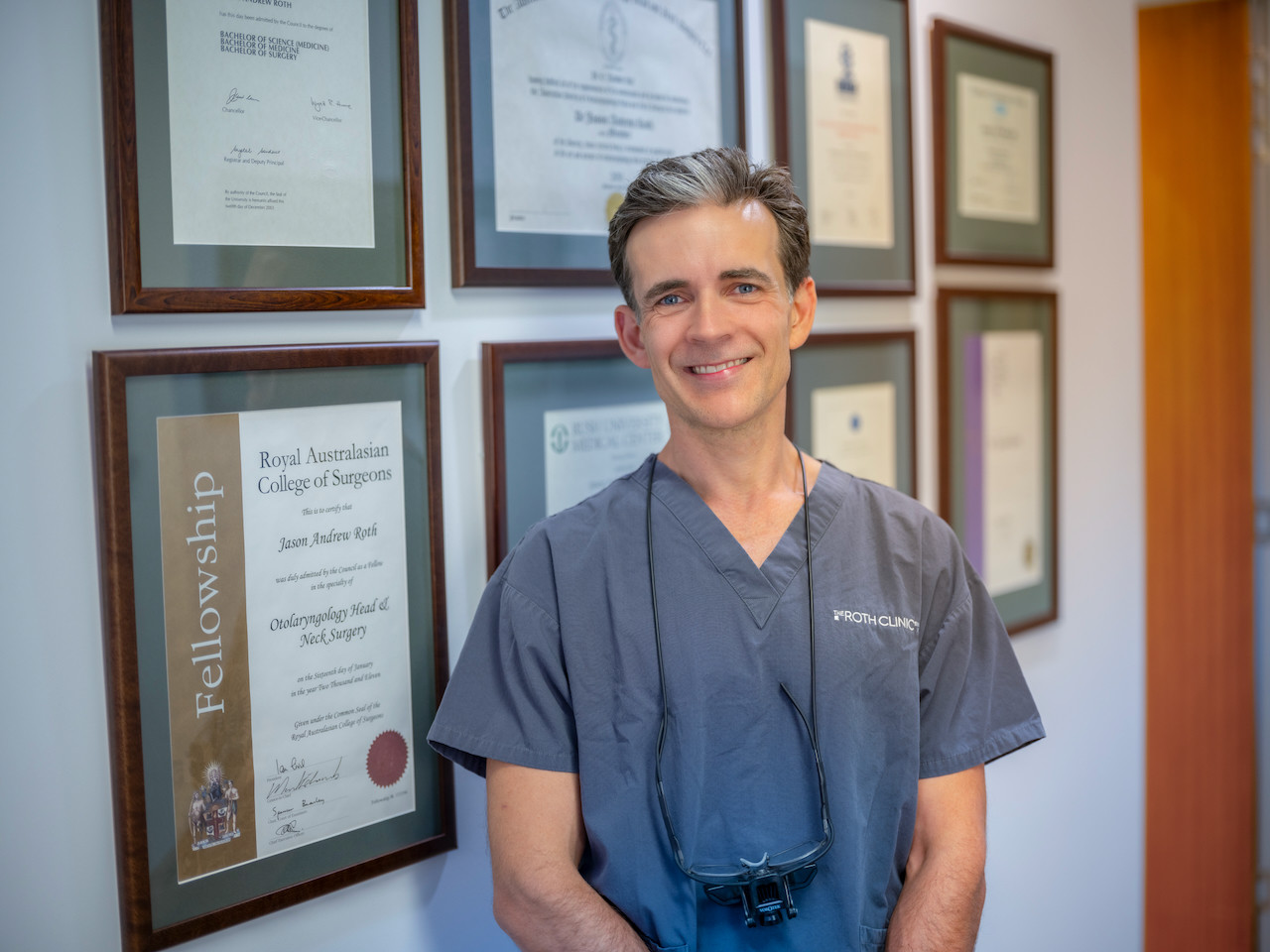
Specialist Otolaryngologist & Head and Neck Surgeon
Specialist registration — Otorhinolaryngology, Head & Neck Surgery
View full profile
