Anaesthetic FAQs
The following information about anaesthesia has been prepared by specialist anaesthetists Dr Paul Williams and Dr Andrea Santoro. It is intended as a general guide and does not replace a direct and individualised discussion with your treating anaesthetist, which will occur prior to your surgery.
What is Anaesthesia?
General anaesthesia (from the Greek “without sensation”) is a reversible state of controlled, temporary loss of sensation or awareness which cannot be interrupted by stimulation.
What is an Anaesthetist?
An anaesthetist is a specialist doctor trained in all aspects of anaesthesia who, after obtaining their medical degree, has spent at least two years working in the hospital system before completing a further five years of training in anaesthesia. Clinical anaesthesia is built on knowledge of physiology (how the body works) and pharmacology (how medications work in the body). Anaesthetists have an extensive knowledge of medicine and surgery and an understanding of the basic sciences. They know how the body responds to anaesthesia and surgery, and how a patient’s health affects these responses.
What Are the Risks Involved?
Australia has rigorous training, continual professional development, and continuing medical education requirements for anaesthetists, which contribute to a high standard of anaesthetic safety. A tailored discussion of risk associated with anaesthesia for your surgery will occur with your anaesthetist prior to the procedure. This is an opportunity to ask any additional questions you may have.
What if I Am Allergic to the Anaesthetic?
Allergy under anaesthesia is rare, occurring in approximately 1 in 5,000 to 1 in 10,000 anaesthetics. Most people who experience a severe allergic reaction or anaphylaxis under anaesthesia respond well to appropriate emergency treatment from the anaesthetic team.
Practical Considerations Before and During Surgery
Common Questions About Anaesthesia
Pre-medication with sedatives is not normally required with modern anaesthesia. If you feel you require a sedative or normally take these medications, inform your anaesthetist — sedatives may interact with anaesthetic medicines.
A mild cold usually has little impact on anaesthesia for a healthy person. If you are suffering from a significant illness — fever over 38°C and/or a lower chest infection — elective surgery may be postponed to minimise risks. Your safety is the most important consideration when this decision is made.
Children with minor coughs and colds can often proceed safely. Children with significant lower chest infections or high fevers may be at increased risk. If your child is unwell, inform the surgeon, anaesthetist, and/or hospital the day prior to surgery. Your anaesthetist will determine whether it is safe to proceed. The decision to postpone is made in the interest of your child’s safety and is not taken lightly.
Anaesthesia is commonly experienced as “lost time” — it is not the same as normal sleep. Some people report dreaming, most commonly during lighter periods of anaesthesia such as induction or emergence.
Awareness during anaesthesia is rare, occurring in approximately 1 in 1,000 patients overall (including high-risk patients). The rate in healthy elective surgery patients is much lower. Implicit awareness (a vague sense of something without specific memories) is more common than explicit awareness (remembering specific events). Your anaesthetist takes steps to minimise this risk.
Once anaesthetic agents are ceased, waking typically takes 10–30 minutes, depending on age, type and duration of anaesthesia, and overall health. It takes up to 24 hours for anaesthesia to be fully cleared from the body.
Nausea and vomiting after anaesthesia occurs in approximately 1 in 3 anaesthetics. Risk is influenced by the type of surgery, age, gender (higher in females and children), type of anaesthesia, and previous experience. Your anaesthetist assesses this risk and administers appropriate preventive medications as part of the anaesthetic plan.
A breathing tube is commonly placed during general anaesthesia. This can cause some throat irritation. Rates of sore throat range from 1 to 3 people in 10. It generally settles over one to two days.
You must not drive, operate machinery, sign documents, or make important decisions for at least 24 hours following anaesthesia. You must be discharged into the care of a responsible adult who can care for you on the first post-operative night.
Death as a direct cause of anaesthesia is very rare — estimated at 1 in 50,000 to 1 in 80,000 anaesthetics in Australia. To contextualise this, the rate of road-related deaths in Australia is approximately 1 in 10,000 to 1 in 15,000 per year.
Malignant hyperthermia (MH) is a rare life-threatening reaction triggered by specific anaesthetic medicines in genetically susceptible individuals. If someone in your family has had MH or been diagnosed as susceptible, you must inform your surgeon and anaesthetist when booking surgery so a “trigger-free” anaesthetic plan can be arranged in advance. When triggering agents are avoided, MH is not triggered and anaesthesia can proceed safely.
Rhinoplasty Anaesthesia → | Contact the Rooms →
Dr Roth’s Clinical Perspective
The anaesthetic FAQs on this page have been prepared by specialist anaesthetists rather than by me — anaesthesia is their domain and the information reflects their expertise. What I can add is a note about TIVA: for rhinoplasty specifically, I request total intravenous anaesthesia because it produces a significantly drier surgical field than inhalational agents, which improves precision and reduces operating time. This is not relevant to all surgical procedures, but for rhinoplasty it makes a material difference to the operating conditions and I discuss it at the pre-operative anaesthetic visit for every rhinoplasty patient.
— Dr Jason Roth, MBBS, FRACS (ORL-HNS), IBCFPRS
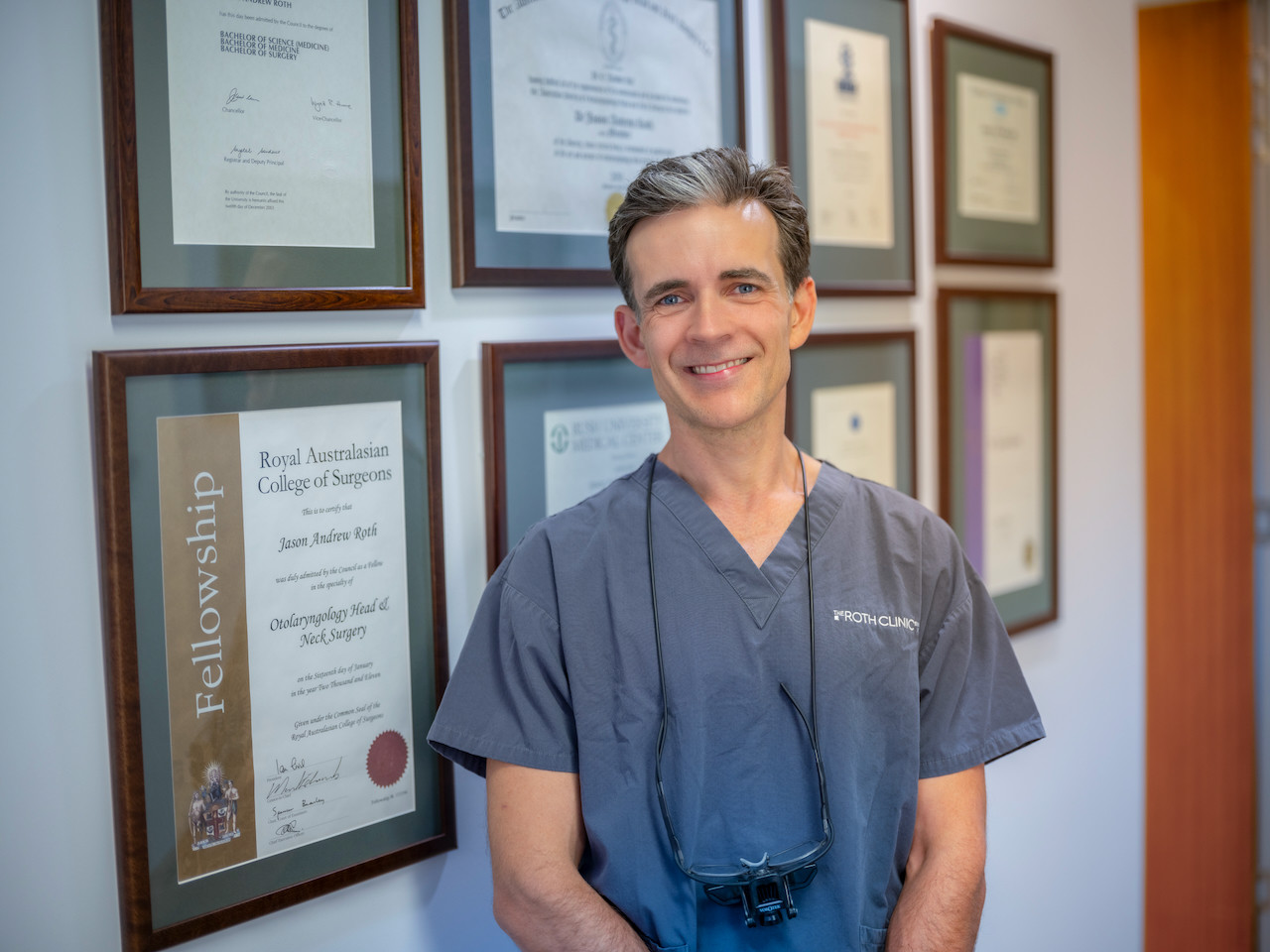
Specialist Otolaryngologist & Head and Neck Surgeon
Specialist registration — Otorhinolaryngology, Head & Neck Surgery
View full profile
Anaesthetic FAQ content prepared by Dr Paul Williams and Dr Andrea Santoro, specialist anaesthetists.
