Facelift (After Weight Loss)
All cosmetic surgery involves risks and individual results vary. Cosmetic surgery is a serious decision. Decisions about whether to proceed should be made after careful consideration and following at least two consultations with a qualified medical practitioner.
Significant weight loss — whether achieved through diet and exercise, medication, or bariatric surgery — is a substantial personal achievement. However, rapid or substantial fat loss frequently produces changes in the face and neck that patients do not anticipate and find distressing: excess skin, loss of facial volume, jowling, and a neck that appears aged well beyond the patient’s years.
Facelift and neck lift surgery can address these changes directly — repositioning the descended soft tissues, removing redundant skin, and restoring a facial appearance that reflects the patient’s improved health and vitality rather than the accelerated ageing that weight loss can cause.
Cosmetic surgery is a serious decision — read the full facelift and neck lift risks page →
How Weight Loss Changes the Face
Patients who are overweight or obese typically have round, full faces — facial fat provides volume and support to the overlying skin. As weight is lost, this underlying volume is reduced, but the skin does not contract to match. The result is excess skin with insufficient soft tissue support beneath it — and the face ages rapidly and visibly as a consequence.
This is particularly pronounced in patients who have undergone bariatric surgery, where large volumes of weight can be lost over a relatively short period. The skin has no opportunity to adapt gradually. The facial changes that follow can be dramatic and, for many patients, deeply distressing — particularly given that they have made an enormous commitment to improving their health and expect to feel better about their appearance, not worse.
The loss of underlying fat leaves the skin without the volume it previously rested on. In the lower face and neck, this produces jowling along the jawline, excess skin in the submental region (beneath the chin), and a “turkey neck” appearance with loose folds of skin in the anterior neck. The jawline loses its definition and the neck loses the sharp cervicomental angle that characterises a youthful profile.
The cheeks deflate as buccal and malar fat is lost, creating a hollow or gaunt appearance in the midface. The temples hollow, the undereye area deepens, and the nasolabial folds deepen as the fat that previously softened them is no longer present. This hollowing is paradoxically ageing — patients can appear significantly older after weight loss than they did before, even though they are healthier.
The unexpected facial ageing that follows significant weight loss causes considerable distress to many patients. Having invested enormous effort and commitment in losing weight, and expecting to feel better about their appearance, they instead find a face in the mirror that looks tired, aged, and unfamiliar. Some patients struggle to recognise themselves. The psychological impact — on mood, energy levels, self-esteem, and confidence — can be substantial, and in some cases patients find it difficult to return to work in roles where appearance is professionally relevant.
What Facelift and Neck Lift Surgery Can Achieve
A combined deep plane facelift and neck lift directly addresses the anatomical changes caused by weight loss — repositioning the descended facial tissues, tightening the underlying SMAS and platysma, removing redundant skin, and restoring facial contours that reflect the patient’s new, healthier body.
If you have made a commitment to losing weight and improving your health, be proud of that decision and that hard work. Surgery can help your face reflect the person you have worked to become.
Important Considerations Before Surgery
The most important prerequisite for facelift surgery after weight loss is weight stability. Surgery should not be undertaken while weight loss is still ongoing — if the face continues to lose volume after surgery, the result will be compromised and further skin will become redundant. A minimum of six to twelve months of stable weight is generally recommended before surgical planning begins. This ensures that the tissues being repositioned and the skin being removed reflect the face’s long-term volume, not a transitional state.
Patients who have undergone bariatric surgery or who have achieved very significant weight loss through dietary restriction may have nutritional deficiencies — including protein, iron, zinc, and vitamins — that can impair wound healing. Nutritional status should be assessed and optimised before surgery is undertaken. Dr Roth will discuss this at consultation and may recommend pre-operative blood tests or referral to a dietitian where appropriate.
The skin quality of patients who have lost significant weight varies considerably. Some patients have good skin elasticity despite the volume loss; others have thin, inelastic, or sun-damaged skin that heals more slowly and produces less predictable results. Skin quality is carefully assessed at consultation and influences both the technique selected and the realistic expectations for outcome and recovery.
Smoking significantly impairs blood supply to the skin flap and substantially increases the risk of skin necrosis — a particularly significant concern in patients whose skin may already have a compromised vascular supply following significant weight loss. Cessation of smoking, vaping, and nicotine for a minimum of four weeks before and after surgery is required. Ideally, cessation should be permanent.
Frequently Asked Questions
Common questions about facelift surgery after weight loss answered by Dr Jason Roth, Specialist Otolaryngologist and Head and Neck Surgeon, Sydney.
Weight must be stable for a minimum of six months before surgical planning begins — and twelve months of stability is preferable, particularly after bariatric surgery where very large volumes of weight may have been lost. Operating while weight loss is still ongoing means the surgical result is planning for a moving target — if the face continues to lose volume after surgery, further skin will become redundant and the result will be undermined.
Nutritional status also needs time to stabilise and optimise after significant weight loss or bariatric surgery. A blood test assessing nutritional markers before surgery is recommended.
It can be. Patients who have lost significant weight often have thinner, less elastic skin with a potentially reduced vascular supply — both of which affect wound healing. There may be more redundant skin requiring removal, which means the incisions and the degree of skin excision need to be carefully planned. The risk of skin flap complications is higher in patients with thin, inelastic skin, and smoking cessation is even more important than usual.
In many other respects the procedure is similar to a standard facelift — the SMAS is elevated, the retaining ligaments released, and the tissues repositioned using the same principles. Individual assessment at consultation determines the specific approach and the realistic expectations.
Possibly. In patients with significant facial hollowing following weight loss, the deep plane facelift repositions native tissue back into the midface, which partially restores volume. In some patients this is sufficient. In others, where volume loss has been severe — particularly in the temples, undereye region, or lips — fat grafting or filler may complement the surgical result. This is discussed at consultation based on your individual anatomy.
Recovery follows a similar timeline to standard facelift surgery. Most patients are socially presentable within two to three weeks. The full result continues to develop over 6–12 months as swelling resolves and scars mature. Patients with thinner skin may find their result becomes apparent more quickly; those with skin quality concerns may have a slower recovery.
Facelift surgery is a cosmetic procedure and does not attract Medicare or private health insurance rebates, regardless of the cause of the facial laxity. A full itemised quote including all fees will be provided at consultation.
Modest weight regain after surgery — within a healthy range — is unlikely to significantly affect the result. The tissues that have been repositioned will gain some volume back, which can actually be beneficial in patients who have facial hollowing. Very significant weight regain would over time alter the facial contour again, as it would in anyone who gained substantial weight. Maintaining a stable healthy weight is the best way to preserve and enjoy the result of surgery long-term.
Deep Plane Facelift → | Neck Lift → | Facelift & Neck Lift Risks → | Before & After Gallery → | Why Choose Dr Roth →
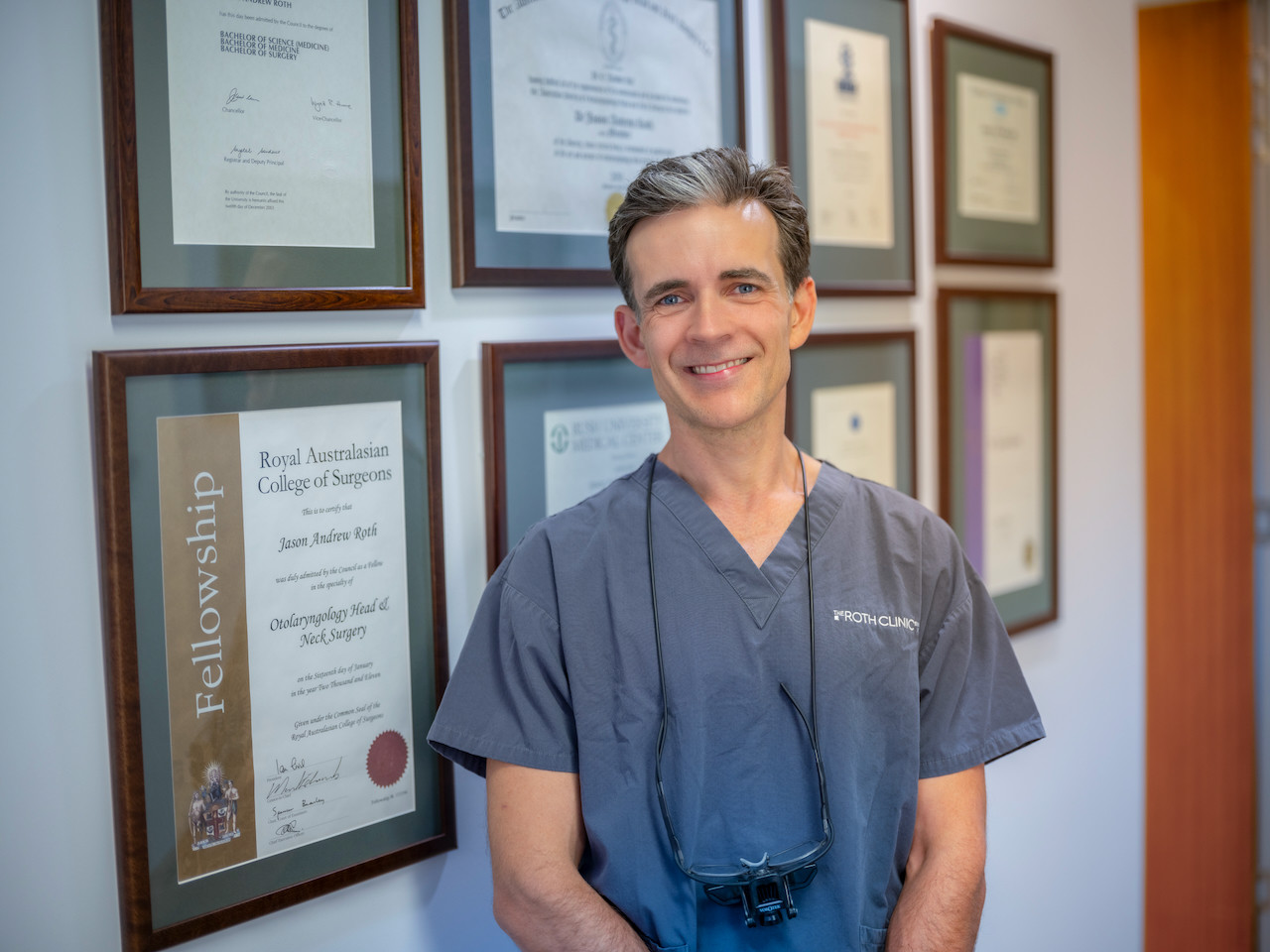
Specialist Otolaryngologist & Head and Neck Surgeon
Specialist registration — Otorhinolaryngology, Head & Neck Surgery
View full profile
