Facelift Surgery in Sydney
All cosmetic surgery involves risks and individual results vary. Cosmetic surgery is a serious decision. Decisions about whether to proceed should be made after careful consideration and following at least two consultations with a qualified medical practitioner.
Facelift surgery addresses age-related changes in the face and neck — including laxity of the skin and deeper soft tissues, descended facial fat compartments, jowling along the jawline, and changes in the neck. It is one of the more technically demanding procedures in facial surgery, and the outcome depends significantly on careful planning, appropriate technique selection, and the surgeon’s training and experience.
Cosmetic surgery is a serious decision — read the full facelift and neck lift risks page →
What Does Facelift Surgery Address?
The ageing face involves changes at multiple anatomical levels — the skin, the subcutaneous fat compartments, the deeper muscular and fascial layer known as the SMAS, and the retaining ligaments that tether facial tissues to underlying bone. Different facelift techniques address these layers to varying degrees. The most effective approaches work at the level of the SMAS and deeper structures rather than relying on skin tension alone, which produces less durable results and can distort facial features.
Facelift surgery is particularly effective at addressing jowling along the jawline, laxity of the neck skin and platysma muscle, descent of midface soft tissues, and deepening of the nasolabial folds. It does not address skin quality, fine lines, or volume loss — which may require separate assessment and treatment.
Types of Facelift
Frequently Asked Questions
What is involved in the consultation?
A consultation is typically 45 to 90 minutes. Dr Roth will listen to your concerns, examine your face and neck to assess the relevant changes, explain what components of surgery are relevant to your anatomy, discuss incision placement, and give a realistic assessment of what can and cannot be achieved. A second consultation is required before any cosmetic surgery proceeds. There is no obligation to commit at either appointment.
Who performs facelift surgery in Australia?
In Australia, facelift surgery is performed by surgeons holding Fellowship of the Royal Australasian College of Surgeons (FRACS) — including Otolaryngology Head and Neck Surgeons and Plastic Surgeons. Within these groups, only a subset specialise in facelift surgery. It is important to verify your surgeon’s specific training, qualifications, and experience in the technique to be used.
What are Dr Roth’s credentials?
Dr Roth completed specialist training in Otolaryngology Head and Neck Surgery through the Royal Australasian College of Surgeons, followed by fellowships in Advanced Rhinology and Facial Plastic Surgery at Rush University Medical Center in Chicago, and Facial Plastic Surgery at the Academic Medical Center in Amsterdam. He holds the International Board Certification in Facial Plastic and Reconstructive Surgery and has completed dedicated deep plane facelift training with an experienced facelift specialist in Connecticut. He performs more than 50 face and neck lift procedures per year. Full details are on the About Me page.
Recovery
About Dr Jason Roth, MBBS, FRACS
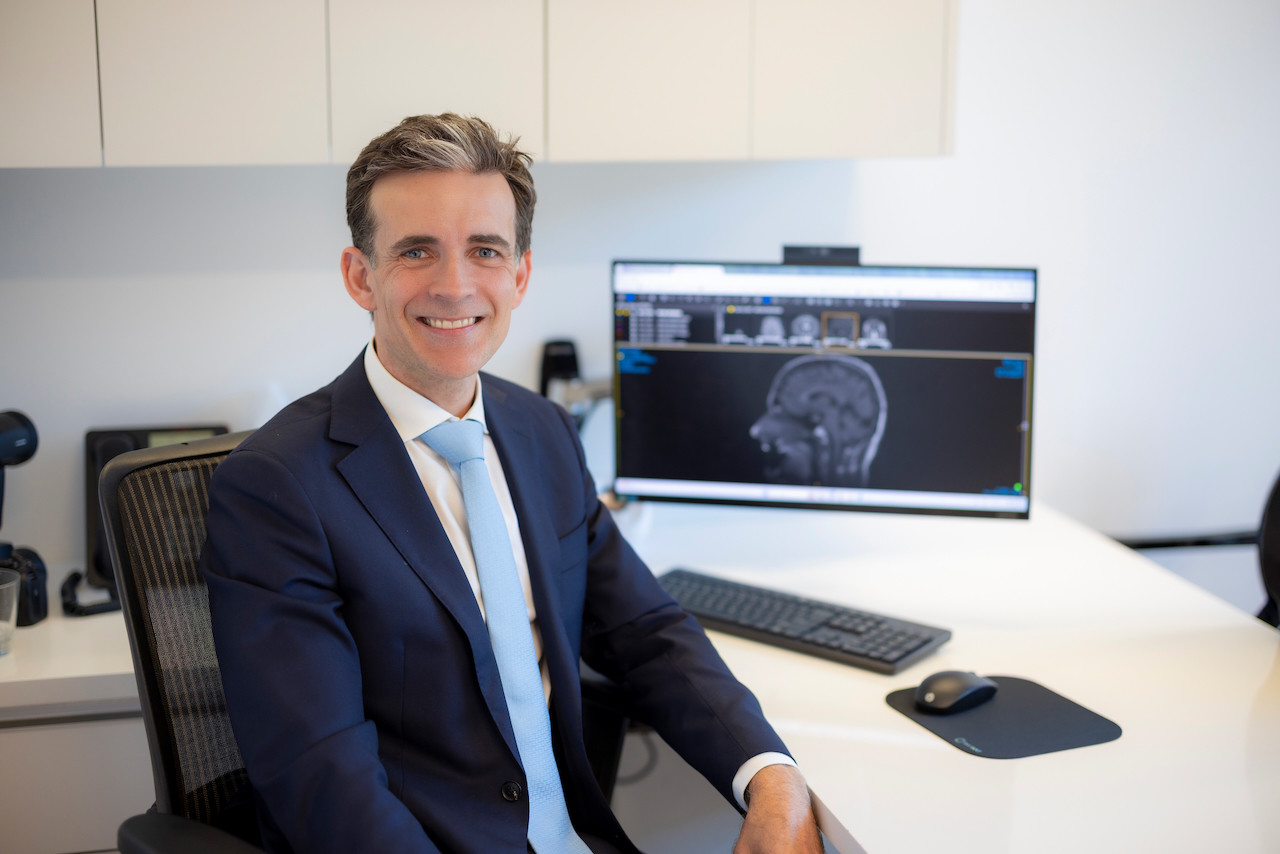
Dr Jason Roth is a Sydney-based Specialist Otolaryngologist and Head & Neck Surgeon with fellowship training in rhinology and facial plastic surgery from Australia, the United States, and Europe.
He consults from his clinic in Dee Why and operates at several accredited private hospitals across Sydney. He performs more than 50 face and neck lift procedures per year. View his full profile here →
Facelift Before & After Gallery
All surgery performed by Dr Jason Roth (MED0001185485), Specialist Otolaryngologist & Head and Neck Surgeon, Sydney. Results vary from person to person. The outcomes shown are relevant only to the specific patient depicted and do not necessarily reflect the results other patients may experience. Cosmetic surgery is a serious decision.
View Full Patient Photo Gallery →
Frequently Asked Questions
Common questions about facelift surgery answered by Dr Jason Roth, Specialist Otolaryngologist and Head and Neck Surgeon, Sydney.
A standard facelift (SMAS facelift) tightens the SMAS — the fibromuscular layer beneath the skin — but does not release the deeper facial retaining ligaments. The result is effective but the tissues are repositioned by tension rather than by true anatomical repositioning.
A deep plane facelift works beneath the SMAS, releasing the retaining ligaments of the cheek and jaw and allowing the descended facial tissues to be repositioned as a single composite unit with a vertical rather than lateral vector. This produces a more complete correction of midface descent and avoids the windswept appearance associated with tension-based lifts. Dr Roth performs deep plane facelift as his primary technique. Read more about deep plane facelift →
Facelift surgery is appropriate for patients with visible laxity of the lower face, jowling along the jawline, and descent of the soft tissues of the cheek and neck. It is not appropriate for patients whose primary concern is skin texture, pigmentation, or periorbital changes — these are addressed by different procedures.
Good general health, realistic expectations, and non-smoking status are all important. Anatomy rather than age is the primary determinant of suitability — some patients in their forties benefit from facelift surgery while others in their sixties may be better served by non-surgical approaches. This is assessed individually at consultation.
A well-performed deep plane facelift should not look operated upon. The aim is to reposition the facial structures to where they were a decade or more earlier — not to stretch the skin tighter. The deep plane technique in particular repositions the underlying tissues vertically rather than pulling the skin laterally, which avoids the tight, swept appearance associated with older or tension-based facelift techniques.
Individual results vary and outcomes cannot be guaranteed. Before and after photographs in our gallery illustrate the type of changes that can be achieved. All surgery involves risks and outcomes vary from person to person.
Recovery from deep plane facelift proceeds over several months, though most patients are socially presentable within two to three weeks:
- Day 1: Overnight hospital stay. Drain removed the following morning.
- Days 2–5: Bruising and swelling peak. Rest at home with head elevated.
- Days 7–10: Sutures removed. Bruising beginning to resolve. Most patients presentable socially.
- Weeks 2–4: Return to work and normal activities. Avoid strenuous exercise.
- Months 1–3: Swelling continuing to resolve. Result refining.
- 6–12 months: Final result apparent.
Facelift surgery does not halt the ageing process — the face continues to age after surgery. The improvement achieved by facelift surgery is maintained over time: a patient looks better at any given age than they would have without surgery. Deep plane facelift results tend to be durable because the procedure addresses the structural causes of facial descent rather than simply removing skin.
Individual results vary and longevity depends on genetics, skin quality, sun exposure, and lifestyle factors. These matters are discussed at consultation.
Yes — facelift is very frequently combined with other procedures in the same anaesthetic. Common combinations include: neck lift, blepharoplasty (eyelid surgery), brow lift, lip lift, and fat transfer. Combining procedures reduces the total number of anaesthetics and recovery periods and allows complementary changes to be made simultaneously. The specific combination appropriate for you will be discussed at consultation.
Facelift incisions are placed in the natural creases around and behind the ear, within the hairline, and in the natural fold behind the ear. With careful incision placement and closure, these scars are designed to be imperceptible in normal social settings and when the hair is worn naturally. Scar visibility depends on individual healing, skin type, and adherence to post-operative scar management. All surgery leaves a scar — the goal is for it to be inconspicuous.
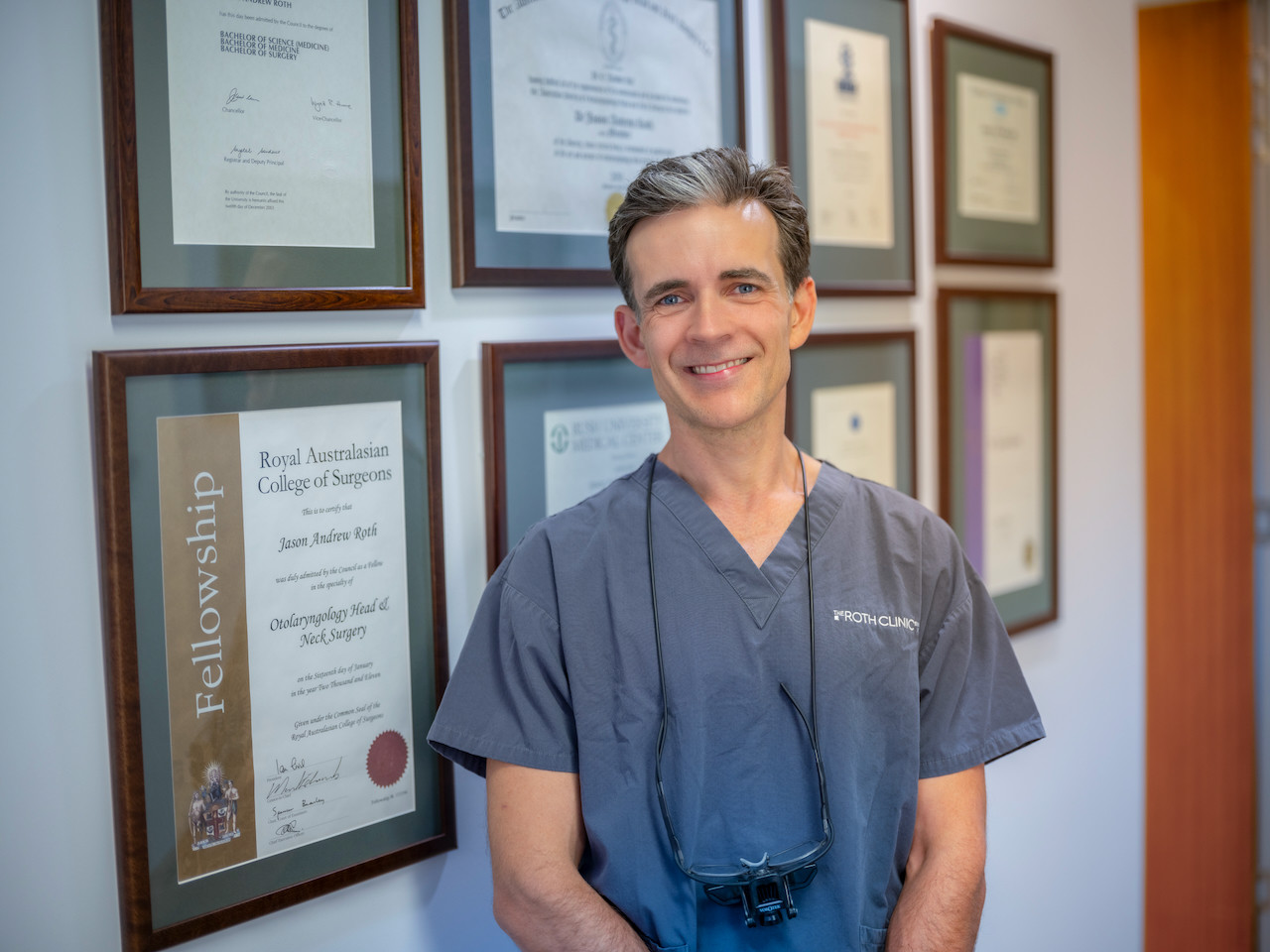
Specialist Otolaryngologist & Head and Neck Surgeon
Specialist registration — Otorhinolaryngology, Head & Neck Surgery
View full profile
