Bent Nose
A deviated or asymmetric nose is a common reason patients seek rhinoplasty consultation. The deviation may be present from birth, develop during growth, or result from nasal trauma. It can affect the external appearance, nasal breathing, or both.
All surgery carries risks — read the full rhinoplasty risks page →
Why Does a Nose Deviate?
The nose is composed of multiple structures — nasal bones, upper and lower lateral cartilages, the nasal septum, soft tissue, and skin — and deviation in any of these can contribute to an asymmetric appearance. Common causes include:
- Developmental — when the septal cartilage outgrows the space available within its bony boundaries, continued growth causes it to bend and dislocate into one nostril. This is the most common cause of a deviated septum.
- Traumatic — a blow to the nose can fracture the nasal bones, bend the septal cartilage, and disrupt the ligamentous connections between structures. Nasal bones that are not treated promptly heal in their displaced position, typically within three weeks of injury.
- Congenital — some patients are born with nasal asymmetry related to underlying facial skeletal asymmetry, which can complicate surgical correction.
Why is Correction Challenging?
- Cartilage memory — deviated cartilage has an intrinsic tendency to return toward its original position. Sutures, grafts, and scoring techniques are used to counteract this, but the risk of gradual recurrence over time is real and is discussed at consultation.
- Underlying facial asymmetry — no face is perfectly symmetrical. When baseline skeletal asymmetry exists, the nose cannot be made to appear perfectly straight relative to a reference point that itself is not straight. Pre-existing asymmetry is assessed and documented at consultation.
- Multiple contributing structures — if any deviated component is left unaddressed, it can continue to push the nose off-centre. A systematic approach to each structural layer is required.
What Does Corrective Surgery Involve?
The approach depends on which structures are contributing to the deviation. Correction typically proceeds from inside out — septum first, then cartilages, then nasal bones.
Dr Roth generally aims to address all contributing structural elements in a single procedure where possible.
Contact us to arrange a consultation → | Rhinoplasty Surgery → | Rhinoplasty Risks →
Dr Roth’s Clinical Perspective
Correcting a genuinely crooked nose is one of the more technically demanding goals in rhinoplasty, because the deviation usually involves both the bony vault and the cartilaginous framework — and addressing only one without the other produces an incomplete result. I explain to patients that perfect symmetry is not a realistic surgical goal for any nose, but meaningful improvement in alignment is achievable in most cases. The key is thorough preoperative analysis of where the deviation originates — bony, cartilaginous, or both — and planning the osteotomies and septal work accordingly.
— Dr Jason Roth, MBBS, FRACS (ORL-HNS), IBCFPRS
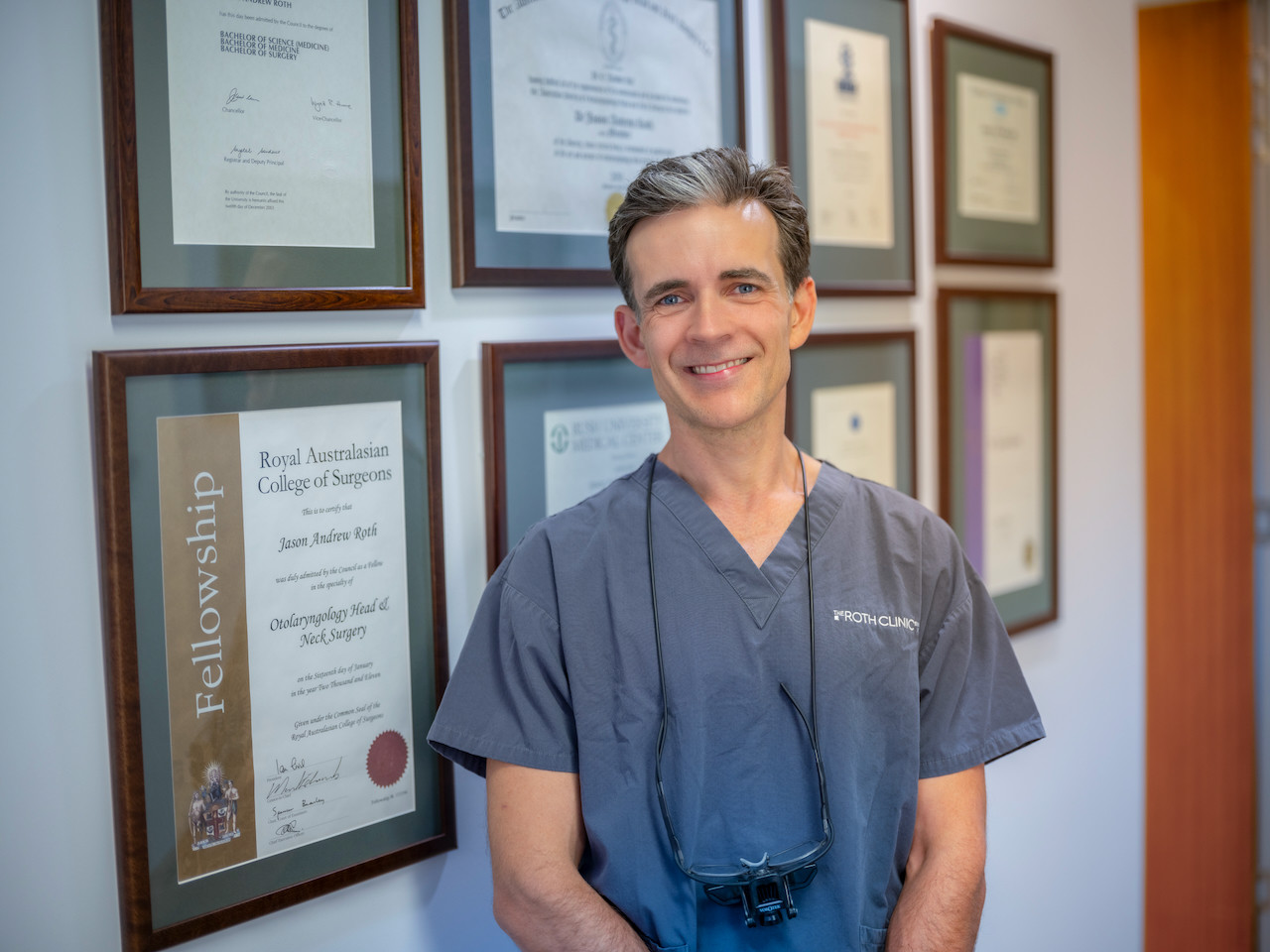
Specialist Otolaryngologist & Head and Neck Surgeon
Specialist registration — Otorhinolaryngology, Head & Neck Surgery
View full profile
