
Pre Operative Blepharoplasty Information
All cosmetic surgery involves risks and individual results vary. Cosmetic surgery is a serious decision. Decisions about whether to proceed should be made after careful consideration and following at least two consultations with a qualified medical practitioner.
This page provides pre-operative and post-operative information for patients preparing for blepharoplasty (eyelid surgery) with Dr Roth. Please read it alongside the written instructions provided at your pre-operative appointment.
Full blepharoplasty information →
About Blepharoplasty
Blepharoplasty is surgery of the eyelids, addressing excess skin, muscle, and/or fat in the upper eyelids, lower eyelids, or both. Upper blepharoplasty removes excess skin that hoods over the lashes and can impair the visual field. Lower blepharoplasty addresses under-eye bags (fat prolapse), hollowing of the tear trough, and excess lower eyelid skin. The two procedures can be performed together in the same anaesthetic.
Blepharoplasty is performed under general anaesthesia as day surgery in most cases. Operating time is typically one to two hours for upper and lower combined.
Before Surgery
Medications to Cease
- Aspirin and aspirin-containing products
- Ibuprofen (Nurofen, Advil) and all other anti-inflammatory medications
- Naproxen (Naprosyn, Naprogesic)
- Warfarin, clopidogrel, or other anticoagulants — discuss with Dr Roth and your GP before stopping
- Vitamin E, fish oil, garlic tablets, ginkgo biloba, ginseng, St John’s Wort
Eye-Specific Preparations
- Remove contact lenses before surgery — you will not be able to wear them for at least one week post-operatively
- Bring your glasses to the hospital — you will need them after surgery
- Do not wear eye make-up on the day of surgery
- If you use eye drops regularly, discuss this with Dr Roth at your pre-operative appointment
- Advise Dr Roth of any history of dry eye, glaucoma, or previous eye surgery
Fasting
Practical Preparations
- Arrange a responsible adult to drive you home — you will not be able to drive after surgery
- Purchase prescribed medications in advance including lubricating eye drops
- Plan one week away from work; two to three weeks off strenuous activity
Recovery Timeline
Important Post-Operative Instructions
- Apply cold compresses gently over the closed eyelids for the first 24 hours — do not apply pressure directly to the eyes
- Keep head elevated, including while sleeping, for the first week
- Use lubricating eye drops as prescribed — dry eyes are common in the first weeks
- Do not rub, touch, or apply pressure to the eyes or eyelids
- Do not wear eye make-up until cleared by Dr Roth (typically two weeks)
- Do not wear contact lenses until the eyes are comfortable and cleared at follow-up
- Avoid strenuous exercise and heavy lifting for two to three weeks
- Protect scars from sun exposure — use SPF50+ sunscreen or sunglasses
- Complete the full course of antibiotics as prescribed
- Take paracetamol for pain — avoid ibuprofen and anti-inflammatory medications
When to Seek Urgent Assistance
- Any change in vision — blurring, double vision, or loss of vision
- Severe pain in or behind the eye
- Rapidly increasing swelling or bleeding around the eye
- Inability to close the eye fully
- Fever above 38.5°C
Dr Roth’s rooms: (02) 9982 3439
Out of hours: attend the nearest emergency department.
Blepharoplasty — Full Information → | Blepharoplasty Risks → | Contact the Rooms →
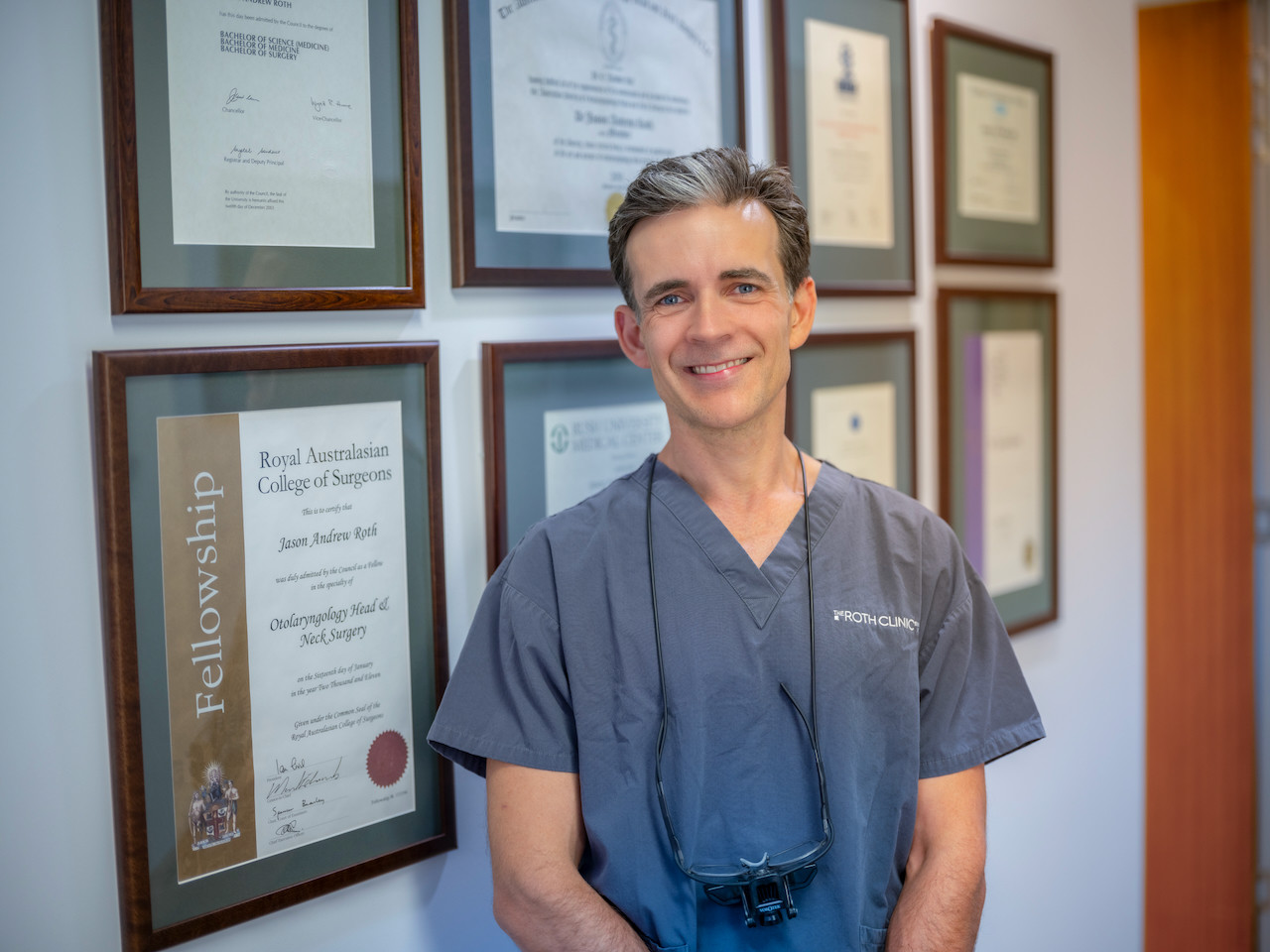
Specialist Otolaryngologist & Head and Neck Surgeon
Specialist registration — Otorhinolaryngology, Head & Neck Surgery
View full profile
