Pre Operative Lip Lift Information
All cosmetic surgery involves risks and individual results vary. Cosmetic surgery is a serious decision. Decisions about whether to proceed should be made after careful consideration and following at least two consultations with a qualified medical practitioner.
This page provides pre-operative and post-operative information for patients preparing for lip lift surgery with Dr Roth. Please read it alongside the written instructions provided at your pre-operative appointment.
About Lip Lift Surgery
A lip lift shortens the distance between the base of the nose and the upper lip — the philtrum or “white lip” — by removing a precisely measured strip of skin from just beneath the nose. The procedure repositions the vermillion border upward, increasing visible upper lip show and creating greater definition of the Cupid’s bow. Unlike lip filler injections, a lip lift produces a permanent structural change to the lip’s position and shape.
The most common technique is the bullhorn lip lift, in which a bullhorn-shaped strip of skin is removed from the base of the nose. The procedure is performed under general anaesthesia and takes approximately 60 minutes. It is most commonly performed as day surgery.
Before Surgery
Medications to Cease
- Aspirin and aspirin-containing products
- Ibuprofen (Nurofen, Advil) and all other anti-inflammatory medications
- Naproxen (Naprosyn, Naprogesic)
- Warfarin, clopidogrel, or other anticoagulants — discuss with Dr Roth and your GP before stopping
- Vitamin E, fish oil, garlic tablets, ginkgo biloba, ginseng, St John’s Wort
Smoking
Do not smoke, vape, or use nicotine for at least two weeks before and two weeks after surgery. Smoking impairs healing of the incision at the base of the nose.
Fasting
Practical Preparations
- Arrange a responsible adult to drive you home and be available for the first 24 hours
- Purchase prescribed medications in advance including prescribed antiseptic mouthwash
- Plan one week away from work; two weeks off strenuous activity
- Prepare soft foods — you will be on a soft/liquid diet for several days
Recovery Timeline
Important Post-Operative Instructions
- Soft or liquid diet for the first three to five days — avoid hard, chewy, or crunchy foods
- Avoid hot, spicy, or acidic foods and beverages for the first week
- Do not use straws — suction places stress on the healing incision
- Avoid excessive facial movements including wide smiling, laughing, or opening the mouth wide for the first week
- Clean the mouth gently with prescribed antiseptic mouthwash or warm saltwater rinse after meals
- Brush teeth gently with a soft-bristled toothbrush
- Keep the incision site clean and dry — apply prescribed ointment as instructed
- Do not touch, pick at, or manipulate the sutures
- Avoid strenuous exercise and heavy lifting for two weeks
- Protect the scar from sun exposure for at least six months — use SPF50+
- Take paracetamol for pain — avoid ibuprofen and anti-inflammatory medications
When to Seek Urgent Assistance
- Brisk bleeding that does not settle with direct pressure
- Fever above 38.5°C
- Increasing pain, redness, or swelling around the wound
- Any discharge that appears purulent (cloudy or discoloured)
- Wound edges separating
Dr Roth’s rooms: (02) 9982 3439
Out of hours: attend the nearest emergency department.
Lip Lift Surgery — Full Information → | Lip Lift Risks → | Contact the Rooms →
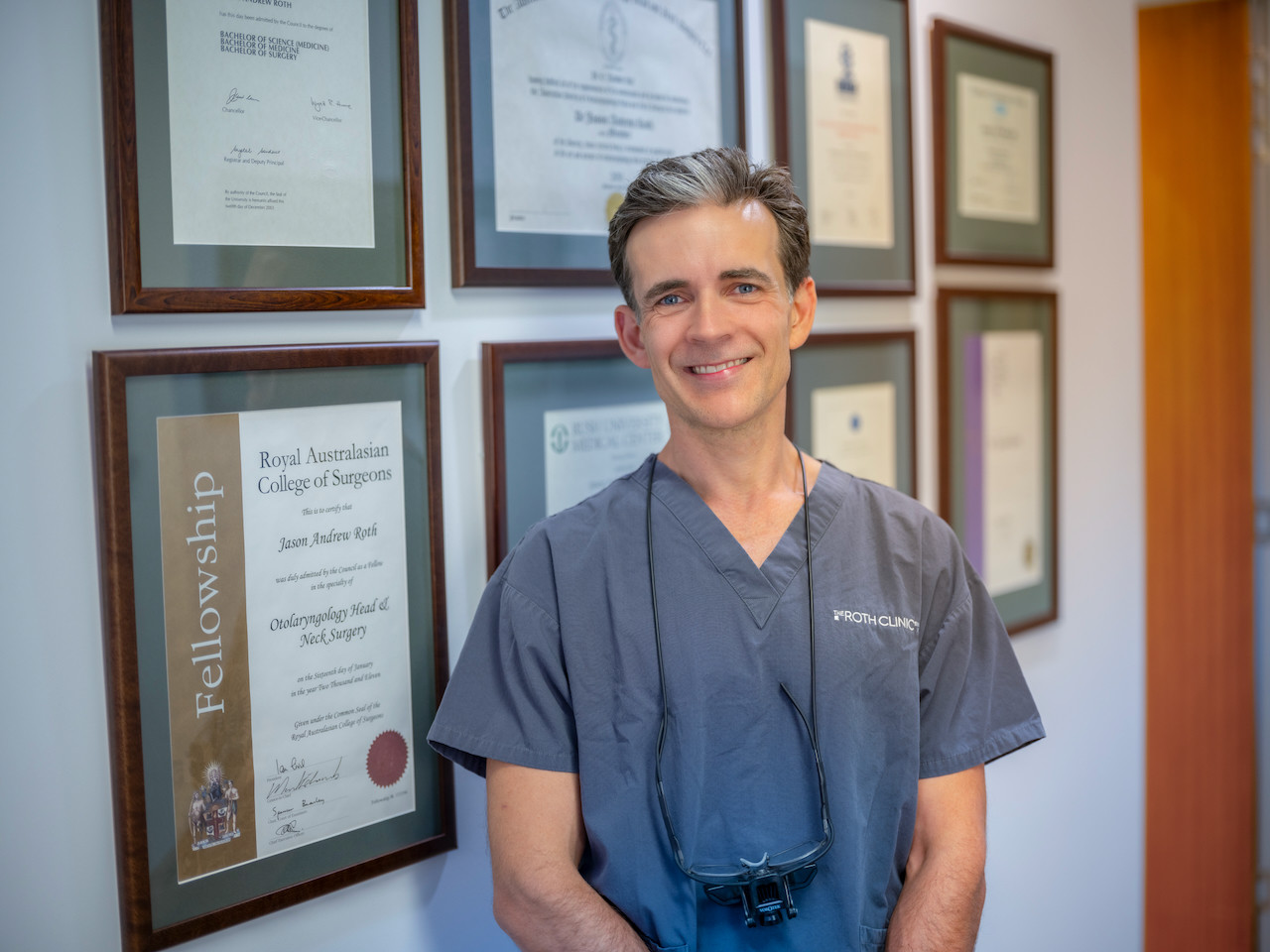
Specialist Otolaryngologist & Head and Neck Surgeon
Specialist registration — Otorhinolaryngology, Head & Neck Surgery
View full profile
