
ENT or Plastic Surgeon for Facial Surgery?
Patients seeking rhinoplasty, facelift, blepharoplasty, or other facial plastic surgery in Australia will find that the surgeons they encounter come from two distinct specialist training backgrounds — Otolaryngology, Head and Neck Surgery (ENT) and Plastic and Reconstructive Surgery. Both pathways produce surgeons who perform facial plastic surgery, and both produce excellent results. But the training programmes are different in scope, duration, focus, and the depth of subspecialty knowledge they develop — and understanding those differences helps patients ask better questions when choosing a surgeon for a specific procedure.
This page describes what each training pathway involves, where the strengths of each lie, and what is actually most important when choosing a surgeon for a facial procedure — regardless of which background they come from.
Otolaryngology, Head and Neck Surgery — The ENT Pathway
Otolaryngologists — ENT surgeons — complete a six-year specialist surgical training programme through the Royal Australasian College of Surgeons (RACS) in Otorhinolaryngology, Head and Neck Surgery. The programme covers the full breadth of ear, nose, throat, head, and neck surgery across both adult and paediatric populations, encompassing medical and surgical management of the ear (hearing, balance, middle ear disease), nose and sinuses (rhinology, endoscopic sinus surgery, nasal obstruction), throat and larynx (voice, swallowing, tonsillectomy), and head and neck (oncology, thyroid, salivary glands, neck dissection). Successful completion is recognised by Fellowship of the Royal Australasian College of Surgeons in Otorhinolaryngology, Head and Neck Surgery — FRACS (ORL-HNS).
Rhinology — a unique depth of nasal knowledge
The ENT training pathway produces a depth of nasal anatomical and functional knowledge that is unmatched in any other surgical specialty. Rhinology — the subspecialty of ENT focused on the nose and sinuses — encompasses the anatomy, physiology, and pathology of the nasal airway in extraordinary detail: the turbinate system, the ostiomeatal complex, the nasal valves, the septum, Eustachian tube function, and the biomechanics of nasal airflow. This knowledge is not merely academic — it is directly and practically relevant to rhinoplasty, because every change made to the external nose has functional airway consequences. An ENT surgeon performing rhinoplasty approaches the nose with an understanding of how each surgical decision affects nasal breathing — an understanding developed through years of managing nasal airway problems medically and surgically before a rhinoplasty fellowship is even begun.
Subspecialty fellowship training in facial plastic surgery
Many ENT surgeons who develop a focused interest in facial plastic surgery complete additional fellowship training — typically twelve months at an overseas programme in Europe or North America — specifically in rhinoplasty and/or facial plastic and reconstructive surgery. These fellowships are intensive, high-volume training experiences at centres where facial plastic surgery is the primary focus of the programme. The American Academy of Facial Plastic and Reconstructive Surgery (AAFPRS) and the European Academy of Facial Plastic Surgery (EAFPS) both accredit fellowship programmes of this type, and their graduates — whether from an ENT or plastic surgery background — represent the concentrated subspecialty end of the field.
Procedures in which ENT-trained facial plastic surgeons have particular depth of experience include:
- Rhinoplasty — functional, cosmetic, and combined; primary and revision; preservation, structural, and ethnic approaches
- Septoplasty, turbinoplasty, and sinus surgery — functional nasal airway surgery with or without cosmetic components
- Facelift and neck lift — including deep plane and extended deep plane techniques
- Blepharoplasty — upper and lower eyelid surgery
- Browlift — endoscopic and open approaches
- Otoplasty — ear reshaping surgery
- Facial reconstruction — following skin cancer excision on the face, scalp, and neck
Plastic and Reconstructive Surgery — The Plastics Pathway
Plastic and reconstructive surgeons complete a five-year specialist training programme through RACS covering cosmetic and reconstructive procedures across the whole body — including the face, breast, hand, and trunk. Successful completion is recognised by Fellowship in Plastic and Reconstructive Surgery — FRACS (Plast). The breadth of the programme is its defining characteristic: plastic surgery training encompasses wound healing, burns management, hand surgery and microsurgery, breast reconstruction and cosmetic breast surgery, abdominal wall reconstruction, lower limb reconstruction, head and neck reconstruction, and facial cosmetic surgery. This breadth means that the depth of training in any specific area of the body varies significantly between individual trainees and programmes.
A plastic surgeon who has developed a concentrated focus on facial procedures — through a specific facial plastics fellowship, high facial surgery operative volume during training, or a subsequent career focused primarily on the face — can achieve the same depth of facial surgery expertise as an ENT-trained facial plastic surgeon. The most important question is not “Which pathway did they take?” but “What is their specific experience and training in this particular procedure?” — a question explored in detail below.
Plastic surgeons and rhinoplasty
Rhinoplasty falls within the plastic surgery scope of practice and is performed by some plastic surgeons with high volume and specific fellowship training. However, rhinoplasty training within the standard plastic surgery programme varies considerably — it is not a guaranteed focus of training in the way that ENT training systematically develops nasal surgical experience through years of rhinological practice. Plastic surgeons who operate at the highest level of rhinoplasty have generally sought out specific rhinoplasty fellowship training or have deliberately built their practice around this procedure over many years of dedicated focus.
What Actually Matters When Choosing — Regardless of Pathway
The training pathway matters as context, but it is not the most important factor in choosing a surgeon for any specific facial procedure. The following questions are far more useful:
Beware of Titles That Are Not Specialist Registrations
In Australia, only practitioners holding specialist registration with AHPRA in a recognised specialty can use the title “Specialist” in connection with that specialty. The relevant specialist registrations for facial plastic surgery are Otorhinolaryngology, Head and Neck Surgery (FRACS ORL-HNS) and Plastic and Reconstructive Surgery (FRACS Plast). A small number of other surgical specialties — for example, Oral and Maxillofacial Surgery — also encompass facial procedures within their scope of practice.
The title “Cosmetic Surgeon” is not a recognised specialist registration in Australia. Practitioners using this title may hold general medical registration (MBBS or equivalent) without any specialist surgical training. They may have completed cosmetic surgery courses or diplomas, but these do not confer specialist registration and are not assessed by RACS. The AHPRA register will indicate clearly whether a practitioner holds specialist registration and in which specialty. If a practitioner performing facial surgery under general anaesthesia does not hold specialist surgical registration, this is a material fact that a patient deserves to know before proceeding.
This distinction is not a comment on the personal ethics or skill of any individual practitioner — it is a structural point about the regulatory framework, the training standards that have and have not been assessed, and the accountability structures that attach to different types of registration.
About Dr Roth’s Training and Background
Dr Jason Roth is a Specialist Otolaryngologist and Head and Neck Surgeon — FRACS (ORL-HNS) — with subspecialty fellowship training in rhinoplasty and facial plastic surgery from two internationally recognised programmes:
- Rush University Medical Center, Chicago — American Rhinologic Society Fellowship in Advanced Rhinology and Facial Plastic Surgery. One of the leading rhinology and rhinoplasty training centres in the United States, with direct training in functional and cosmetic rhinoplasty under the supervision of recognised international rhinoplasty faculty.
- Academic Medical Center, Amsterdam — Fellowship training in rhinoplasty and facial plastic surgery at one of Europe’s major facial plastic surgery centres.
Dr Roth holds the International Board Certification in Facial Plastic and Reconstructive Surgery and serves as a board member and Treasurer of the Australasian Academy of Facial Plastic Surgery (AAFPS). He performs more than 150 rhinoplasty procedures per year and more than 50 facelift and neck lift procedures per year from his practice on Sydney’s Northern Beaches.
His AHPRA registration can be verified at any time: ahpra.gov.au — MED0001185485.

View Dr Roth’s full profile and training → | How to choose a rhinoplasty surgeon → | The dangers of online reviews → | Arrange a Consultation →
Dr Roth’s Clinical Perspective
I am an ENT surgeon and I am biased — I think the rhinology background that comes with ENT training is genuinely valuable for rhinoplasty. But I also know excellent rhinoplasty surgeons who trained through plastic surgery, and I would not hesitate to refer a patient to one of them if the circumstances called for it. The questions that actually matter are the ones on this page: what is the surgeon’s specific training in this procedure, how many do they perform per year, and are they engaged with how the field is evolving? Those questions apply equally to ENT and plastic surgery backgrounds, and they are the ones worth spending time on at consultation.
— Dr Jason Roth, MBBS, FRACS (ORL-HNS), IBCFPRS
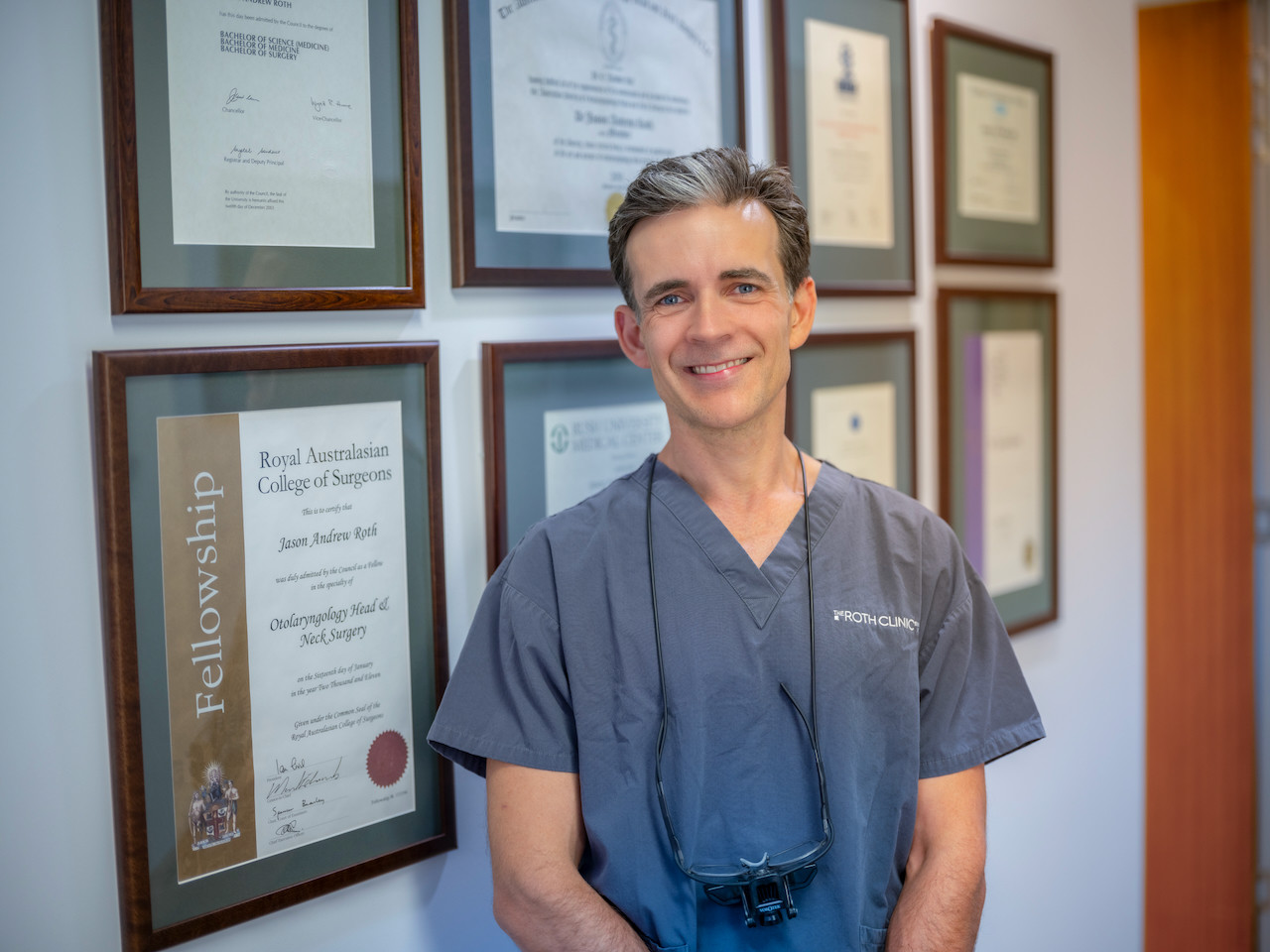
Specialist Otolaryngologist & Head and Neck Surgeon
Specialist registration — Otorhinolaryngology, Head & Neck Surgery
View full profile
