Rhinoplasty Recovery
Dr Jason Roth (MED0001185485) — Specialist Otolaryngologist & Head and Neck Surgeon, specialist registration in Otorhinolaryngology, Head & Neck Surgery.
All cosmetic surgery involves risks and individual results vary. Cosmetic surgery is a serious decision. Decisions about whether to proceed should be made after careful consideration and following at least two consultations with a qualified medical practitioner.
Rhinoplasty recovery is one of the most misunderstood aspects of the procedure. Patients often expect to look presentable within days and fully healed within weeks. The reality is more complex — and more interesting. The nose undergoes a lengthy and highly dynamic healing process in which swelling gradually resolves, the skin redrapes over the new framework, and scar tissue matures and softens. Understanding this process in detail allows patients to manage their expectations accurately, avoid unnecessary anxiety at intermediate stages, and know when to seek review. The final result of a rhinoplasty cannot be properly assessed until twelve to eighteen months after surgery — and in patients with very thick skin, longer still.
All surgery carries risks — read the full rhinoplasty risks page → | Full post-operative care instructions →
Why Rhinoplasty Takes So Long to Heal
Understanding the biology of rhinoplasty healing explains why the timeline is so different from, say, a cut on the arm. Three processes are simultaneously at work:
1. Resolution of surgical oedema
The nasal skin and soft tissue envelope (SSTE) — the skin, subcutaneous fat, and muscular layer overlying the nasal skeleton — are elevated during rhinoplasty to allow access to the underlying cartilage and bone. This elevation disrupts the lymphatic drainage channels within the soft tissue, causing the well-known post-operative swelling. Unlike the acute oedema of a sprained ankle, which resolves in days, rhinoplasty oedema can take months to resolve because the SSTE is dependent on regrowth of lymphatic vessels — a slow process that proceeds from the base of the nose upward toward the tip.
This explains why the nasal tip — the last region to establish new lymphatic drainage — is always the last area to show the final result, and why tip definition is often the final dimension to emerge. Patients with thicker nasal skin have more subcutaneous tissue through which lymphatics must regrow, explaining their longer recovery timelines.
2. Scar tissue maturation
Every point where the nasal cartilage is incised, sutured, or grafted undergoes an inflammatory healing response — even when the surgery is entirely through the nostril (closed approach). Fibroblasts infiltrate the healing tissues, depositing collagen. This early scar tissue is stiff, poorly organised, and creates firmness that can be felt and seen. Over months, the collagen remodels, the tissue softens, and the contours refined at surgery become visible through the overlying skin. This maturation process continues for twelve to eighteen months.
3. Skin redrapage
The nasal skin must redrape over a new, reshaped framework. This takes time — the skin has an elastic memory of its original shape and must gradually accommodate the changes made to the underlying skeleton. Where the dorsum has been reduced, the excess skin must contract. Where grafts have been placed to add support or projection, the skin must stretch. Both processes are slow and continue well beyond the first year in some patients.
The Recovery — Stage by Stage
Night of Surgery
Most patients stay one night in hospital. The nose is splinted, taped, and packed with internal support. The anaesthetic creates a dreamlike quality that makes the first evening feel manageable — pain is typically mild in the first 24 hours, partly due to residual local anaesthetic. The nose feels completely blocked, as though you have the worst cold of your life.
What to do: Sleep with the head elevated on extra pillows (not lying flat). Apply cold compresses gently to the cheeks and eye area — not on the nose itself. Begin regular paracetamol and prescribed medications. Do not blow the nose.
Days 1–3 — Peak Swelling and Bruising
Bruising and swelling are at their worst. The periorbital bruising (under-eye darkening) reaches its maximum and may extend onto the cheeks. The nose looks dramatically swollen and bears little resemblance to the expected outcome — this is completely normal and expected. Fatigue is significant. Most patients feel better staying at home and resting.
The congestion is absolute during this phase — breathing exclusively through the mouth is universal. Some blood-tinged fluid from the nostrils is normal. A light drip pad under the nose (changed regularly) manages this.
What to do: Rest. Head elevation when sleeping. Cold compresses to cheeks. Avoid bending forward, straining, or any activity that raises blood pressure. Take all medications as prescribed. No smoking. No alcohol. No nose-blowing.
Days 4–6 — The Difficult Middle Days
This is often the most psychologically challenging phase. The dramatic bruising and swelling have not yet begun to resolve, the splint is still in place, nasal breathing is still absent, and there is a generalised feeling of congestion and fatigue. Patients who were expecting a rapid recovery often feel disheartened during this window.
It is important to know: this is the expected nadir of the recovery. It does not indicate a problem. Every rhinoplasty patient looks and feels like this at day four.
What to do: Maintain head elevation. Saline nasal spray to the nostrils (not a rinse — do not irrigate while internal splints are in place). Begin gentle mobilisation around the house. Attend all scheduled post-operative appointments.
Days 7–10 — Splint Removal
The first post-operative appointment. The external splint and any external sutures are removed. Internal splints (if present) are removed with a simple, brief clinic procedure. This is a landmark moment — the face is visible for the first time since surgery. The nose at this stage is still very swollen and will bear only a partial resemblance to the eventual result. Do not judge the outcome at this visit.
Most bruising will have faded significantly by this point, though residual yellowish discolouration under the eyes may persist for another week. Most patients are sufficiently presentable to return to non-physical work and light social activities by day 10–14, provided they are comfortable with their appearance at this intermediate stage.
What to do: Begin high-volume saline nasal irrigation if instructed. Keep the nose clean and dry. Avoid any sunscreen or makeup directly on healing skin until cleared. No glasses resting on the bridge of the nose for six weeks (glasses must be taped to the forehead or worn as contacts).
Weeks 2–4 — The Social Recovery Window
Bruising resolves entirely for most patients by two to three weeks. Swelling continues to improve noticeably. The nose looks substantially better than it did at splint removal and patients often feel encouraged during this phase. By four weeks, most are comfortable returning to social and professional environments.
Nasal breathing begins to improve as internal swelling resolves. The sense of congestion gradually reduces, though it does not disappear completely at this stage. Smell, which may have been temporarily reduced post-operatively, begins to return.
What to do: Return to light work and social activities as comfortable. Continue gentle saline irrigation. Light walking and gentle exercise are generally permitted from two to three weeks — specific guidance will be provided at your post-operative visits. Continue head elevation when sleeping if there is residual swelling around the eyes.
Weeks 4–6 — Return to Exercise
From approximately four to six weeks (confirmed at the post-operative appointment), most patients are cleared to return to non-contact exercise — gym work, cycling, swimming, running. The nasal bones have healed sufficiently that controlled cardiovascular exercise is safe. However, contact sports, boxing, martial arts, and any activity with a risk of nasal trauma should be deferred for at least three months.
Glasses can be returned to the nose from around six weeks, when the nasal bones are sufficiently healed that minor pressure from a frame will not affect the osteotomy result. Sunglasses and heavy frames should be used carefully and avoided where possible for a further period.
What to do: Resume gym and exercise from week four to six as cleared. Sun protection on the nose (SPF50) is important — the healing skin is more susceptible to pigmentation change from UV exposure. Continue post-operative appointments as scheduled.
Months 2–3 — The Difficult Plateau
This is the phase that causes the most anxiety for rhinoplasty patients. The initial dramatic improvement from surgery is apparent, but the remaining swelling — particularly around the nasal tip and supratip — creates a thickened, boxy, or undefined appearance that can feel discouraging. Patients may notice irregularities or asymmetries that are not visible to others, because they are examining their nose in detailed close-up in ways they never did before surgery.
What is happening biologically: scar tissue is at maximum density during this phase. The fibroblasts deposited during the initial healing response have produced a peak collagen load that creates firmness and swelling, particularly around the tip cartilages and the supratip region. This is temporary — collagen remodelling has begun and will continue for months.
What to do: Do not assess the result at this stage. Do not compare with post-operative photographs from other patients taken at a different stage of recovery. Attend your three-month post-operative appointment, at which Dr Roth will assess your healing, address any concerns, and advise whether steroid injections to the supratip are appropriate to assist resolution of firm scar tissue. Sun protection remains important.
Months 3–6 — Progressive Refinement
This phase brings the most noticeable ongoing improvement in tip definition and supratip contour. Approximately 70–80% of the final swelling will have resolved by the end of month six. Tip definition becomes more apparent, dorsal refinements become visible, and patients begin to see the result taking its final shape.
Breathing continues to improve as internal mucosal swelling subsides. In patients who had a combined septoplasty, nasal breathing by three to six months is typically substantially better than before surgery. Smell, if it was temporarily reduced, should be fully restored by this stage.
What to do: A six-month post-operative appointment provides a useful benchmark. Photographs at this stage are a valuable record of progress. All normal exercise and activity, including contact sport with appropriate protection, is generally permitted from three months. Continue sun protection on the nose.
Months 6–12 — Approaching the Final Result
The nose is approaching its final form. Residual swelling is subtle and generally apparent only to the patient and their surgeon. Tip definition is well established in most patients with moderate skin thickness. The skin has substantially recontoured over the new framework. For most patients, the result at six to twelve months closely reflects the final outcome.
Patients with thicker nasal skin — Southeast Asian, Middle Eastern, or Mediterranean heritage are common examples, though skin thickness is individual — may still have noticeable tip swelling at this stage. For these patients, the twelve to eighteen month window is more significant.
What to do: Twelve-month post-operative appointment. This is the appropriate time for detailed assessment of the result and discussion of any concerns. The decision about whether revision surgery (if ever desired) is appropriate should not be made before twelve months at the earliest.
Months 12–18 — The Final Result
All residual swelling has resolved. The skin has fully recontoured over the nasal skeleton. Scar tissue has matured, softened, and become indistinguishable from normal tissue. What you see now is the result. For patients with moderate to thin skin, this final definition is often reached between twelve and fifteen months. For patients with thick skin, the process may continue to eighteen months or beyond.
It is not uncommon for patients to be surprised — in a positive sense — by the continued improvement between month six and month fifteen. The nose often looks better at eighteen months than it did at six months in ways the patient had not anticipated.
Important: Any discussion of revision surgery should only take place after the result has fully matured — typically not before twelve to eighteen months. Revision of a result that has not yet healed is both technically more difficult and more likely to produce an inferior outcome.
Factors That Influence Recovery Speed
Skin Thickness
This is the single most important variable. Patients with thin skin heal faster and see tip definition earlier — sometimes as early as three to four months. The tradeoff is that thin skin shows all surface irregularities, so precise surgical technique is essential. Patients with thick skin have longer recovery timelines — twelve to eighteen months is realistic — but their skin provides natural camouflage for minor irregularities and tends to produce a more forgiving result in the long term.
Surgical Approach
Open (external) rhinoplasty — which uses a small incision across the columella — involves more extensive tissue dissection and produces more post-operative swelling than a closed (endonasal) approach. The additional swelling from an open approach does resolve, but the timeline is extended by several weeks to months compared with equivalent closed surgery. The vast majority of complex rhinoplasties benefit from the improved visualisation of the open approach despite this cost.
Preservation vs Structural Technique
Dorsal preservation rhinoplasty — which lowers the nasal bridge by mobilising intact anatomy rather than excising and reconstructing it — generally produces less post-operative swelling than conventional hump excision, because the subperichondrial dissection plane preserves more of the vascular supply to the nasal tissues. Patients who undergo preservation rhinoplasty may notice faster resolution of dorsal swelling compared with those who had conventional structure rhinoplasty, though tip recovery follows a similar timeline.
Revision Surgery
Revision rhinoplasty recovery is generally longer than primary rhinoplasty. The presence of scar tissue from the previous procedure, reduced tissue vascularity, and more extensive dissection all contribute to a slower healing trajectory. Patients undergoing revision surgery should plan for a recovery timeline of eighteen to twenty-four months before making any assessment of the result.
Smoking
Smoking — including nicotine patches and e-cigarettes — impairs tissue perfusion and wound healing. It significantly increases the risk of skin flap complications, prolongs swelling, and worsens scar quality. Smoking cessation for a minimum of six weeks before surgery and at least six weeks after surgery is required. The longer the cessation, the better the healing.
Sun Exposure
UV exposure on the healing nasal skin can cause permanent post-inflammatory hyperpigmentation — brown discolouration of the skin over the nasal tip and dorsum that can persist for years. Daily SPF50 sunscreen on the nose from the time the splint is removed until at least twelve months post-operatively is essential, regardless of skin type.
Steroid Injections in Rhinoplasty Recovery
Intralesional steroid injection — typically triamcinolone acetonide injected directly into the area of firm scar tissue at the supratip — is one of the most valuable tools in rhinoplasty recovery management. It reduces excessive collagen deposition, accelerates the softening of firm scar tissue, and improves tip definition in patients who are healing with more swelling than expected.
Steroid injection is used selectively — not in all patients, and not as a routine measure. It is most appropriate when the three-month assessment reveals firm, persistent supratip swelling that is not resolving on the expected timeline, particularly in patients with thicker skin. The dose is carefully calibrated — too much steroid injected into the tip can cause permanent skin atrophy, depigmentation, or necrosis of the tip cartilages. This is a procedure that requires experience with rhinoplasty recovery management.
The Psychological Dimension of Rhinoplasty Recovery
The psychological experience of rhinoplasty recovery deserves more attention than it typically receives. Most patients experience a predictable emotional arc:
- Days 1–7: Shock at the degree of swelling and bruising, combined with anxiety about the outcome
- Days 7–14: Relief at splint removal and initial improvement; cautious optimism
- Months 2–3: The most common period of anxiety — the initial improvement has plateaued and the supratip swelling creates an appearance that can feel discouraging
- Months 4–6: Renewed optimism as progressive improvement resumes
- Months 12–18: Acceptance and often genuine satisfaction as the full result emerges
The most important advice at every stage: do not make decisions about your outcome, do not compare yourself with other patients at different stages of recovery, and do not consider revision until the nose has fully healed. A rhinoplasty result assessed at three months is not the same as that result at fifteen months. Patience is the most difficult and most important part of rhinoplasty recovery.
Contact us to arrange a consultation → | Full post-operative care instructions → | Rhinoplasty Risks →
Dr Roth’s Clinical Perspective
The conversation I have most often during rhinoplasty recovery is with patients at the six-week mark who are concerned that their nose still looks swollen and undefined. Six weeks is not the final result — it is the point at which the major visible bruising and swelling has resolved and the nose is socially presentable, but the tip swelling and subtle contour irregularities from healing are still very much present. I tell patients before surgery that the nose they see at six weeks is not the nose they will have at twelve months, and the nose at twelve months is not quite the nose they will have at two years in thick-skinned patients. Setting that expectation clearly prevents unnecessary anxiety during the healing period.
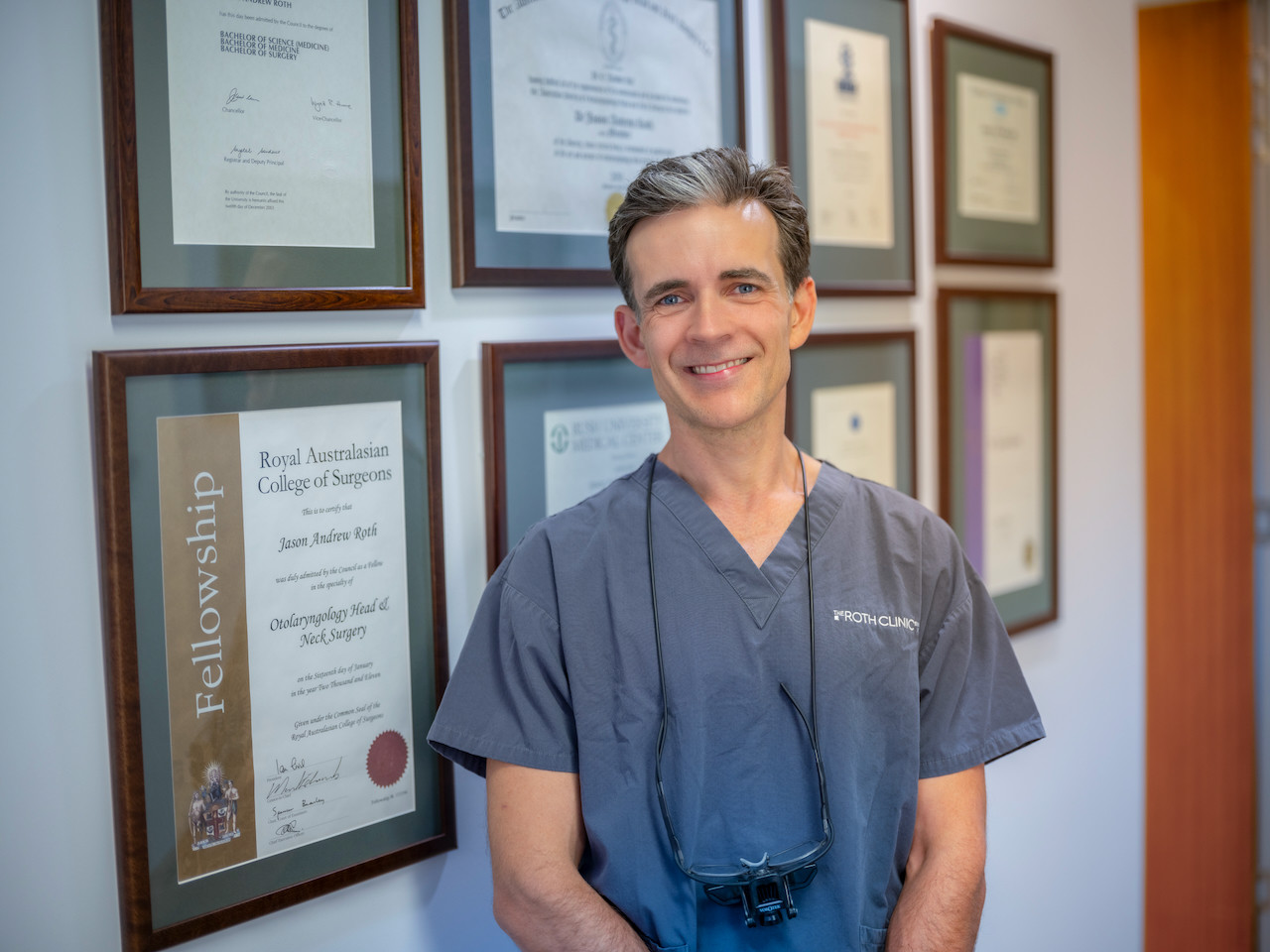
— Dr Jason Roth, MBBS, FRACS (ORL-HNS), IBCFPRS
Arrange a Consultation
Speak with Dr Jason Roth
Dr Roth consults from Dee Why on Sydney’s Northern Beaches. A GP referral is recommended.
Dr Jason Roth (MED0001185485) — Specialist Otolaryngologist & Head and Neck Surgeon.
Dr Jason Roth | MBBS, FRACS (ORL-HNS) | MED0001185485
Specialist Otolaryngologist & Head and Neck Surgeon
Specialist registration — Otorhinolaryngology, Head & Neck Surgery
View full profile