
Cocaine Nose
Chronic intranasal cocaine use causes progressive and potentially severe damage to the nose, sinuses, and midface. The mechanism is primarily ischaemic — cocaine is a potent vasoconstrictor that reduces blood flow to the mucosal lining of the nose, leading to tissue necrosis, cartilage destruction, and in advanced cases, structural collapse of the nasal framework. The damage is cumulative and can be extensive, but surgical reconstruction is possible in appropriate patients who have ceased cocaine use.
This page describes the spectrum of nasal damage caused by cocaine, how it is assessed, and what surgical options exist for patients seeking reconstruction.
How Cocaine Damages the Nose
When cocaine is insufflated — snorted through the nose — it is rapidly absorbed through the nasal mucosa into the bloodstream. Cocaine blocks the reuptake of noradrenaline, producing intense and prolonged vasoconstriction of the nasal mucosal blood vessels. This reduces oxygen delivery to the mucosal lining and underlying cartilage. With repeated exposure, the cumulative ischaemia leads to mucosal necrosis, followed by cartilage necrosis once the mucosal covering is lost and the cartilage’s blood supply is compromised.
The anterior nasal septum is the most commonly and severely affected area — it has the thinnest mucosa, the most exposed blood supply, and bears the direct mechanical trauma of insufflation. Progressive destruction can extend posteriorly along the septum, laterally into the lateral nasal wall and turbinates, and superiorly into the nasal dorsum.
Levamisole — a contaminant commonly found in cocaine — is an additional contributor to tissue damage through a separate mechanism involving autoimmune vasculitis and ANCA-positive inflammatory destruction. This may accelerate and extend the pattern of damage beyond what vasoconstriction alone would produce.
Spectrum of Nasal Damage
Assessment
Assessment of cocaine-related nasal damage includes anterior rhinoscopy and nasal endoscopy to define the extent of mucosal and cartilaginous destruction, the size and location of any perforation, and the remaining mucosal integrity. CT imaging of the nose and sinuses is performed to assess the bony and cartilaginous framework, the extent of any sinonasal involvement, and to plan any proposed reconstruction.
Blood tests including ANCA, ANA, and inflammatory markers are performed — levamisole-adulterated cocaine causes ANCA positivity that can mimic granulomatosis with polyangiitis, and this distinction matters for surgical planning. A formal medical assessment by a physician with experience in inflammatory nasal disease may be appropriate in complex cases.
An assessment of the patient’s current cocaine use status is an essential part of the consultation. Surgical reconstruction in a patient who is still using cocaine is not appropriate — continued use will cause progressive destruction of any repair and predictably lead to failure.
The Prerequisite — Cessation of Cocaine Use
This cannot be overstated. Reconstruction of cocaine-damaged nasal structures is only considered after a sustained period of cocaine abstinence — typically a minimum of twelve months, and ideally longer. During this period, the residual mucosal inflammation settles, the true extent of irreversible structural damage becomes apparent, and the tissue quality improves sufficiently to support surgical repair.
Patients who present requesting surgery while still using cocaine are counselled clearly that surgical intervention is not appropriate and will fail. Support for cessation is discussed and appropriate referrals arranged where requested.
Surgical Reconstruction
Reconstruction of cocaine-damaged nasal structures addresses two separate problems — the septal perforation and the structural deformity — and these are typically addressed in staged procedures.
Stage 1 — Septal perforation repair
Where adequate mucosal tissue remains surrounding the perforation, surgical closure using mucosal flaps is the first priority. Dr Roth uses the anterior ethmoidal artery (AEA) pedicled flap with collagen matrix inlay as his preferred technique — the same approach used for septal perforations from other causes. The AEA flap’s robust vascularity and wide angle of rotation make it particularly suited to the anterior, large perforations typical of cocaine-related damage.
In patients with very large or near-complete septal destruction and insufficient surrounding mucosal tissue, complete closure may not be achievable. In these cases, partial closure to reduce the size of the defect, or conservative management with a septal button to control symptoms, may be more realistic than attempting complete surgical closure.
Stage 2 — Structural reconstruction (saddle nose repair)
Once the septal perforation has been addressed and the nasal lining has healed, structural reconstruction of the collapsed dorsum and tip can be considered. This is a complex rhinoplasty that rebuilds the nasal framework using cartilage grafts.
The available cartilage sources depend on what remains of the nasal septum. Where septal cartilage has been extensively destroyed — as is common in significant cocaine-related damage — ear cartilage or rib cartilage is required. Dr Roth’s preference for significant rib cartilage cases is irradiated cadaveric rib allograft, which avoids a donor-site incision on the chest while providing structural cartilage of sufficient volume and rigidity to reconstruct the dorsal framework.
Reconstruction involves rebuilding the dorsal support with a spreader graft or dorsal onlay, restoring tip projection and support with columellar strut and tip grafts, and re-establishing the cervicomental angle and nasal profile. The goal is a functionally patent and aesthetically natural nose — results are not guaranteed and the complexity of the reconstruction means that the outcome is less predictable than in standard rhinoplasty on unscarred anatomy.
Staging the procedures — perforation repair first, structural reconstruction second — is standard practice. Operating on a mucosal environment that has not yet fully healed increases the risk of further breakdown.
Dr Roth’s Clinical Perspective
Patients who present with cocaine-related nasal damage are often experiencing significant distress — both from the nasal symptoms and from the circumstances that have led to this point. The consultation needs to address both the clinical and the personal honestly. I am direct about what surgery can and cannot achieve, and equally direct about the non-negotiable requirement for sustained cessation before any surgical intervention.
The levamisole contamination issue is clinically important and often overlooked. Patients presenting with an ANCA-positive result and extensive mucosal destruction — more than would be expected from vasoconstriction alone — may have a levamisole-related inflammatory component that requires specific management beyond simple cessation. I refer these patients for a rheumatology or immunology review before planning surgery.
For patients who have achieved sustained abstinence and are appropriate candidates for reconstruction, the results can be genuinely transformative. Rebuilding a structurally collapsed nose with rib cartilage grafts — restoring the dorsal height, the tip projection, and the airway — is technically challenging but deeply satisfying work when the patient has done the hard part of getting here.
— Dr Jason Roth, MBBS, FRACS (ORL-HNS), IBCFPRS
Septal Perforation → | Saddle Nose Deformity → | Revision Rhinoplasty → | Arrange a Consultation →
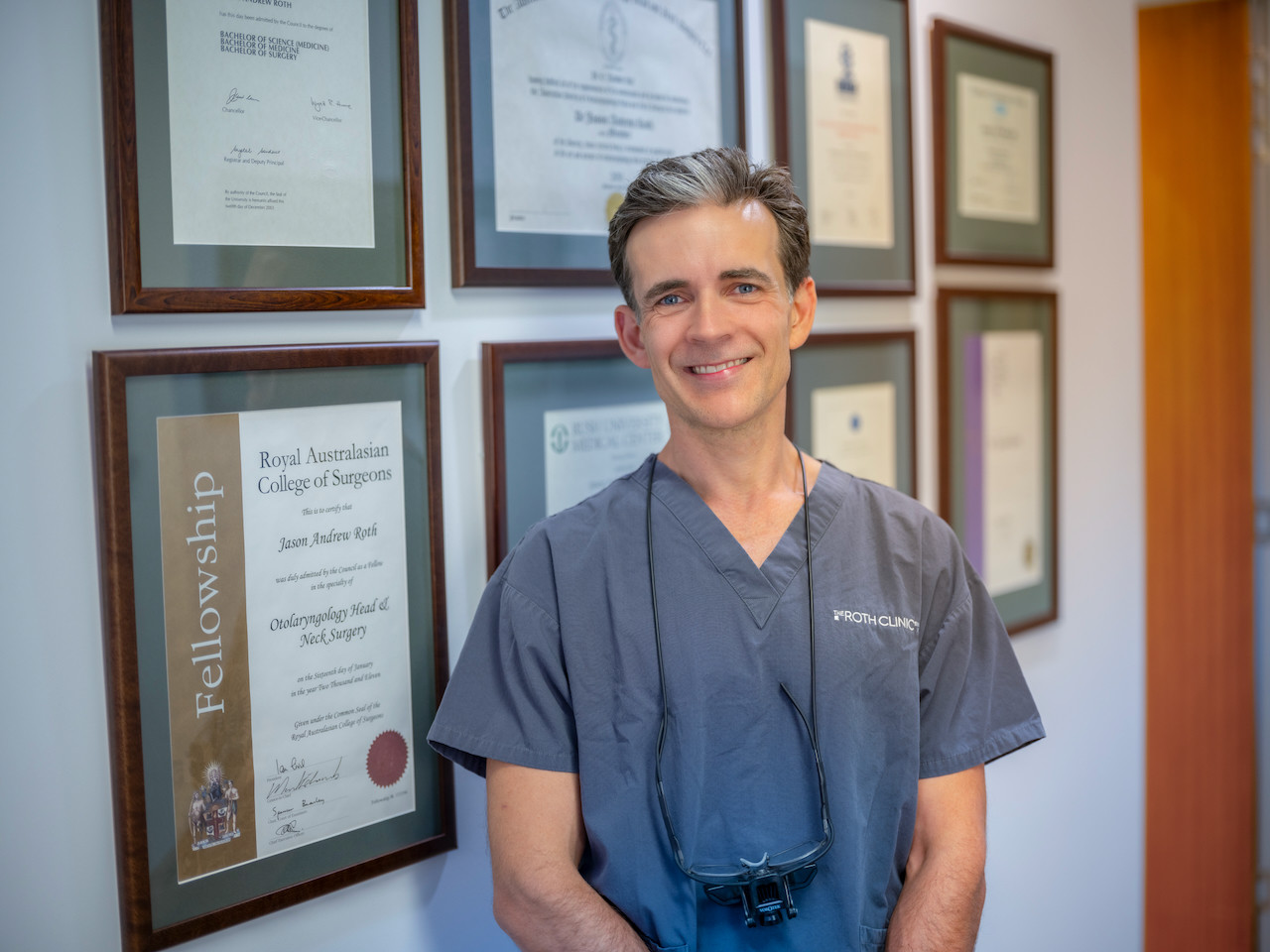
Specialist Otolaryngologist & Head and Neck Surgeon
Specialist registration — Otorhinolaryngology, Head & Neck Surgery
View full profile | Nose Procedures →
