Anaesthesia in Facial Plastic Surgery — How Modern Techniques Improve Outcomes
All surgery involves risks. This page provides general information about anaesthesia in facial plastic surgery. The specific anaesthetic approach for your procedure will be discussed with your anaesthetist at your pre-operative assessment. Anaesthetic content on this page has been prepared with contributions from Dr Andrea Santoro, Senior VMO Anaesthetist, Department of Anaesthesia, Pain and Peri-operative Medicine, Royal North Shore Hospital.
The quality of the anaesthetic has a direct and measurable effect on facial plastic surgery outcomes. This is not a peripheral concern — it sits at the centre of how modern facelift, rhinoplasty, and blepharoplasty surgery is planned and executed. Advances in anaesthetic pharmacology, technique, and perioperative medicine over the past two decades have changed what is achievable, what the recovery looks like, and how consistently good outcomes can be reproduced.
This page describes the specific ways in which modern anaesthesia improves outcomes in facial plastic surgery, and explains the rationale behind the approach used at Dr Roth’s practice.
The Surgical Field — Why Anaesthesia Matters Beyond Keeping You Asleep
In most surgical specialties, the anaesthetist’s primary role is unconsciousness and analgesia. In facial plastic surgery, the anaesthetic’s effect on the surgical field itself is equally important. The face has an exceptionally rich blood supply — far greater than almost any other area of the body of equivalent size. Uncontrolled bleeding obscures tissue planes, increases operating time, forces suboptimal surgical decisions, and results in more post-operative bruising, swelling, and slower recovery. Controlling the surgical field through the anaesthetic is as important as controlling it through technique.
The ideal anaesthetic for facial plastic surgery creates a dry, visible surgical field; maintains cardiovascular stability to prevent pressure-driven bleeding; provides smooth induction and emergence without coughing, straining, or hypertensive surges; minimises post-operative nausea and vomiting; and supports rapid, comfortable recovery. Modern anaesthetic practice achieves all of these goals simultaneously through a combination of pharmacological agents and techniques described below.
Total Intravenous Anaesthesia (TIVA)
Total intravenous anaesthesia — TIVA — uses intravenous agents exclusively to maintain unconsciousness and analgesia, without the volatile inhalational anaesthetic agents (sevoflurane, desflurane) used in conventional general anaesthesia. The primary agent is propofol, delivered by target-controlled infusion (TCI) — a computer-driven pump that calculates and maintains a target plasma or effect-site concentration based on the patient’s weight, age, and pharmacokinetic parameters.
For facial plastic surgery, TIVA offers several specific advantages over inhalational anaesthesia:
Controlled Hypotension
Controlled or deliberate hypotension — maintaining mean arterial blood pressure at a level lower than the patient’s resting baseline during surgery — is a well-established technique for reducing intraoperative blood loss in facial surgery. By reducing perfusion pressure, the technique directly reduces the rate of bleeding from the small vessels in the surgical field without compromising organ perfusion, provided the reduction is modest and carefully titrated.
In facelift surgery, controlled hypotension — typically targeting a mean arterial pressure of 60–70 mmHg — consistently reduces intraoperative blood loss, improves surgical field visibility in the subplatysmal and deep plane dissection, and reduces post-operative bruising and swelling. It is standard practice in high-quality facelift anaesthesia and requires close collaboration between surgeon and anaesthetist.
Controlled hypotension is not appropriate for all patients — it is contraindicated or requires modification in patients with significant cardiovascular disease, cerebrovascular disease, or renal impairment. Patient selection and intraoperative monitoring are managed by the anaesthetist.
Vasoconstrictive Infiltration
Before incision, the surgical field is infiltrated with a dilute solution of local anaesthetic and adrenaline (epinephrine). Adrenaline causes local vasoconstriction of the small blood vessels in the tissue, dramatically reducing bleeding at the incision and dissection planes. This is standard practice in rhinoplasty, facelift, and blepharoplasty, and is one of the most effective tools available for creating a dry surgical field.
The combination of TIVA (avoiding volatile-agent-induced vasodilation), controlled hypotension (reducing perfusion pressure), and vasoconstrictive infiltration (local vasoconstriction) produces a surgical field that is consistently dry, well-visualised, and conducive to precise technical work. Each element reinforces the others.
Multimodal Analgesia and Opioid Reduction
Modern perioperative analgesia in facial plastic surgery uses a multimodal approach — combining agents with different mechanisms of action to achieve adequate pain control while minimising the dose of any single agent and its associated side effects. Opioids, while effective analgesics, cause nausea, sedation, respiratory depression, and constipation — all of which complicate recovery. A multimodal approach reduces opioid requirements while maintaining or improving analgesia.
Agents commonly incorporated into a multimodal analgesic regimen for facial surgery include:
- Paracetamol — scheduled regularly throughout the perioperative period; highly effective as a baseline analgesic
- Non-steroidal anti-inflammatory drugs (NSAIDs) — used selectively; potent analgesics and anti-inflammatories, but avoided in rhinoplasty where their antiplatelet effect increases bleeding risk
- Dexamethasone — a corticosteroid given intravenously at induction; reduces post-operative nausea, decreases opioid requirements, and significantly reduces post-operative swelling in facial surgery
- Local anaesthetic nerve blocks — regional nerve blocks of the infraorbital, supraorbital, and other facial nerves reduce intraoperative and post-operative pain and significantly reduce opioid requirements
Prevention of Post-Operative Nausea and Vomiting (PONV)
PONV is one of the most significant patient-reported quality-of-care issues after facial surgery, and one of the most consequential. Beyond patient comfort, vomiting after facelift surgery increases venous pressure and is a well-recognised precipitant of post-operative haematoma — the most common serious complication of facelift surgery, occurring in approximately 1–3% of patients overall but with rates rising sharply in patients with poorly controlled PONV.
Modern PONV prophylaxis uses a risk-stratified, multimodal approach. Risk factors are assessed preoperatively — female sex, non-smoker status, history of PONV or motion sickness, and planned opioid use are each independent risk factors. High-risk patients receive multiple prophylactic agents targeting different receptors: ondansetron (a 5-HT3 antagonist), dexamethasone (a corticosteroid), and metoclopramide or droperidol where indicated. TIVA itself reduces PONV risk significantly. The result is that PONV after modern facial plastic surgery should be uncommon, and the haematoma risk attributable to it correspondingly low.
The Anaesthetist’s Role in Facial Plastic Surgery
An anaesthetist with specific experience in facial plastic surgery is a meaningful advantage. The techniques described above — TIVA with target-controlled infusion, controlled hypotension, multimodal PONV prophylaxis, and facial nerve block techniques — require specific familiarity and judgment. An anaesthetist who performs these techniques routinely will execute them more precisely and respond more reliably to intraoperative changes than one for whom they are occasional departures from standard practice.
Dr Roth works with anaesthetists who have extensive experience in facial plastic surgery and who apply these approaches as standard practice rather than as special requests. The pre-operative planning discussion between surgeon and anaesthetist is an integral part of how cases are prepared — not an afterthought.
Dr Roth’s Clinical Perspective
TIVA for rhinoplasty is not a preference — it is a clinical standard in my practice. The difference between a volatile anaesthetic and propofol-based TIVA in a nasal surgical field is directly visible: the mucosa is less engorged, bleeding is less, tissue planes are cleaner, and operating time is shorter. Those are not marginal differences. Over hundreds of cases they translate into meaningfully better outcomes and a more predictable recovery.
For facelift surgery, PONV prophylaxis and smooth emergence are the anaesthetic priorities I discuss most with my anaesthetist. The haematoma risk from a vomiting episode in the immediate post-operative period is real and avoidable. Getting the antiemetic regimen right, using TIVA to reduce PONV baseline risk, and ensuring a calm emergence without coughing or pressure surges are the three things that make the biggest anaesthetic contribution to facelift safety.
Patients occasionally ask about the anaesthetic at consultation and I think it is worth discussing. Understanding why we use the approach we do — and what it is designed to achieve — is part of genuinely informed consent.
— Dr Jason Roth, MBBS, FRACS (ORL-HNS), IBCFPRS
Rhinoplasty Anaesthesia → | Anaesthetic FAQs → | On the Day of Surgery → | Arrange a Consultation →
Frequently Asked Questions
In most surgery, the anaesthetic’s primary role is to keep the patient unconscious and comfortable. In facial plastic surgery, the anaesthetic also has a direct effect on the surgical field itself. The face has an exceptionally rich blood supply — uncontrolled bleeding obscures tissue planes, extends operating time, and increases post-operative bruising and swelling. The anaesthetic approach is planned specifically to minimise bleeding, maintain cardiovascular stability, and support a dry, well-visualised field throughout the procedure.
TIVA — total intravenous anaesthesia — maintains anaesthesia using intravenous propofol rather than inhaled volatile agents. For facial plastic surgery it offers three specific advantages: it significantly reduces post-operative nausea and vomiting (propofol has inherent antiemetic properties); it avoids the vasodilatory effect of volatile agents on the nasal mucosa, producing a drier field in rhinoplasty; and it produces a smoother, calmer emergence without coughing or straining — which is particularly important after facelift, where a vomiting episode or Valsalva can precipitate a post-operative haematoma. TIVA is Dr Roth’s standard for all rhinoplasty and facial surgery.
Controlled hypotension means deliberately maintaining blood pressure at a level modestly lower than the patient’s resting baseline during surgery — typically targeting a mean arterial pressure of 60–70 mmHg. At this level, bleeding from small vessels in the surgical field is reduced without compromising blood flow to the brain, kidneys, or heart in healthy patients. It is a well-established technique in facial surgery and directly reduces intraoperative blood loss, bruising, and post-operative swelling. It is not used in patients with significant cardiovascular or cerebrovascular disease, and the anaesthetist assesses suitability at the pre-operative review.
An intravenous cannula is placed before anaesthesia, usually on the back of the hand or the forearm. This is a small needle prick — a local anaesthetic cream can be applied beforehand if you are particularly sensitive. Propofol can cause a brief, mild burning sensation in the vein as it is injected — this is normal, lasts only seconds, and resolves as unconsciousness follows within 30 to 60 seconds. Most patients find the onset of anaesthesia very rapid and comfortable.
PONV prevention after facelift is a specific priority because vomiting raises venous pressure and is a recognised precipitant of post-operative haematoma. Prevention is multimodal: TIVA with propofol reduces baseline PONV risk; intravenous dexamethasone is given at induction; ondansetron is given at the end of surgery; and opioid use is minimised through multimodal analgesia. High-risk patients — women, non-smokers, those with a history of PONV — may receive additional antiemetic agents. With this approach, post-operative nausea after facial surgery should be uncommon.
Pain is managed actively from the end of surgery. Long-acting local anaesthetic is infiltrated into the surgical field before closure, providing analgesia during the early recovery period. Paracetamol and anti-inflammatory medications are given perioperatively. The recovery nursing staff assess and treat pain promptly. Most patients describe the discomfort after facial surgery as a pressure or tightness rather than sharp pain, and manageable with oral analgesia. Severe uncontrolled pain on waking is uncommon with a well-planned multimodal analgesic approach.
TIVA with propofol produces a rapid, clear recovery — propofol is metabolised and cleared quickly, and most patients are awake and oriented within minutes of the infusion stopping. The post-anaesthetic fog that can follow inhalational anaesthesia is significantly reduced. Most patients are transferred from the recovery room to the ward or day surgery area within 30 to 60 minutes. Cognitive effects — including subtle impacts on concentration and reaction time — may persist for 24 hours, which is why driving and important decisions are prohibited for that period.
A mild sore throat is common after general anaesthesia and results from the airway device used during the procedure. For most facial surgery Dr Roth’s anaesthetists use a laryngeal mask airway (LMA) rather than an endotracheal tube where possible — the LMA sits in the throat without passing through the vocal cords and produces less post-operative sore throat and hoarseness. Where intubation is required, a lubricated, appropriately sized tube minimises trauma. Any throat discomfort typically resolves within 24 to 48 hours.
Your anaesthetist will contact you before your surgery date for a pre-operative telephone or in-person assessment. This review covers your medical history, current medications, previous anaesthetic experiences, and any specific concerns. It is the opportunity to ask questions about the anaesthetic plan for your procedure. On the day of surgery, your anaesthetist will review the plan with you again before you go to theatre.
Yes — anticoagulant and antiplatelet medications (including warfarin, rivaroxaban, apixaban, clopidogrel, and aspirin) increase bleeding risk during surgery and specific instructions will be given about stopping or bridging these before your procedure. Do not stop any blood thinner without explicit instruction from Dr Roth or your anaesthetist, as some patients are on these medications for conditions where sudden cessation carries its own risk. Bring a full list of your medications to every pre-operative appointment. Full guidance is on the medications to avoid page →
Pre-operative anxiety is common and entirely normal — raise it with your anaesthetist at your pre-operative assessment so it can be addressed directly. If anxiety is significant, a mild oral sedative premedication can be given before you go to theatre. The anaesthetic team is experienced in managing anxious patients, and the pre-operative environment is designed to be as calm as possible. Understanding exactly what will happen — the cannula, the brief burning sensation of propofol, how quickly consciousness follows, what you will notice on waking — often reduces anxiety considerably. Ask questions at every stage.
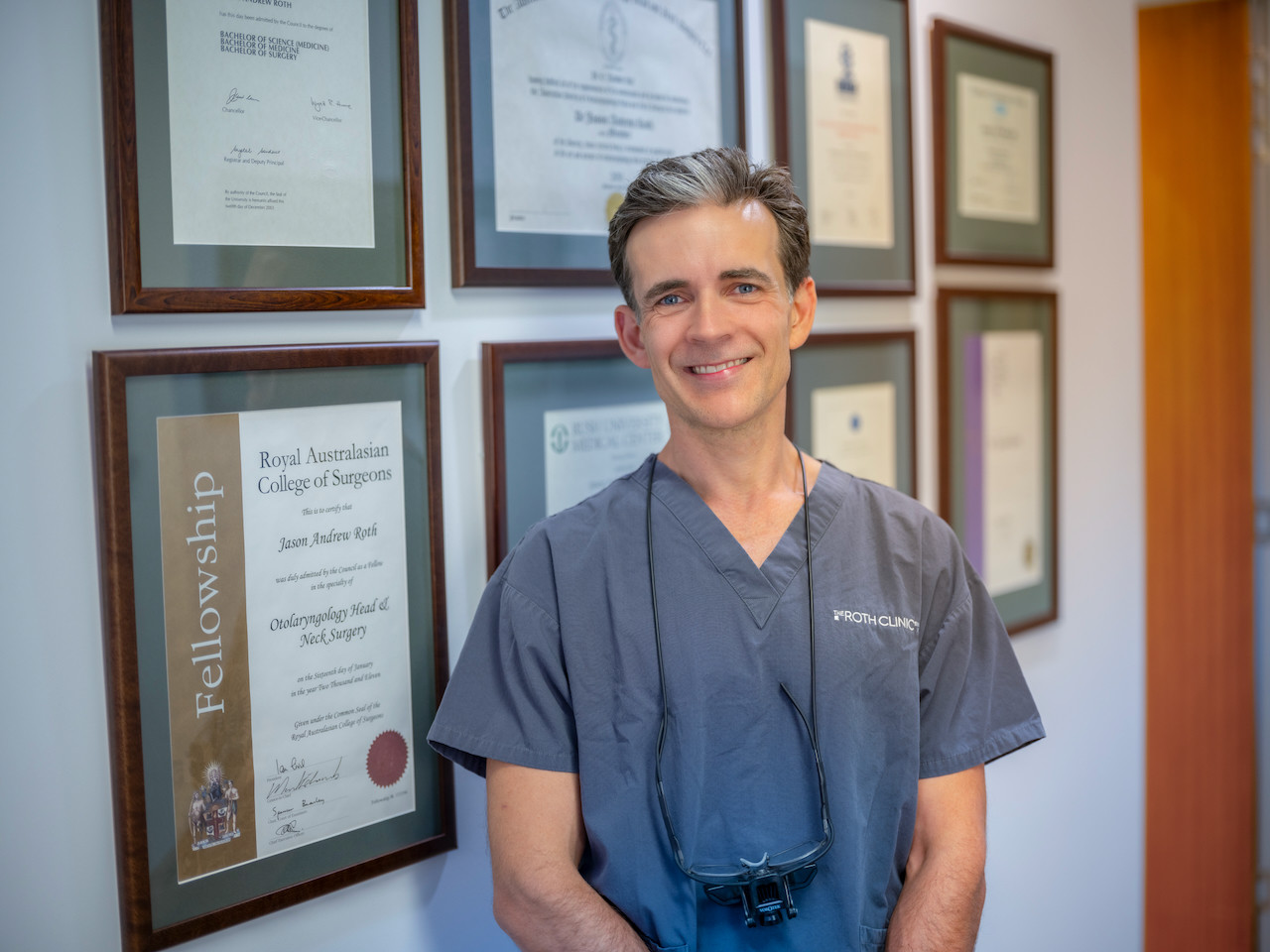
Specialist Otolaryngologist & Head and Neck Surgeon
Specialist registration — Otorhinolaryngology, Head & Neck Surgery
View full profile
