Clinic Procedures
A range of procedures can be performed within Dr Roth’s clinic rooms without the need for hospital admission. These are listed below. Where a procedure can be offered in the rooms, Dr Roth will advise you at consultation.
Nasendoscopy
Nasendoscopy is a commonly performed in-clinic procedure used to assess the nasal cavity, including the nasal septum, turbinates, Eustachian tube openings, adenoid tissue, and the entrance and drainage pathways of the sinuses. The nose is first anaesthetised with a topical spray. The procedure takes a few minutes and is generally well tolerated. There is usually no pain.
Laryngeal Endoscopy
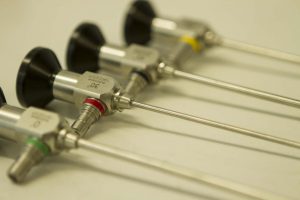
The larynx can be visualised either via the nose or through the mouth, depending on the patient’s anatomy. Topical anaesthetic spray is applied beforehand when the nasal route is used. The entirety of the pharynx and larynx — including the tongue base, vocal cords, and in some patients the upper oesophagus — can be assessed. Patients typically feel a sliding sensation but not pain.
Ear Wax Cleaning
Wax removal is performed under direct vision using gentle suction, without the use of water (syringing). This is generally well tolerated and can be done in both children and adults.
Microscopic Ear Cleaning (Micro-Ear Toilet)
Where ear canals have accumulated wax, hair, and dry skin that has not responded to drops or GP irrigation, careful cleaning under the operating microscope may be required. Suction and fine microscopic instruments are used — no water. This is usually painless and provides significant relief. It is an important component of the management of outer ear infections (otitis externa) and keratosis obturans.
Removal of a Foreign Body from the Ear
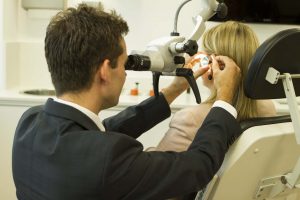
Foreign bodies in the ear — beads, food particles, parts of hearing aids, or insects — can often be removed in the clinic with appropriate instruments under a microscope. Occasionally a foreign body is too deeply wedged or too painful to remove without a general anaesthetic, in which case hospital admission is arranged.
Removal of a Foreign Body from the Nose
Children occasionally place items in their nose that require removal. Most items can be removed in the clinic after the nose is decongested and anaesthetised with a topical spray. Foreign bodies located more deeply within the nose may require a general anaesthetic. Button batteries require urgent removal within 24 hours as the acid can leak and cause permanent damage to the nasal lining — please present to an emergency department if the removal cannot be arranged promptly.
Insertion of Grommets (Adults — Clinic)
In some adult patients with a sufficiently large ear canal without exostoses or other narrowing, grommets can be inserted under local anaesthesia in the clinic, avoiding the need for a general anaesthetic. Suitability for in-clinic insertion is assessed at consultation.
Nasal Cautery
Recurrent nosebleeds (epistaxis) can often be treated with nasal cautery under local anaesthetic in the clinic. A numbing spray is applied beforehand so the procedure is generally painless. This can be performed in both children and adults.
Particle Repositioning for Benign Paroxysmal Positional Vertigo (BPPV)
Approximately 20% of all dizziness presentations are caused by BPPV — a condition where displaced calcium crystals in the inner ear cause positional vertigo. Symptoms include vertigo, lightheadedness, imbalance, and nausea triggered by changes in head position. BPPV can be treated in the clinic with the Epley repositioning manoeuvre.
Smell Testing
Smell disorders (anosmia) can be assessed with an objective 40-item smell identification test conducted in the clinic.
Removal of Keratosis Obturans
Keratosis obturans is a disorder in which skin cells and wax fail to migrate normally from the deep ear canal, causing progressive accumulation and, in severe cases, erosion of the canal bone and compression of the eardrum. Management involves regular microscopic ear cleaning and maintenance with wax-softening drops. Initial removal may occasionally require a general anaesthetic if accumulation is severe.
Removal of Skin and Mucosal Lesions
Dr Roth has a minor procedures room within his consulting rooms equipped for biopsy and excision of selected skin lesions and lesions within the nose or mouth. In-clinic excision is convenient for many patients but is not always possible depending on the size, location, or depth of the lesion, or if the patient is on blood-thinning medications — in these cases hospital admission is arranged.
Resources for Patients → | Contact the Rooms →
Dr Roth’s Clinical Perspective
Minor procedures performed in the clinic setting — wax removal, cautery for nosebleeds, minor skin lesion assessment — are an important part of ENT practice and are often the first point of contact for patients who have had a long-standing problem that has not been adequately addressed in primary care. The consultation for any in-clinic procedure includes a full assessment of the presenting complaint and the relevant history, not just the procedure itself — because occasionally what appears to be a simple problem reveals a more complex underlying condition that requires further investigation.
— Dr Jason Roth, MBBS, FRACS (ORL-HNS), IBCFPRS
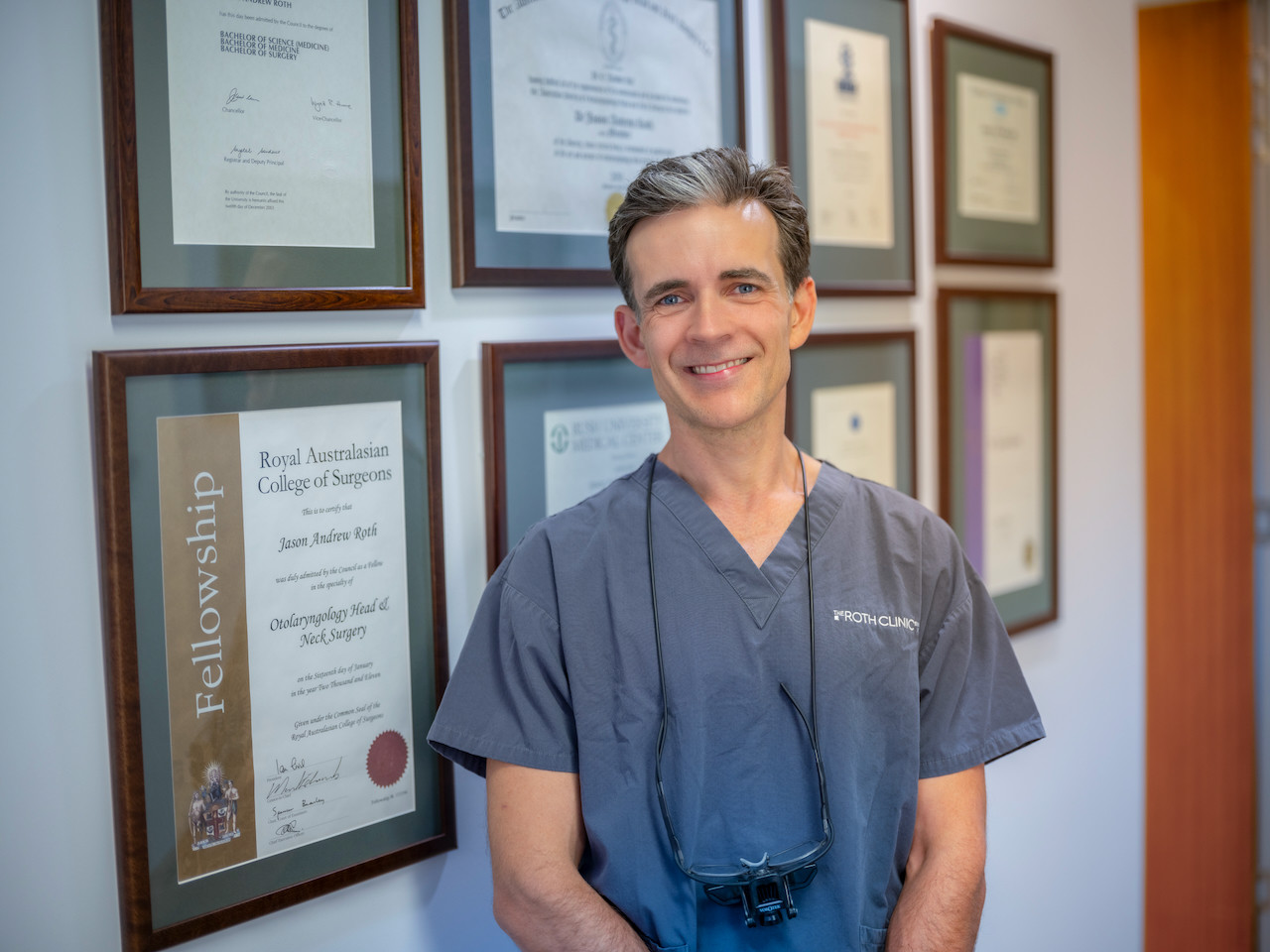
Specialist Otolaryngologist & Head and Neck Surgeon
Specialist registration — Otorhinolaryngology, Head & Neck Surgery
View full profile
