Chin Surgery Pre-Operative Information
All cosmetic surgery involves risks and individual results vary. Cosmetic surgery is a serious decision. Decisions about whether to proceed should be made after careful consideration and following at least two consultations with a qualified medical practitioner.
This page provides pre-operative and post-operative information for patients preparing for chin surgery (mentoplasty). It should be read alongside the written instructions provided at your pre-operative appointment. If anything here is unclear or conflicts with instructions you have been given directly, please contact the rooms.
About Chin Surgery
Chin surgery — mentoplasty — addresses the size, shape, and projection of the chin to improve facial balance and proportion. The two most common procedures are chin augmentation using an implant and chin reduction through bone reduction. Dr Roth will have discussed the specific procedure planned for you at your consultations.
Chin surgery is frequently performed in combination with rhinoplasty — the proportional relationship between the nose and chin is central to overall facial balance — and is also commonly combined with neck liposuction or neck lift. It is performed under general anaesthesia as day surgery.
Before Surgery
Medications to Cease
- Aspirin and any aspirin-containing products
- Ibuprofen (Nurofen, Advil) and all other anti-inflammatory medications
- Naproxen (Naprosyn, Naprogesic)
- Warfarin, clopidogrel, or other anticoagulants — discuss with Dr Roth and your GP before stopping
- Vitamin E supplements, fish oil, garlic tablets, ginkgo biloba, ginseng, St John’s Wort
Full list: Medications to Avoid →
Diet Before and After Surgery
Chewing will be restricted for several days after chin surgery, particularly if the oral approach is used. Prepare soft foods and liquids in advance — soups, smoothies, yoghurt, mashed foods, and similar. A soft diet is required for approximately one to two weeks.
Fasting
Practical Preparations
- Arrange a responsible adult to drive you home and stay with you on the first night
- Prepare soft foods and liquids in advance before the day of surgery
- Plan at least one week away from work; two weeks off strenuous exercise
- Wear loose clothing that does not need to be pulled over the head on the day of surgery
- Purchase prescribed antiseptic mouthwash before surgery if the oral approach is planned
What to Expect in Recovery
Important Post-Operative Instructions
- Maintain a soft diet for two weeks — avoid hard, chewy, or crunchy foods
- If the oral approach was used, rinse the mouth gently with the prescribed antiseptic mouthwash after each meal
- Do not apply pressure or massage to the chin area for six weeks
- Avoid strenuous exercise and heavy lifting for two weeks
- No contact sport for six weeks
- Do not drive while taking oxycodone or other prescribed opioid pain relief
- If the chin implant feels displaced or you notice a sudden asymmetry, contact the rooms immediately
- Take paracetamol regularly for pain — avoid ibuprofen and all anti-inflammatory medications after surgery
When to Seek Urgent Assistance
- Sudden, rapidly increasing swelling on one side — may indicate a haematoma requiring urgent drainage
- Fever above 38.5°C
- Increasing pain not controlled by prescribed medication
- Increasing redness, warmth, or purulent discharge
- Sudden noticeable displacement or asymmetry of the chin implant
Dr Roth’s rooms: (02) 9982 3439
Out of hours: attend the nearest emergency department.
Chin Surgery Pre-Operative Information → | Rhinoplasty Surgery → | Contact the Rooms →
Dr Roth’s Clinical Perspective
Chin augmentation is a procedure I perform in conjunction with other facial surgery — most commonly with rhinoplasty, where the relationship between the chin and nose is a key element of facial balance, or with facelift and neck lift where additional anterior projection of the chin improves the cervicomental angle. I rarely perform it as an isolated procedure. The assessment of chin position should be part of any rhinoplasty consultation because the apparent size and prominence of the nose is substantially affected by the chin projection — a patient with a recessive chin may benefit more from chin augmentation than from dorsal reduction, and that conversation needs to happen before any surgical plan is finalised.
— Dr Jason Roth, MBBS, FRACS (ORL-HNS), IBCFPRS
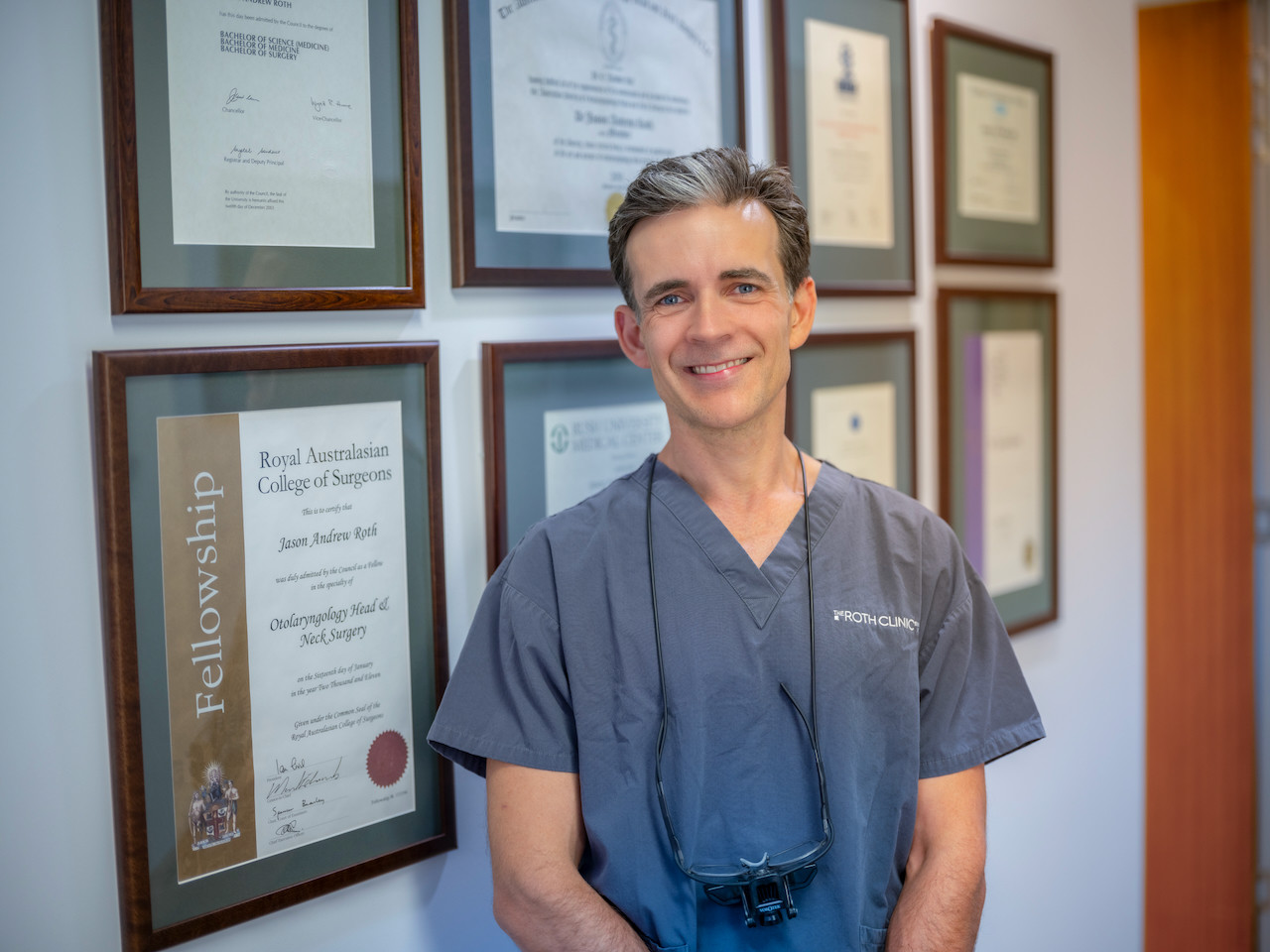
Specialist Otolaryngologist & Head and Neck Surgeon
Specialist registration — Otorhinolaryngology, Head & Neck Surgery
View full profile
