Pre Operative Rhinoplasty Information
All cosmetic surgery involves risks and individual results vary. Cosmetic surgery is a serious decision. Decisions about whether to proceed should be made after careful consideration and following at least two consultations with a qualified medical practitioner.
This page provides pre-operative and post-operative information for patients preparing for rhinoplasty with Dr Roth. Please read it alongside the written instructions provided at your pre-operative appointment. If anything conflicts with instructions you have been given directly, contact the rooms.
Full rhinoplasty information →
About Rhinoplasty
Rhinoplasty is a surgical procedure to correct functional and cosmetic problems with the nose — addressing issues with the nasal septum, cartilages, bony vault, or soft tissues. It may be performed for functional reasons (to improve breathing), cosmetic reasons, or both. When rhinoplasty is combined with septoplasty, the combined procedure is called a septorhinoplasty.
Rhinoplasty is performed under general anaesthesia. Most patients stay one night in hospital, though some procedures can be done as day surgery. Operating time is typically 1.5–4 hours depending on complexity. Revision cases or those requiring ear or rib cartilage grafts take longer.
Before Surgery
Medications to Cease
- Aspirin and aspirin-containing products
- Ibuprofen (Nurofen, Advil) and all other anti-inflammatory medications
- Naproxen (Naprosyn, Naprogesic)
- Warfarin, clopidogrel, or other anticoagulants — discuss with Dr Roth and your GP before stopping
- Vitamin E, fish oil, garlic tablets, ginkgo biloba, ginseng, St John’s Wort
Full list: Medications to Avoid →
Smoking
Do not smoke, vape, or use nicotine products for at least two weeks before and two weeks after surgery. Smokers have significantly higher rates of wound breakdown, infection, and poor healing.
Fasting
Practical Preparations
- Arrange a responsible adult to drive you home and stay overnight with you
- Purchase prescribed medications in advance
- Plan one to two weeks away from work; four to six weeks off contact sport
- Do not arrange important social events within three weeks of surgery
- Purchase a saline nasal irrigation kit (NeilMed Sinus Rinse) if septoplasty is included
Recovery Timeline
Important Post-Operative Instructions
- Do not blow your nose for at least seven days — after this, blow only very gently
- Keep the external splint completely dry — no washing the face, no showers over the face
- Sleep with head elevated for the first week
- Apply ice packs (wrapped in cloth) to the eyes for the first 24 hours to reduce swelling and bruising
- Do not wear spectacles until cleared by Dr Roth — glasses can shift nasal bones if osteotomies were performed
- Do not rub or bump the nose for a minimum of 8 weeks
- Avoid sun exposure to the nose for at least 3 months
- Avoid strenuous exercise and heavy lifting for three to four weeks
- Avoid contact sport for at least three months
- Do not smoke, vape, or use nicotine
- Complete the full course of antibiotics as prescribed
- Take paracetamol regularly for pain — avoid ibuprofen and all anti-inflammatory medications
When to Seek Urgent Assistance
- Brisk bleeding that does not settle after 20 minutes of firm direct pressure
- Fever above 38.5°C
- Increasing pain, redness, or swelling
- Any discharge that appears purulent (cloudy or discoloured)
- Sudden difficulty breathing through both sides of the nose
Dr Roth’s rooms: (02) 9982 3439
Out of hours: attend the nearest emergency department.
Rhinoplasty — Full Information → | Post-Operative Care → | Rhinoplasty Risks → | Contact the Rooms →
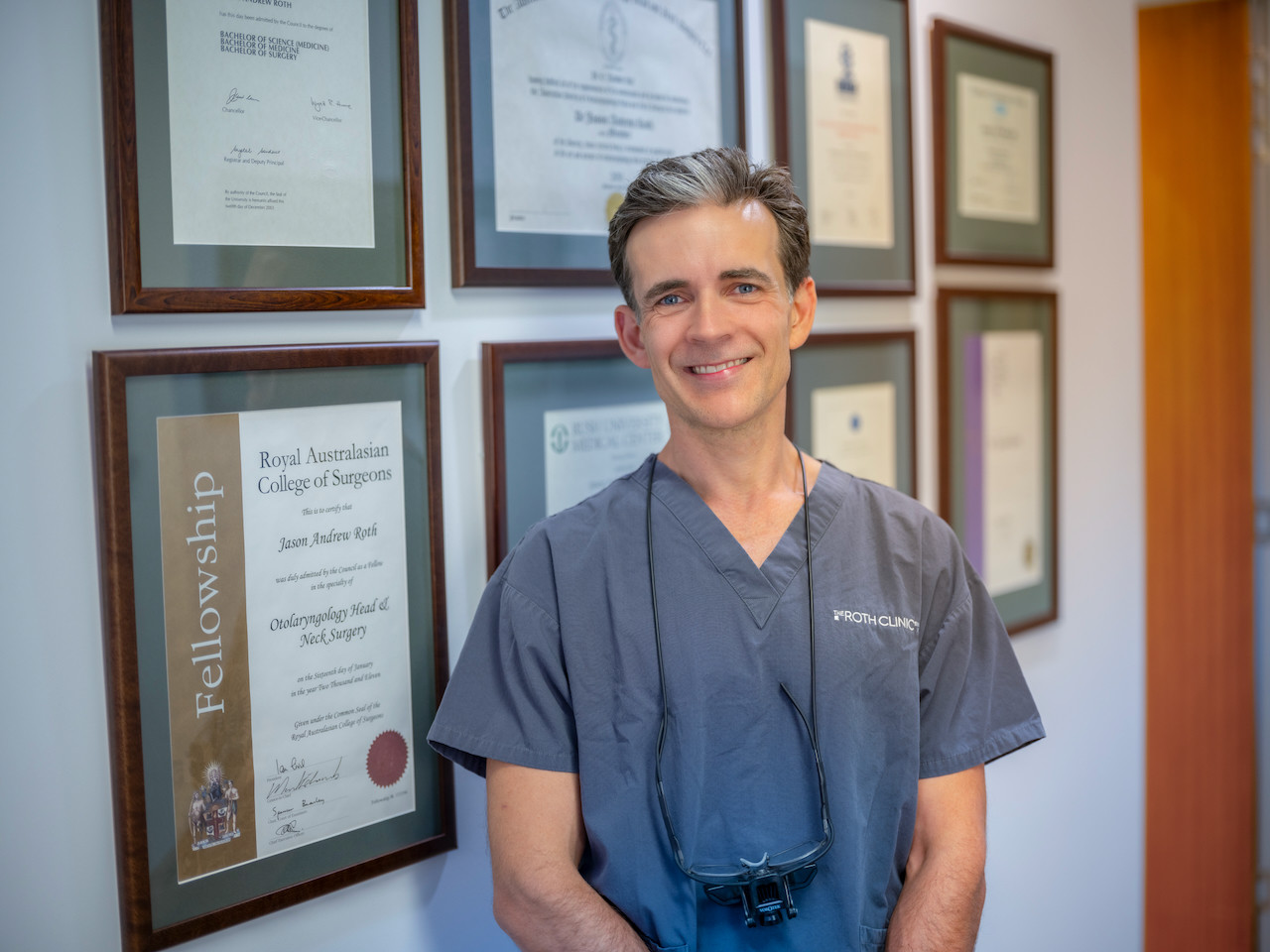
Specialist Otolaryngologist & Head and Neck Surgeon
Specialist registration — Otorhinolaryngology, Head & Neck Surgery
View full profile
