Upper blepharoplasty
All cosmetic surgery involves risks and individual results vary. Cosmetic surgery is a serious decision. Decisions about whether to proceed should be made after careful consideration and following at least two consultations with a qualified medical practitioner.
Upper blepharoplasty — upper eyelid surgery — is a surgical procedure that addresses excess skin, muscle, and sometimes fat from the upper eyelids. With age, the skin of the upper eyelid progressively loses elasticity and descends, creating a hooded appearance that can affect both the aesthetic appearance of the eye and, in more advanced cases, the superior visual field. Upper blepharoplasty removes this excess tissue through a carefully placed incision within the natural eyelid crease, leaving a scar that is concealed within the fold of the eyelid.
As with all surgery, outcomes vary between individuals depending on factors including genetics, skin quality, age, and overall health. Dr Roth will conduct a thorough consultation before any decision about surgery is made.
Read the full blepharoplasty risks page → | Full blepharoplasty information →
Am I a Candidate?
You may wish to discuss upper blepharoplasty with Dr Roth if you have concerns about any of the following:
Hooded Upper Eyelids
Sagging or drooping skin affecting the natural contour of the upper eyelids and obscuring the eyelid crease
Upper Eyelid Puffiness
Fullness or swelling of the upper eyelids due to prolapsed orbital fat
Visual Field Impairment
Overhanging skin affecting the superior or lateral visual field — a functional indication that may attract Medicare rebates
Tired Appearance
A heavy or fatigued appearance around the eyes that does not reflect how you feel
Cosmetic surgery is not the only option for addressing these concerns. Dr Roth will discuss all available options with you during consultation, including non-surgical alternatives where appropriate.
Consultation and Planning
Before any decision is made about surgery, Dr Roth will conduct a thorough consultation covering:
- A detailed discussion of your goals and expectations
- A review of your medical history, medications, allergies, and any previous eye surgeries
- A physical examination of your eyelids assessing skin laxity, muscle tone, and fat distribution
- An evaluation of your tear production and overall eye health — dry eye symptoms can be worsened by eyelid surgery and must be assessed pre-operatively
- Assessment of brow position — a descended brow can contribute to upper eyelid hooding, and correcting the eyelid without addressing the brow may produce an incomplete result
- Pre-operative photographs for planning purposes
- A full discussion of risks, recovery, and realistic outcomes
A minimum of two consultations is required before any cosmetic surgical procedure proceeds. There is no obligation to commit to surgery at either appointment.
The Procedure
Upper blepharoplasty is typically performed under local anaesthesia with sedation, though general anaesthesia may be used depending on individual circumstances and whether it is being combined with other procedures. The procedure takes approximately 45–60 minutes for upper eyelids alone.
Recovery
Important Post-Operative Instructions
- Apply cold compresses gently over closed eyelids for the first 24 hours — do not apply direct pressure to the eyes
- Keep head elevated including while sleeping for the first week
- Use lubricating eye drops as prescribed
- Do not rub, touch, or apply pressure to the eyelids
- Do not wear eye make-up until cleared by Dr Roth (typically two weeks)
- Do not wear contact lenses until comfortable and cleared at follow-up
- Protect scars from sun exposure — use SPF50+ or sunglasses
- Take paracetamol for pain — avoid ibuprofen and anti-inflammatory medications
Risks and Complications
Upper blepharoplasty is an invasive surgical procedure that carries real risks. Common side effects include temporary swelling, bruising, dry eyes, itching, and sensitivity to light. Less common but serious complications can include infection, bleeding, scarring, asymmetry, changes in sensation, difficulty fully closing the eyes (lagophthalmos), and — rarely — changes in vision. Dr Roth will discuss all risks with you in detail during consultation.
Read the full blepharoplasty risks page →
Frequently Asked Questions
Common questions about upper blepharoplasty answered by Dr Jason Roth, Specialist Otolaryngologist and Head and Neck Surgeon, Sydney.
Upper blepharoplasty may attract a Medicare rebate where the overhanging skin is causing documented functional impairment of the visual field — specifically where the skin descends to within a defined distance of the visual axis or where a visual field test demonstrates superior field loss correctable by taping the eyelids. Where a functional indication is present, a rebate applies to the surgeon’s fee and the anaesthetist’s fee, and private health insurance may contribute to the hospital fee.
Where the procedure is undertaken purely for cosmetic reasons without a documented functional impairment, no Medicare rebate applies. Eligibility is assessed at consultation. Dr Roth’s team will advise on the applicable MBS item numbers and provide a detailed quote.
Not directly — brow ptosis (descent of the brows below the orbital rim) is a separate anatomical problem from upper eyelid skin excess. In many patients, apparent upper eyelid hooding is partly or substantially caused by descended brows rather than by true excess eyelid skin. Operating on the eyelid alone in this situation may produce an incomplete result or, in some cases, further lower the brows by releasing some of the brow-elevating tension.
Dr Roth assesses brow position carefully at consultation. Where brow descent is contributing significantly to the upper eyelid appearance, a brow lift — combined with or instead of blepharoplasty — may be recommended. Read more about brow lift surgery →
Yes — upper and lower blepharoplasty are frequently combined in the same anaesthetic. Combining both procedures addresses the full periorbital region in a single recovery period and is generally more efficient than staged procedures. Whether both are indicated is determined by examining your anatomy at consultation.
The incision is placed within the natural crease of the upper eyelid, where it lies in the shadow of the fold and is not visible when the eyes are open. Once healed — over approximately six to twelve months — the scar fades to a fine pale line that is not apparent in normal social interaction. Scar quality varies between individuals and is discussed at consultation.
- Days 1–3: Swelling and bruising peak. Rest at home. Cold compresses and head elevation.
- Days 5–7: Sutures removed. Bruising fading.
- 10–14 days: Most patients comfortable in social settings.
- Weeks 2–4: Return to work and normal activities.
- Months 3–6: Final result apparent. Scars continuing to fade.
The results of upper blepharoplasty are long-lasting — the removed skin does not regrow. However, the ageing process continues and the remaining eyelid skin will continue to lose elasticity over time. Most patients find their result remains satisfying for ten years or longer before any further change becomes noticeable. Individual variation in ageing rate, genetics, and sun exposure all influence how the result evolves over time.
Dry eye symptoms — grittiness, irritation, and watering — are common in the early post-operative period and usually resolve as swelling settles. Patients with pre-existing dry eye disease are at higher risk of persistent or worsened symptoms after blepharoplasty. Tear production and ocular surface health are assessed at consultation. Patients with significant dry eye may require optimisation of their eye condition before surgery is appropriate, and the procedure may need to be modified to reduce the risk of exacerbating their symptoms.
Blepharoplasty — Full Information → | Lower Blepharoplasty → | Brow Lift → | Blepharoplasty Risks → | Pre-Operative Information →
Dr Roth’s Clinical Perspective
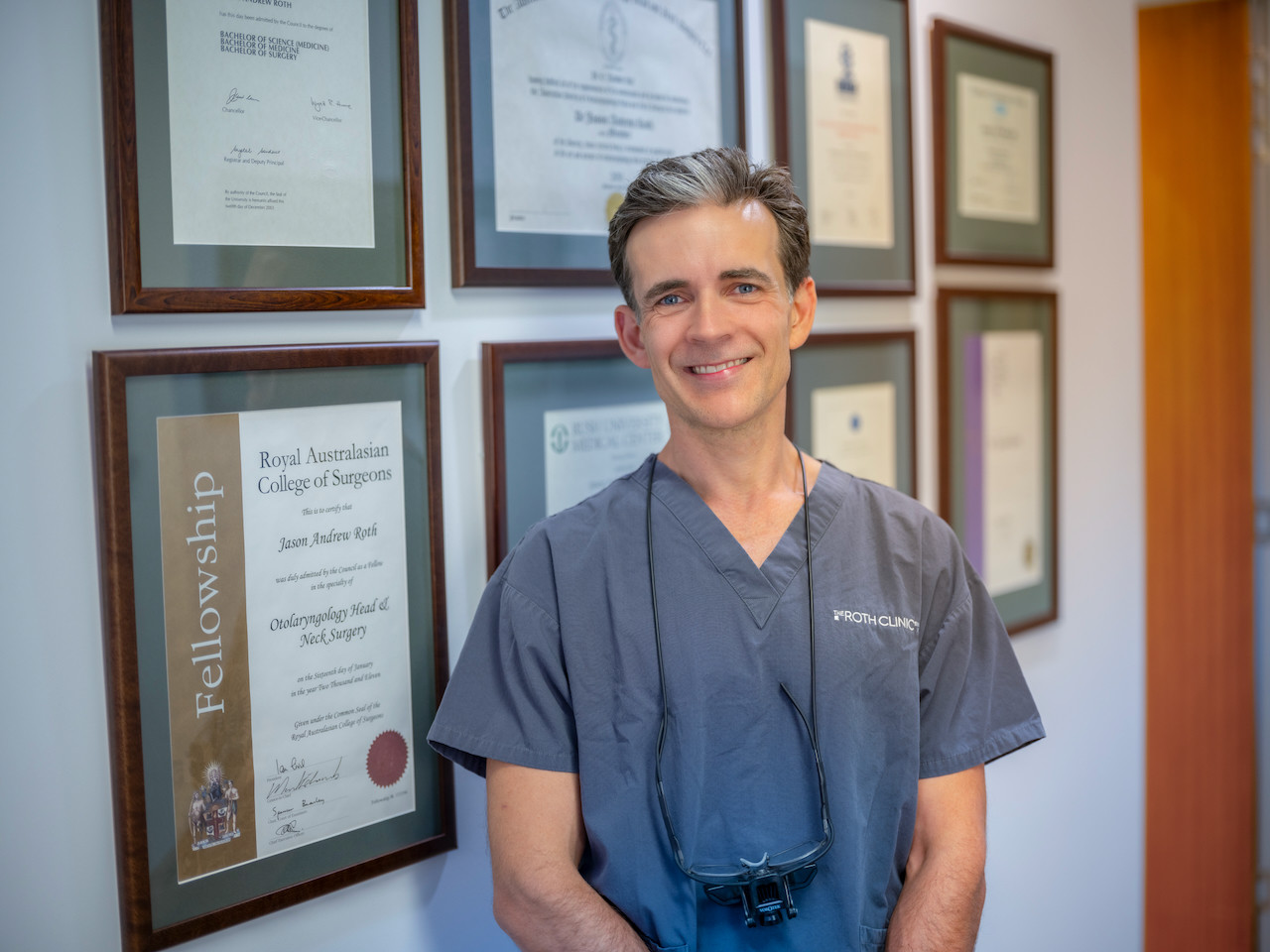
Upper blepharoplasty consultation requires careful attention to brow position before any plan for skin excision is made. A patient who presents with heavy upper eyelid skin may actually have brow ptosis as the primary problem — the brow has descended and is pushing skin into the eyelid space. In that case, upper blepharoplasty alone will produce a result that looks operated-upon if too much skin is removed, or that disappoints if an inadequate amount is removed to avoid that problem. The correct assessment asks: where does the brow sit, and should it be addressed first or simultaneously? I mark patients sitting upright before any decisions about skin excision are made.
— Dr Jason Roth, MBBS, FRACS (ORL-HNS), IBCFPRS
Specialist Otolaryngologist & Head and Neck Surgeon
Specialist registration — Otorhinolaryngology, Head & Neck Surgery
View full profile
