Ear, Nose and Throat
Dr Jason Roth (MED0001185485) — Specialist Otolaryngologist & Head and Neck Surgeon, specialist registration in Otorhinolaryngology, Head & Neck Surgery.
Otolaryngology — Head and Neck Surgery is the medical and surgical specialty covering the full range of conditions affecting the ear, nose, throat, head, and neck. It is one of the oldest and broadest surgical specialties, encompassing everything from a child’s ear infection to complex sinus surgery, from recurrent tonsillitis to disorders of balance and hearing.
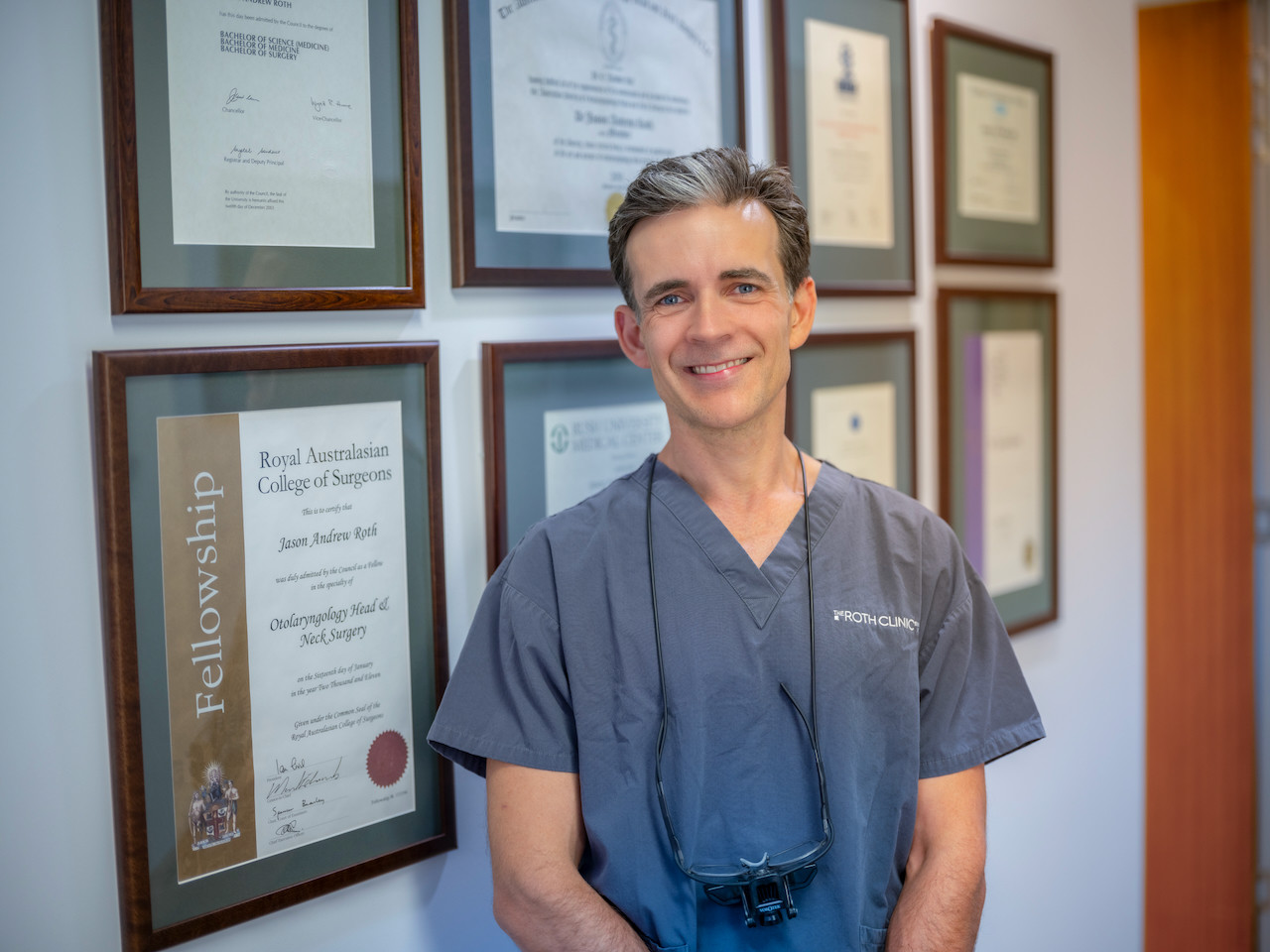
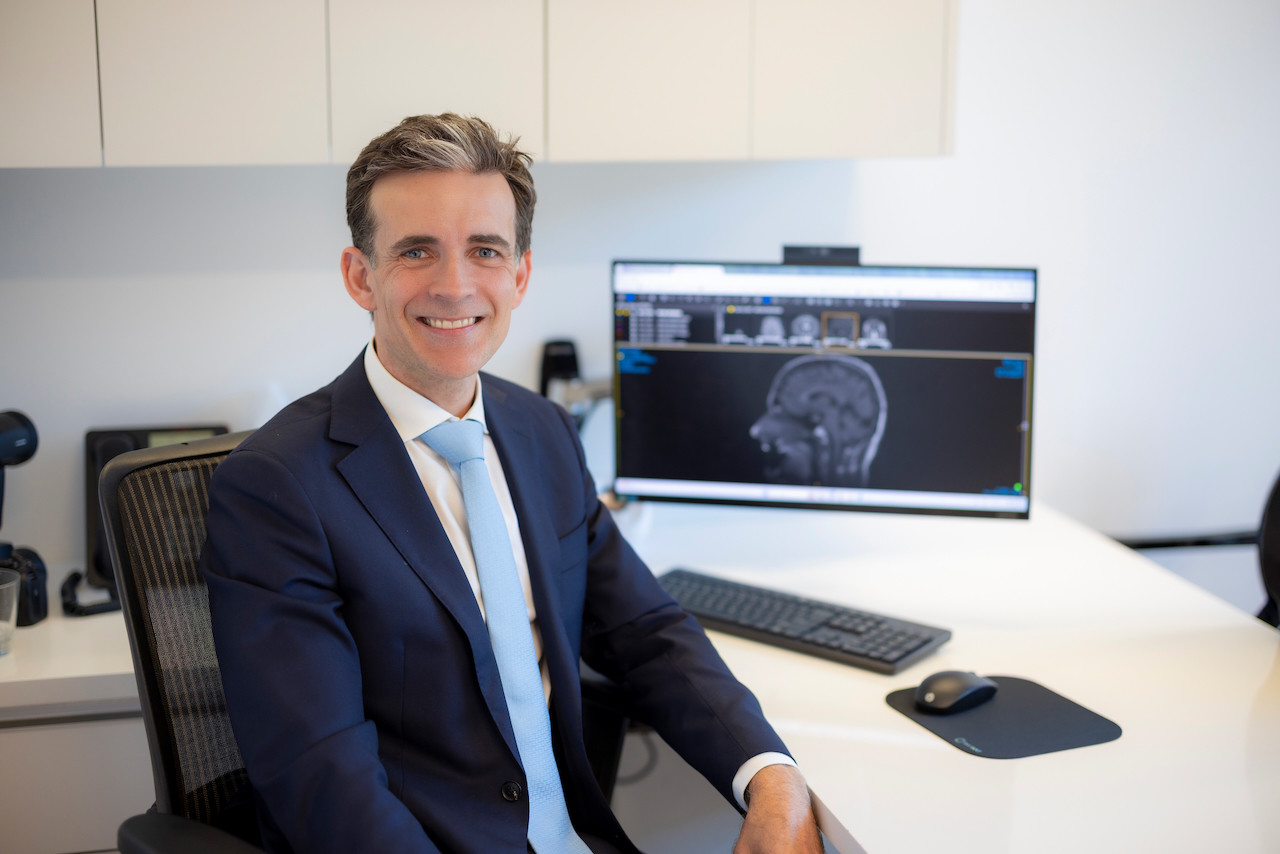
Dr Jason Roth (MED0001185485) is a Specialist Otolaryngologist and Head and Neck Surgeon based on Sydney’s Northern Beaches. He completed specialist surgical training through the Royal Australasian College of Surgeons (FRACS — Otorhinolaryngology, Head and Neck Surgery) and holds additional fellowship training in rhinology and facial plastic surgery from Rush University Medical Center in Chicago and the Academic Medical Center in Amsterdam. He sees both paediatric and adult patients with general ENT conditions alongside his subspecialty practice in rhinoplasty and facial plastic surgery.
He consults from Dee Why and operates at North Shore Private Hospital, Castlecrag Private Hospital, Pittwater Day Surgery, and Wyvern Private Hospital.
Contact us to arrange a consultation →
Jump to a section: Ear | Nose & Sinuses | Throat | Surgical Procedures | Clinic Procedures
👂 Ear
Conditions affecting the outer ear canal, middle ear, and inner ear. Ear problems are among the most common reasons for ENT referral, particularly in children.
Ear Infections in Children
Middle ear infections (acute otitis media) are among the most common infections in childhood. Most resolve without antibiotics, but recurrent infections — three or more in six months — warrant ENT assessment and consideration of grommet insertion. Covers the anatomy, mechanism, natural history, complications including mastoiditis, and prevention.
Read more →
Glue Ear (Otitis Media with Effusion)
Glue ear — fluid behind the eardrum without infection — is the most common cause of hearing loss in children. It can affect speech development, learning, and behaviour. Most cases resolve spontaneously; persistent bilateral glue ear with hearing loss is the standard indication for grommet insertion. Covers causes, developmental impact, cholesteatoma risk, and treatment evidence.
Read more →
Grommets (Ventilation Tubes)
Grommet insertion is one of the most commonly performed surgical procedures in children. A small tube placed through the eardrum bypasses the Eustachian tube, ventilating the middle ear, restoring hearing, and reducing the frequency of ear infections. Covers all indications, tube types, the procedure in detail, water precautions, and risks.
Read more →
Perforated Eardrum
A hole in the eardrum from infection, trauma, or barotrauma. Most small perforations heal spontaneously with good ear care. Persistent perforations causing hearing loss or recurrent infections may require surgical repair (myringoplasty). Covers causes by type, consequences, and when to consider surgery.
Read more →
Myringoplasty (Eardrum Repair)
Surgical repair of a persistent eardrum perforation using a graft — typically temporalis fascia or cartilage. Success rates are approximately 85–90% in experienced hands. Covers graft material options, surgical approaches (post-auricular, trans-canal, endoscopic), the procedure in detail, a phase-by-phase recovery guide, and all risks including chorda tympani and taste disturbance.
Read more →
Hearing Loss
A detailed reference covering the anatomy of hearing, the three types of hearing loss (conductive, sensorineural, mixed), sudden sensorineural hearing loss as a medical emergency, the full assessment battery, and treatment by cause — from grommet insertion and myringoplasty through to cochlear implantation.
Read more →
Hearing Testing
A guide to understanding audiological assessment — how to read an audiogram, what each test measures (PTA, tympanometry, VRA, play audiometry, speech audiometry, OAEs, ABR), hearing aid fitting, and implantable device candidacy. Northern Beaches Audiology is co-located at the Dee Why practice.
Read more →
Outer Ear Infections (Otitis Externa)
Infection of the ear canal skin — “swimmer’s ear” — is often severely painful due to the inelastic bony canal. Microsuction cleaning before ear drops is essential: drops cannot penetrate through infected debris. Covers bacterial and fungal microbiology, the role of cotton buds in causing disease, malignant otitis externa in diabetic patients, and prevention.
Read more →
Exostoses (Surfer’s Ear)
Bony growths in the ear canal from repeated cold water exposure, developing over years in surfers and cold-water swimmers. Progressive narrowing traps water and debris, causing recurrent infections and hearing loss. Present in 70–80% of long-term surfers. Covers the mechanism, three-grade classification, prevention with ear plugs and wetsuits, and canalplasty surgery with detailed step-by-step technique and recovery.
Read more →
BPPV — Positional Vertigo
Benign Paroxysmal Positional Vertigo is the most common cause of vertigo — affecting 20–30% of all dizziness presentations. Caused by displaced calcium crystals in the semicircular canals. Diagnosed with the Dix-Hallpike test and treated in the consulting room with the Epley manoeuvre, which has an approximately 80% success rate in a single session.
Read more →
Tinnitus
The perception of sound without external source — affecting approximately 15–18% of Australians. All new or unilateral tinnitus requires audiological assessment and ENT evaluation to exclude acoustic neuroma (MRI required). Covers peripheral and central mechanisms, the full spectrum of causes including pulsatile tinnitus, investigation, and management including TRT and CBT.
Read more →
Ear Pain During Air Travel
Otic barotrauma — ear pain from pressure changes during flight — results from Eustachian tube failure. Risk is highest with active URTI, allergy, or chronic Eustachian tube dysfunction. Covers the physiology of pressure equalisation, risk stratification, all equalisation techniques, decongestant medications with timing, pressure-regulating earplugs, and when recurrent barotrauma warrants grommet insertion.
Read more →
View the full Ear Procedures page →
👃 Nose & Sinuses
Nasal obstruction, sinus disease, allergies, nosebleeds, and post-nasal drip. Dr Roth has subspecialty fellowship training in rhinology from Rush University Medical Center, Chicago.
Sinus Problems — Overview
A comprehensive guide to the range of sinus conditions — acute sinusitis, chronic rhinosinusitis, nasal polyps, sinus headaches, allergic rhinitis, and post-nasal drip. Covers the ostiomeatal complex, how sinus disease develops, symptoms including loss of smell, investigation (endoscopy, CT), and the full medical and surgical treatment menu.
Read more →
Sinusitis
Full anatomy of all four sinus pairs; classification into acute viral, acute bacterial, recurrent acute, and chronic forms with EPOS diagnostic criteria; step-by-step pathophysiology; detailed symptom analysis; urgent red flag warning signs (orbital/intracranial spread); and evidence-based treatment based on EPOS guidelines including biological agents (dupilumab, mepolizumab).
Read more →
Chronic Rhinosinusitis
An in-depth reference covering CRS without nasal polyps (neutrophilic, structural) and CRS with nasal polyps (eosinophilic, type 2), plus allergic fungal rhinosinusitis. Covers biofilm, the nasal microbiome, type 2 inflammation and biologic therapy, AERD/Samter’s triad with aspirin desensitisation, and the six-step treatment ladder including dupilumab (PBS-listed).
Read more →
Sinus Surgery (FESS)
Functional Endoscopic Sinus Surgery — performed entirely through the nostrils with no external incisions. Covers the full range of indications, TIVA anaesthetic rationale, endoscopes and image guidance, surgical extent options from limited uncinectomy to Draf III, detailed pre-operative preparation, a five-phase recovery guide including the critical post-operative debridement visits, and all complications with estimated frequencies.
Read more →
Nasal Polyps
Benign inflammatory growths arising from the sinus lining — associated with eosinophilic inflammation, allergy, aspirin sensitivity, and asthma. Cause progressive nasal obstruction and loss of smell. Highly steroid-responsive. The new biological agents (dupilumab) are now PBS-subsidised for severe uncontrolled disease.
Read more →
Septoplasty
Surgical correction of a deviated nasal septum — one of the most common ENT procedures. Covers full septal anatomy, developmental and traumatic deviation, all clinical consequences beyond obstruction, the Cottle test, detailed surgical steps, three common combined procedures (turbinoplasty, FESS, rhinoplasty), MBS item numbers, and comprehensive risks. Medicare-rebatable where functional obstruction is documented.
Read more →
Enlarged Nasal Turbinates
The inferior turbinates are the most important functional structures of the nasal airway. Hypertrophy — from allergy, chronic inflammation, or compensatory enlargement after septal deviation — causes persistent nasal obstruction. Turbinoplasty (surgical reduction) provides durable, well-tolerated relief when medical treatment is insufficient.
Read more →
Nasal Allergy (Allergic Rhinitis)
IgE-mediated hypersensitivity to inhaled allergens — the most prevalent chronic condition managed in ENT. Covers Australian allergen profiles (dust mite, grass pollen, moulds), downstream consequences (turbinate hypertrophy, CRS, sleep-disordered breathing, asthma), skin prick testing, and the full treatment hierarchy from avoidance through to allergen immunotherapy.
Read more →
Blocked Nose
Nasal obstruction has multiple causes — deviated septum, enlarged turbinates, nasal polyps, allergy, nasal valve collapse — frequently in combination. A blocked nose affects sleep, exercise, and quality of life. Accurate diagnosis of the contributing factors determines whether medical or surgical treatment, or both, will be most effective.
Read more →
Sinus Headaches
A critical reference: up to 90% of self-diagnosed sinus headache is actually migraine. Covers pain patterns by sinus, how migraine activates nasal symptoms (trigemino-autonomic reflex), a structured comparison of true sinus headache vs migraine, all facial pain differentials, and the thunderclap headache emergency red flag.
Read more →
Post-Nasal Drip
The sensation of mucus flowing down the throat — causing chronic throat-clearing, cough, and sleep disruption. Covers normal mucus physiology, causes (allergic rhinitis, vasomotor rhinitis, CRS, LPR, ACE inhibitor medications, post-viral sensory sensitisation), and cause-directed treatment for each aetiology including ipratropium for vasomotor rhinitis.
Read more →
Nosebleeds (Epistaxis)
A comprehensive reference covering nasal blood supply anatomy (Kiesselbach’s plexus, sphenopalatine artery), all causes including HHT and anticoagulants, correct first aid technique, emergency criteria, and the full treatment ladder from silver nitrate cauterisation to endoscopic sphenopalatine artery ligation and embolisation.
Read more →
Broken Nose
Nasal fractures are among the most common facial injuries. Treatment depends on timing — manipulation under anaesthesia is most effective within 10–14 days. Residual post-traumatic deformity or ongoing obstruction from a deviated septum can be addressed with septoplasty or septorhinoplasty once the acute swelling has resolved.
Read more →
Nasal Valve Collapse
The internal and external nasal valves are the narrowest part of the nasal airway. Collapse on inspiration — producing nasal obstruction that improves when the cheek is pulled laterally (Cottle test) or with breathe-right strips — can be surgically addressed with spreader grafts, alar batten grafts, or lateral crural strut grafts.
Read more →
View the full Nose & Sinus Procedures page →
🗣️ Throat
Tonsil and adenoid conditions, snoring, obstructive sleep apnoea, and throat-related ENT problems in both children and adults.
Tonsils & Adenoids
Tonsillectomy and adenotonsillectomy — among the most commonly performed ENT procedures. Covers Waldeyer’s ring anatomy, all indications (recurrent tonsillitis with Paradise criteria, peritonsillar abscess, obstructive sleep apnoea, chronic tonsillitis, tonsillar asymmetry), surgical technique for both tonsils and adenoids, a phase-by-phase recovery guide, and haemorrhage risk and management.
Read more →
Tonsillectomy — Post-Operative Care (Adults)
Detailed post-operative instructions for adult patients following tonsillectomy. Covers the pain trajectory (worst days 3–5), the critical importance of hydration, correct pain relief schedule (why ibuprofen is contraindicated), the healing membrane appearance, activity restrictions, the secondary haemorrhage window (days 5–14), and emergency criteria.
Read more →
Tonsillectomy — Post-Operative Care (Children)
Parent-focused post-operative guidance following tonsillectomy and/or adenoidectomy in children. Covers pain management, oxycodone syrup instructions, dehydration warning signs, the healing membrane, post-operative snoring changes, school return timelines, activity restrictions, and clear bleeding emergency instructions with after-hours contacts.
Read more →
Snoring & Sleep Apnoea — Adults
Snoring exists on a spectrum from simple positional snoring to severe obstructive sleep apnoea (OSA). OSA is associated with cardiovascular disease, metabolic syndrome, impaired cognition, and increased road accident risk — with Australian driving legal obligations for sufferers. Covers AHI grading, health consequences, full ENT assessment, and six treatment pathways including CPAP, MAS, nasal surgery, UPPP, and hypoglossal nerve stimulation (Inspire).
Read more →
Snoring & Sleep Apnoea — Children
Snoring in children is a different and more serious condition than in adults. Paediatric OSA causes measurable neurodevelopmental deficits — attention, memory, and behaviour — and is a significant cause of misdiagnosed ADHD. Covers the full range of causes, consequences including growth hormone suppression and enuresis, the OSA-ADHD overlap, and all treatment pathways including adenotonsillectomy and orthodontic options.
Read more →
🏥 Surgical Procedures & Patient Resources
Information for patients preparing for or recovering from surgical procedures.
Sinus Surgery — Post-Operative Care
Detailed post-operative instructions following FESS. The most important message: twice-daily saline nasal irrigation starting the day after surgery is not optional — it is the single most important factor in a good surgical outcome. Covers what to expect, the debridement visit schedule, return to activity, and delayed bleeding warning signs.
Read more →
Surgical Procedures — Full List
A complete list of all ENT and facial surgery procedures performed by Dr Roth, with links to the relevant information pages. Covers ear, nose, sinus, rhinoplasty, facelift, eyelid, and other facial procedures.
View all procedures →
Anaesthesia — Patient Guide
A general guide to general anaesthesia — prepared by Dr Roth’s specialist anaesthetists. Covers what anaesthesia is, what anaesthetists do, practical considerations before surgery (fasting, medications, smoking, alcohol), and answers to the most frequently asked questions including awareness, nausea, death risk, and malignant hyperthermia.
Read more →
Medications to Avoid Before Surgery
A complete list of medications and supplements that must be ceased at least two weeks before surgery because they increase the risk of bleeding. Covers aspirin-containing medications, NSAIDs (including Celebrex and Mobic), clopidogrel, anticoagulants (warfarin, DOACs), and herbal supplements. Includes specific guidance on blood thinners that require medical advice before stopping.
Read more →
🩺 Clinic Procedures
A range of procedures that can be performed in the consulting rooms without hospital admission. Where possible, Dr Roth will offer clinic-based management to avoid the need for day surgery.
Nasendoscopy
Examination of the nasal passages, adenoids, and sinuses with a thin telescope
Laryngeal Endoscopy
Visualisation of the larynx, vocal cords, and pharynx via flexible endoscope
Ear Wax Microsuction
Gentle suction removal of wax under direct microscopic vision — no water, no syringing
Ear Foreign Body Removal
Removal of beads, hearing aid parts, insects, and other objects from the ear canal under the microscope
Nasal Cautery for Nosebleeds
Silver nitrate or bipolar cauterisation of septal vessels — performed under topical anaesthetic
Epley Manoeuvre (BPPV)
Particle repositioning for benign positional vertigo — approximately 80% effective in a single session
Grommet Insertion — Adults
Selected adult patients with adequate ear canals can have grommets inserted under local anaesthetic in the clinic
Smell Testing
Objective 40-item UPSIT smell identification test for the assessment of anosmia and hyposmia
Nasal Foreign Body Removal
Removal of objects from children’s noses — button batteries require urgent assessment within 24 hours
View the full Clinic Procedures page →
Why See a Specialist Otolaryngologist?
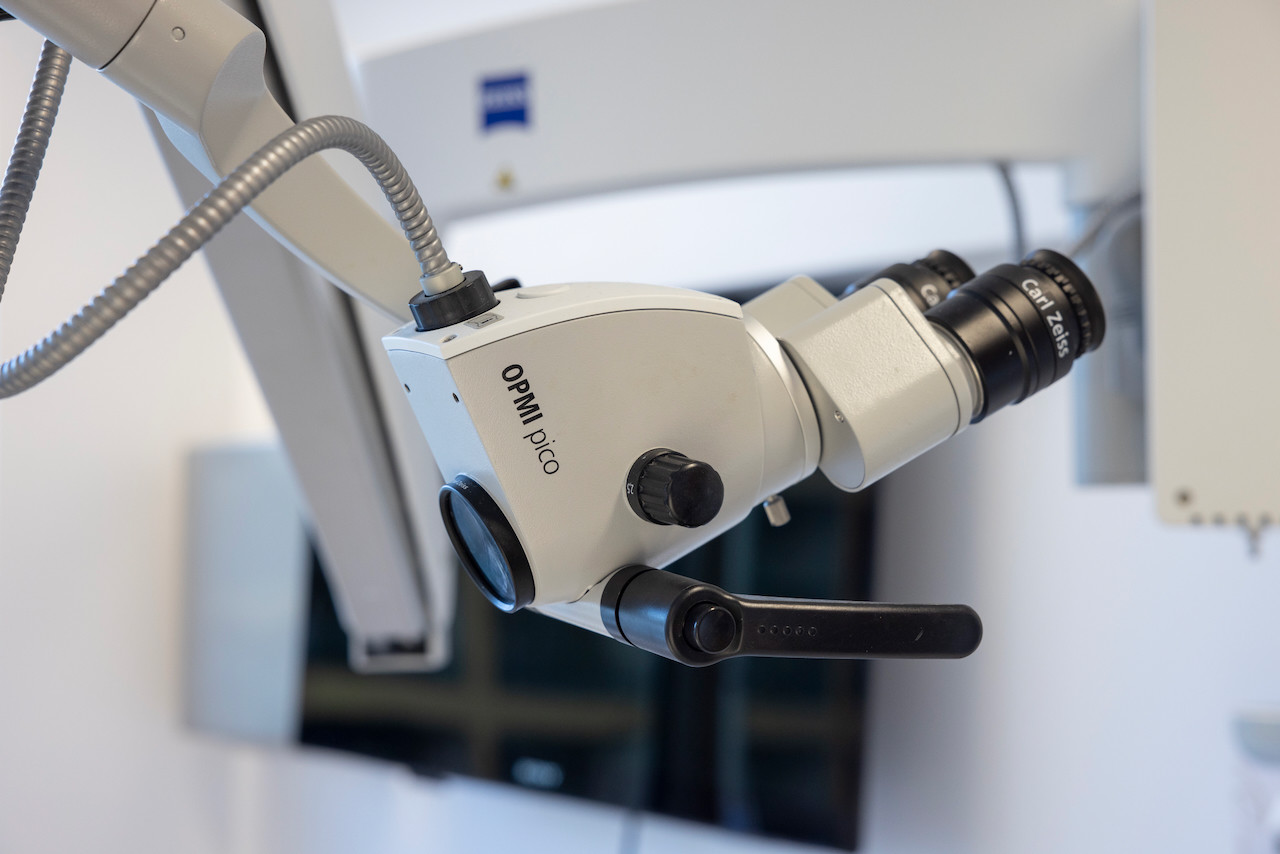
General practitioners manage a large volume of ear, nose, and throat conditions effectively, and most patients appropriately start their journey with their GP. Specialist assessment adds value when conditions are persistent, recurrent, significantly affecting quality of life, or where a surgical option needs to be considered. An Otolaryngologist has specific training in the diagnosis and surgical management of the full range of ear, nose, throat, head, and neck conditions, as well as the equipment — operating microscope, suction instrumentation, rigid endoscopes, and audiological services — necessary to diagnose and treat these conditions to the highest standard.
🔬
Subspecialty Fellowship Training
Dr Roth completed fellowship training in rhinology at Rush University Medical Center, Chicago, and in rhinoplasty and facial plastic surgery at the Academic Medical Center, Amsterdam. He maintains an active continuing education programme.
👶
Paediatric & Adult Patients
Dr Roth sees children and adults with the full range of ENT conditions — from ear infections and glue ear in young children through to sinus surgery, tonsillectomy, and hearing loss management in adults.
🏥
Integrated Audiology
Northern Beaches Audiology is co-located within the Dee Why practice, providing hearing testing, hearing aids, and audiological management as a seamless part of ENT care for both paediatric and adult patients.
📋
High Surgical Volume
Dr Roth performs more than 300 nasal and sinus procedures per year and operates at four accredited private hospitals across Sydney’s North Shore and Northern Beaches.
A GP referral is recommended before attending but not always required. Please contact the rooms to arrange a consultation.
Dr Jason Roth | MBBS, FRACS (ORL-HNS) | MED0001185485
Specialist Otolaryngologist & Head and Neck Surgeon
Specialist registration — Otorhinolaryngology, Head & Neck Surgery
View full profile